Tang Xiaojun, Tang Qi, Mao Yuan, Huang Xiaochen, Jia Lizhou, Zhu Jin, Feng Zhenqing
NHC Key Laboratory of Antibody Technique, Nanjing Medical University, Nanjing, People's Republic of China.
Department of Rheumatology and Immunology, The Affiliated Drum Tower Hospital of Nanjing University Medical School, Nanjing, People's Republic of China.
Onco Targets Ther. 2019 Nov 7;12:9341-9350. doi: 10.2147/OTT.S221040. eCollection 2019.
In previous research, we have found that LMP1-specific chimeric antigen (HELA/CAR) T cells can specifically recognize and kill LMP1-positive NPC cells. However, the tumor-inhibitory effectiveness of HELA/CART cells needs to be enhanced.
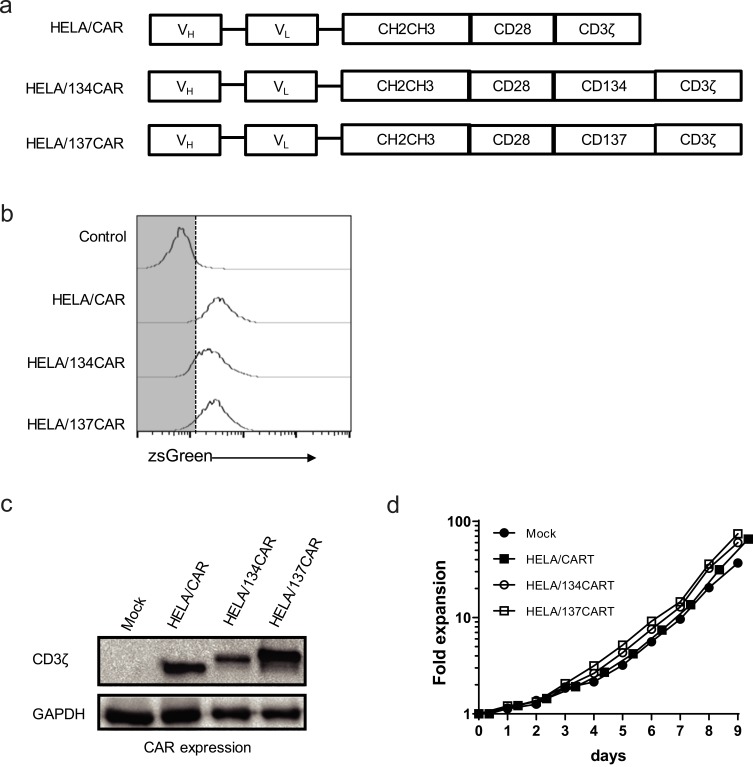
We created two CARs that contain the T cell receptor-ζ (TCR-ζ) signal transduction domain with the CD28 and CD137 (4-1BB) or CD134 (OX-40) intracellular domains in tandem (HELA/137CAR or HELA/134CAR). Then, the tumor-inhibitory functions of two new CAR-T cells were investigated, both in vitro and in vivo.
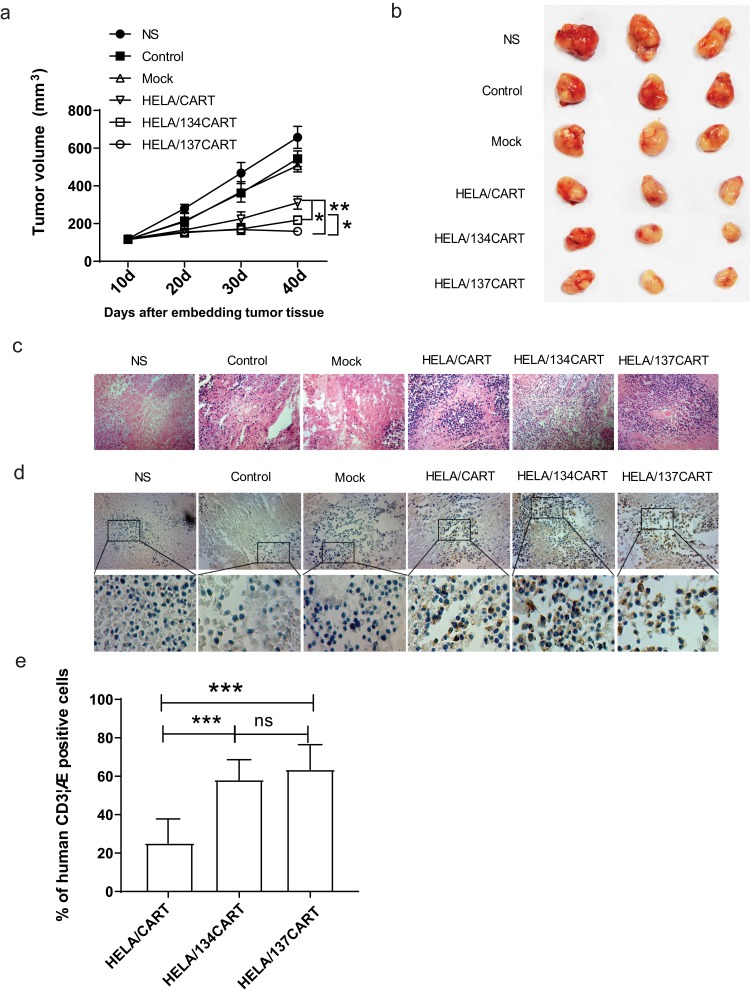
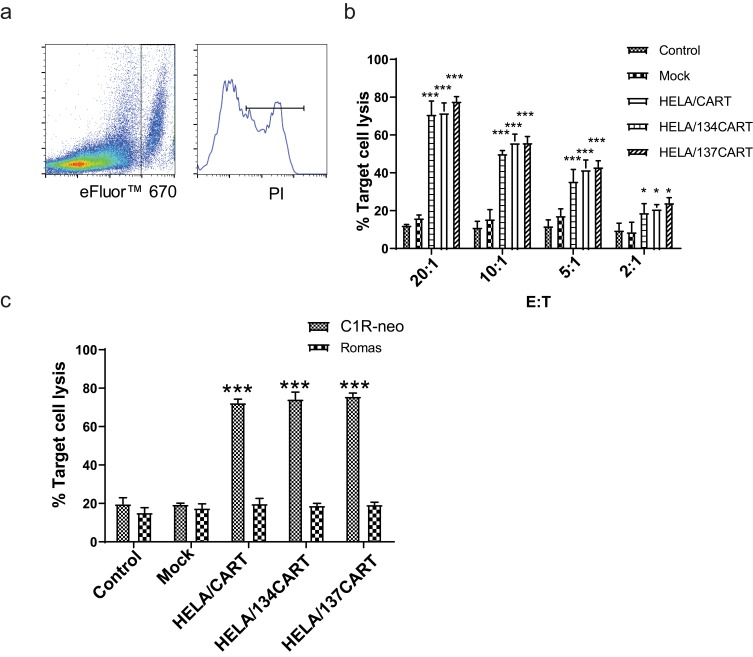
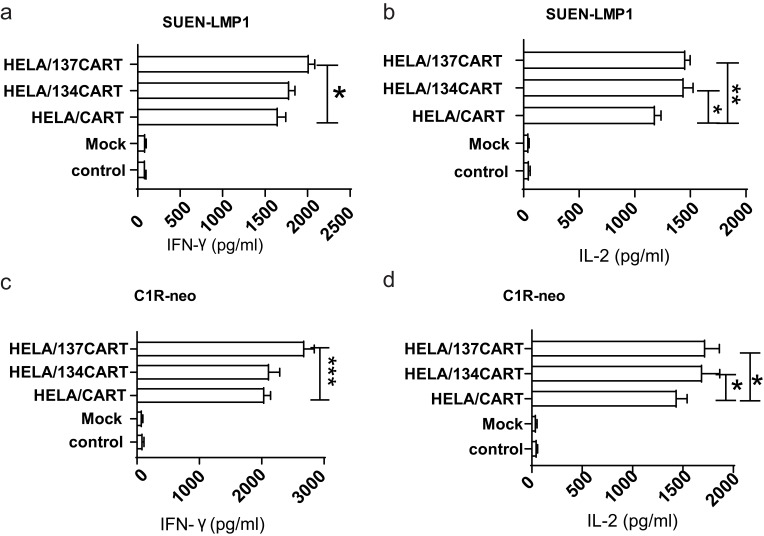
The results showed that, after short-term expansion, primary human T cells were subjected to lentiviral gene transfer, resulting in large numbers of cells with >80% CAR expression. All CART cells were effective in killing SUNE1-LMP1 and C1R-neo cells, while HELA/137CART cells produced greater quantities of IFN-γ and IL-2 than HELA/CART cells. However, the level of IL-2 not INF-γ secreted by HELA/134CART cells was increased under the stimulation of LMP1 antigen. In an LMP1-positive NPC mouse xenograft model, HELA/137CART cells exhibited better antitumor activity and longer survival time in vivo compared with HELA/CAR T cells.
The findings suggest that CD137 and CD28 is a better costimulatory signaling domain than CD28 only for optimizing tumor-inhibitory roles.
在先前的研究中,我们发现LMP1特异性嵌合抗原(HELA/CAR)T细胞能够特异性识别并杀伤LMP1阳性的鼻咽癌细胞。然而,HELA/CAR T细胞的肿瘤抑制效果有待提高。
我们构建了两种嵌合抗原受体(CAR),它们串联包含T细胞受体ζ(TCR-ζ)信号转导结构域以及CD28和CD137(4-1BB)或CD134(OX-40)细胞内结构域(HELA/137CAR或HELA/134CAR)。然后,在体外和体内研究了两种新型CAR-T细胞的肿瘤抑制功能。
结果显示,经过短期扩增后,原代人T细胞进行慢病毒基因转移,产生了大量CAR表达率>80%的细胞。所有CAR-T细胞都能有效杀伤SUNE1-LMP1和C1R-neo细胞,而HELA/137CAR-T细胞比HELA/CAR-T细胞产生更多的干扰素-γ(IFN-γ)和白细胞介素-2(IL-2)。然而,在LMP1抗原刺激下,HELA/134CAR-T细胞分泌的IL-2而非INF-γ水平有所增加。在LMP1阳性的鼻咽癌小鼠异种移植模型中,与HELA/CAR T细胞相比,HELA/137CAR-T细胞在体内表现出更好的抗肿瘤活性和更长的生存时间。
研究结果表明,对于优化肿瘤抑制作用,CD137和CD28作为共刺激信号结构域比仅使用CD28更好。