Department of Medical Research, Taipei Medical University Hospital, Taipei, Taiwan.
Department of Pharmacology, School of Medicine, College of Medicine, Taipei Medical University, Taipei, Taiwan.
J Cell Mol Med. 2020 Jan;24(2):1822-1836. doi: 10.1111/jcmm.14879. Epub 2019 Dec 10.
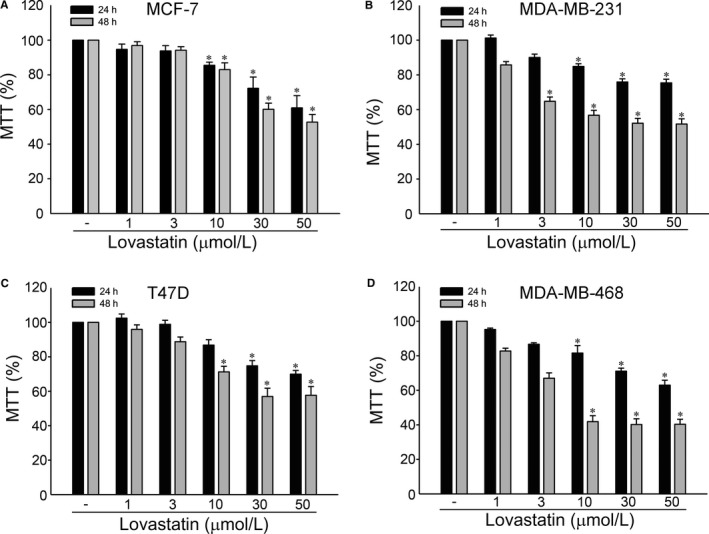
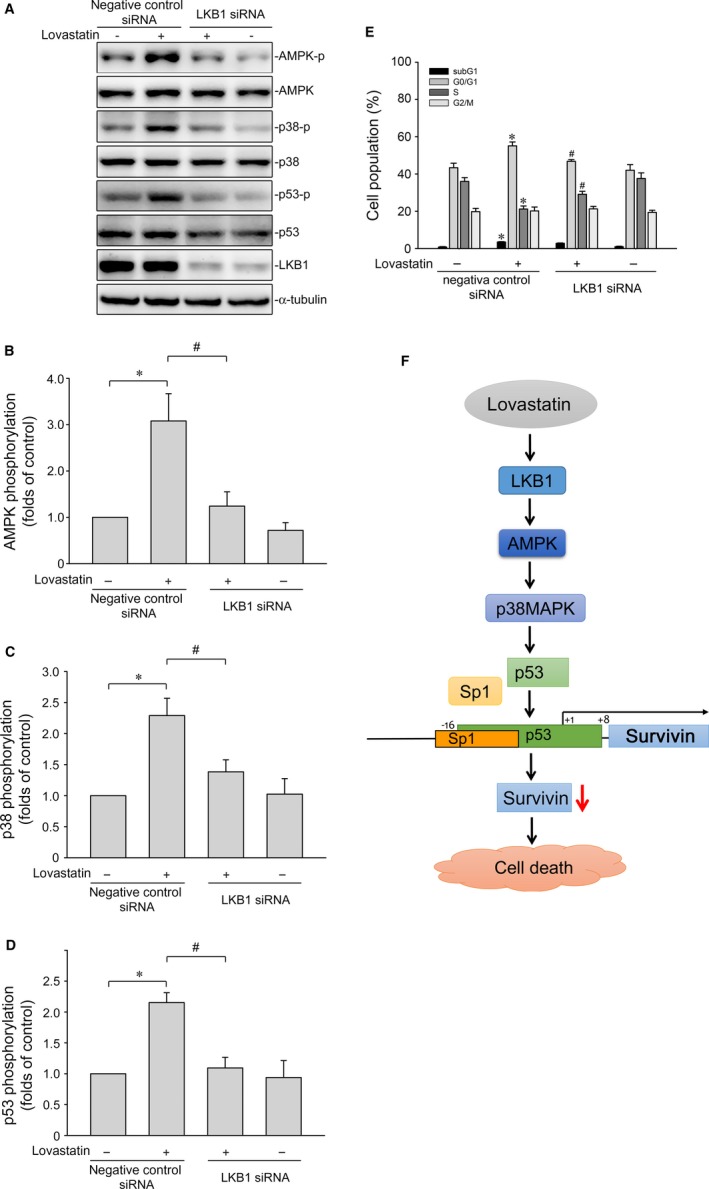
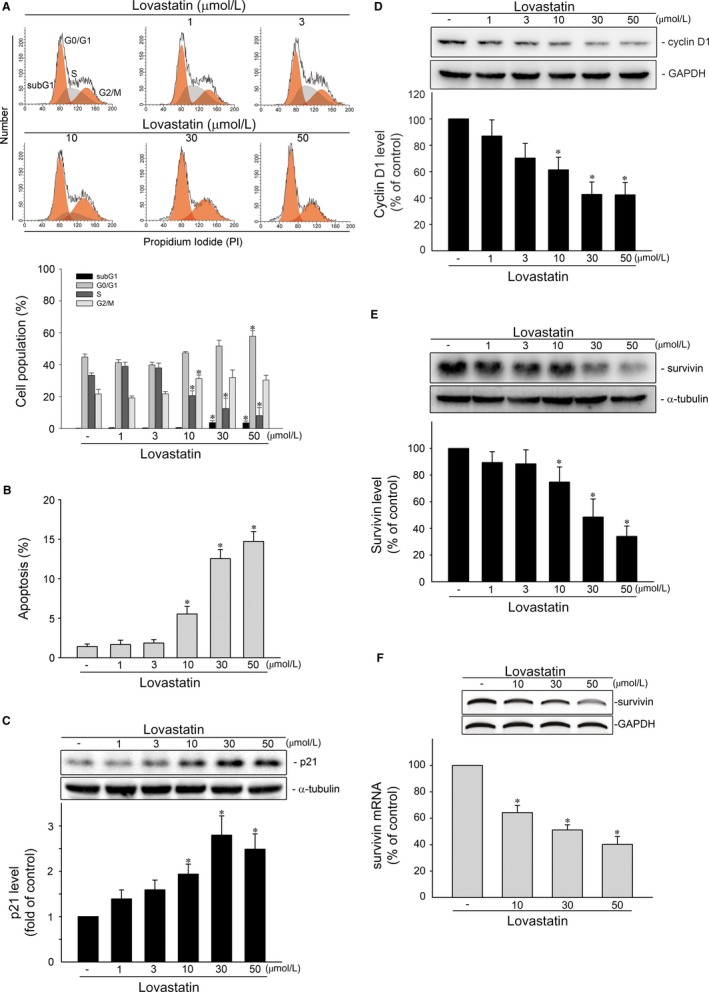
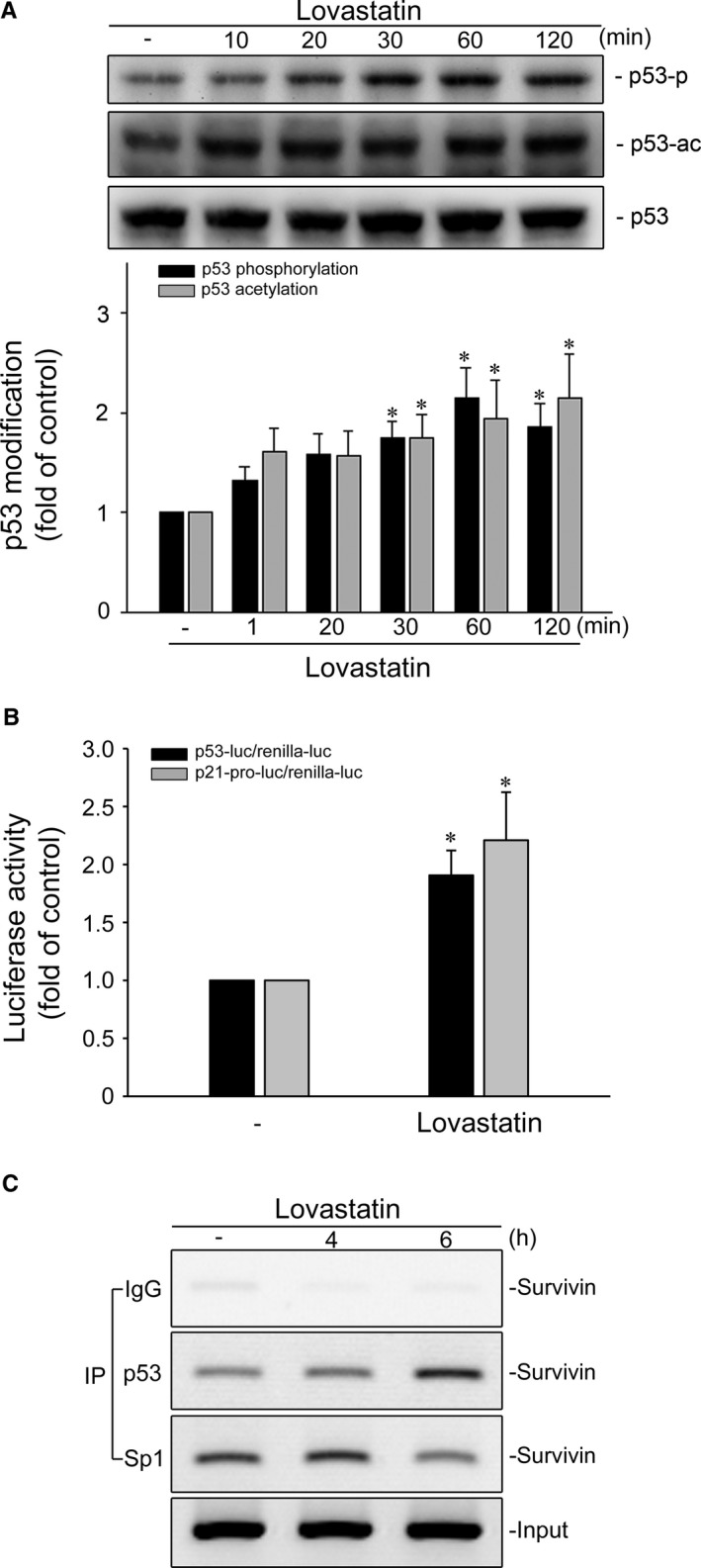
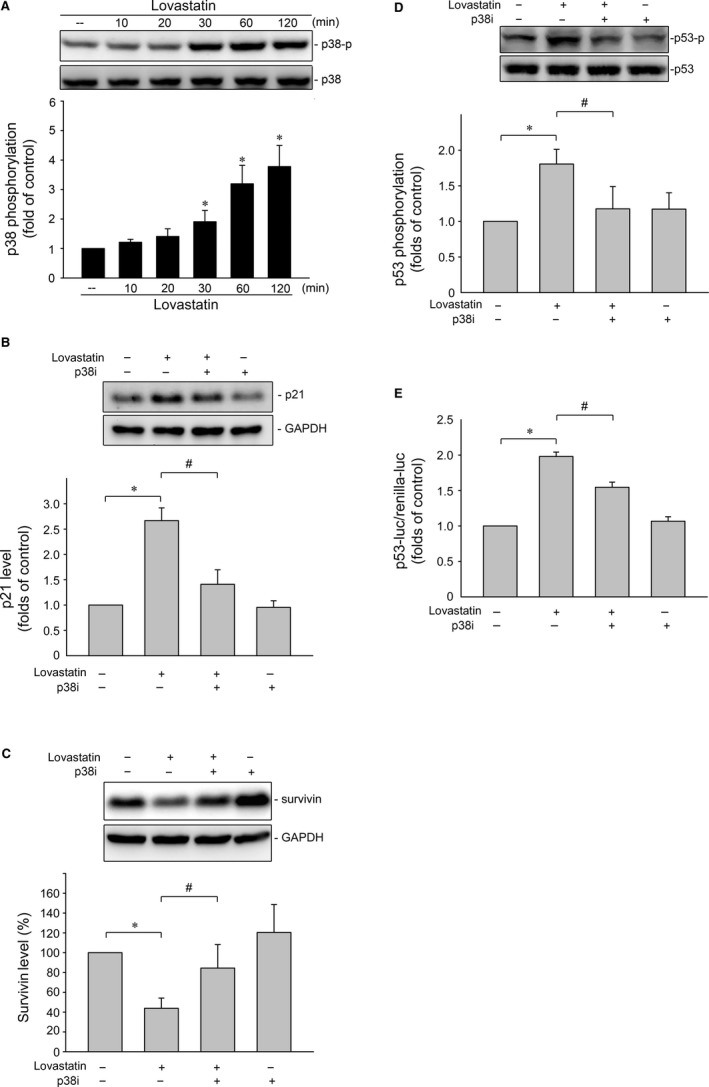
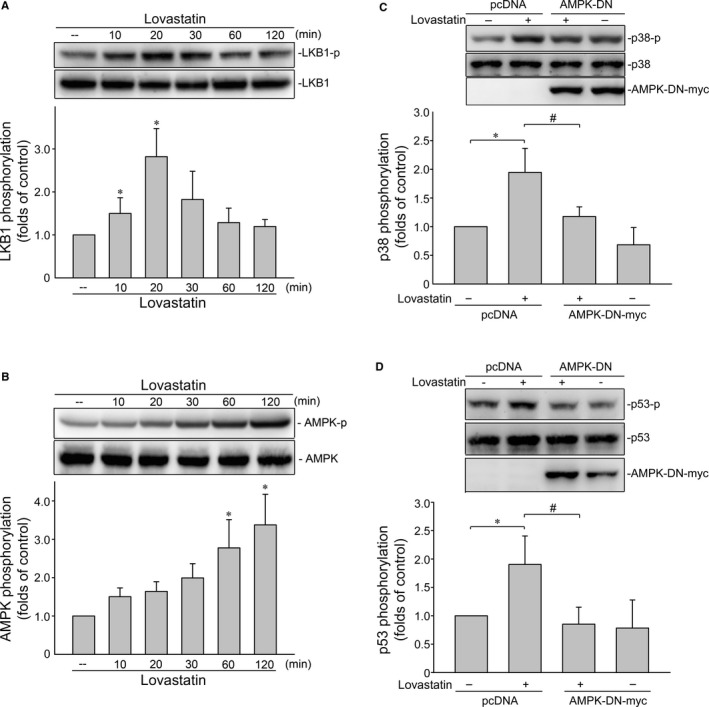
There is increasing evidence that statins, which are widely used in lowering serum cholesterol and the incidence of cardiovascular diseases, also exhibits anti-tumour properties. The underlying mechanisms by which statins-induced cancer cell death, however, remain incompletely understood. In this study, we explored the anti-tumour mechanisms of a lipophilic statin, lovastatin, in MCF-7 breast cancer cells. Lovastatin inhibited cell proliferation and induced cell apoptosis. Lovastatin caused p21 elevation while reduced cyclin D1 and survivin levels. Lovastatin also increased p53 phosphorylation, acetylation and its reporter activities. Results from chromatin immunoprecipitation analysis showed that p53 binding to the survivin promoter region was increased, while Sp1 binding to the region was decreased, in MCF-7 cells after lovastatin exposure. These actions were associated with liver kinase B1 (LKB1), AMP-activated protein kinase (AMPK) and p38 mitogen-activated protein kinase (p38MAPK) activation. Lovastatin's enhancing effects on p53 activation, p21 elevation and survivin reduction were significantly reduced in the presence of p38MAPK signalling inhibitor. Furthermore, LKB1-AMPK signalling blockade abrogated lovastatin-induced p38MAPK and p53 phosphorylation. Together these results suggest that lovastatin may activate LKB1-AMPK-p38MAPK-p53-survivin cascade to cause MCF-7 cell death. The present study establishes, at least in part, the signalling cascade by which lovastatin induces breast cancer cell death.
越来越多的证据表明,他汀类药物被广泛用于降低血清胆固醇和心血管疾病的发病率,同时也具有抗肿瘤特性。然而,他汀类药物诱导癌细胞死亡的潜在机制仍不完全清楚。在这项研究中,我们探讨了亲脂性他汀类药物洛伐他汀在 MCF-7 乳腺癌细胞中的抗肿瘤机制。洛伐他汀抑制细胞增殖并诱导细胞凋亡。洛伐他汀引起 p21 升高,同时降低 cyclin D1 和 survivin 水平。洛伐他汀还增加了 p53 的磷酸化、乙酰化及其报告基因活性。染色质免疫沉淀分析的结果表明,洛伐他汀处理 MCF-7 细胞后,p53 与 survivin 启动子区域的结合增加,而 Sp1 与该区域的结合减少。这些作用与肝激酶 B1(LKB1)、AMP 激活的蛋白激酶(AMPK)和 p38 丝裂原激活蛋白激酶(p38MAPK)的激活有关。在存在 p38MAPK 信号抑制剂的情况下,洛伐他汀对 p53 激活、p21 升高和 survivin 减少的增强作用显著降低。此外,LKB1-AMPK 信号通路阻断消除了洛伐他汀诱导的 p38MAPK 和 p53 磷酸化。这些结果表明,洛伐他汀可能通过激活 LKB1-AMPK-p38MAPK-p53-survivin 级联反应导致 MCF-7 细胞死亡。本研究至少部分确定了洛伐他汀诱导乳腺癌细胞死亡的信号通路。