Laboratory for Bone Repair, Rambam Health Care Campus, Haifa, Israel.
Department of Periodontology, School of Graduate Dentistry, Rambam Health Care Campus, Haifa, Israel.
Sci Rep. 2019 Dec 11;9(1):18896. doi: 10.1038/s41598-019-55383-5.
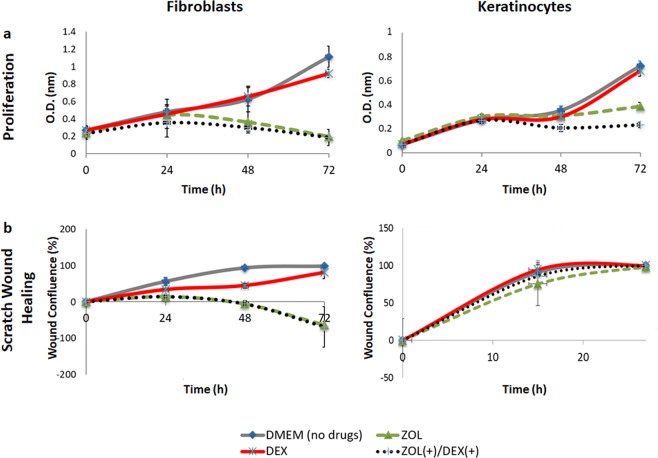
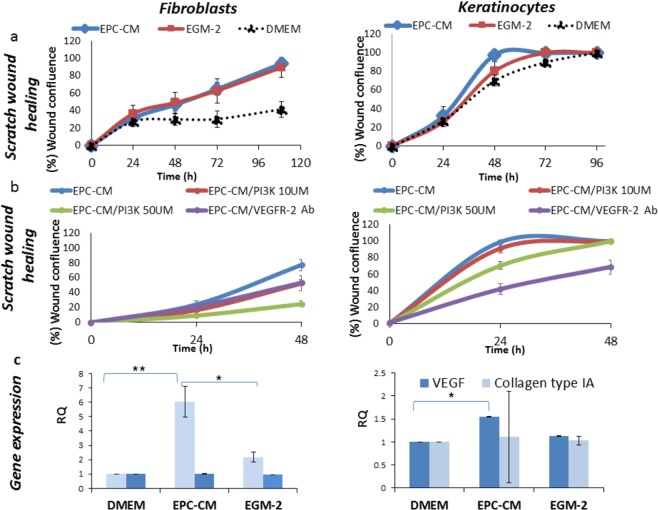
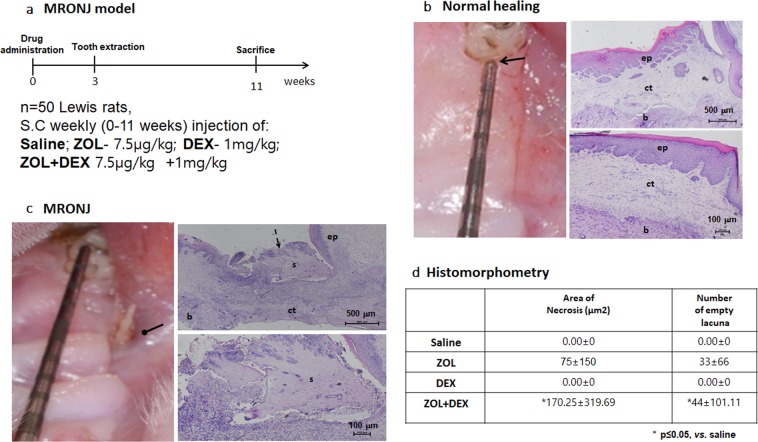
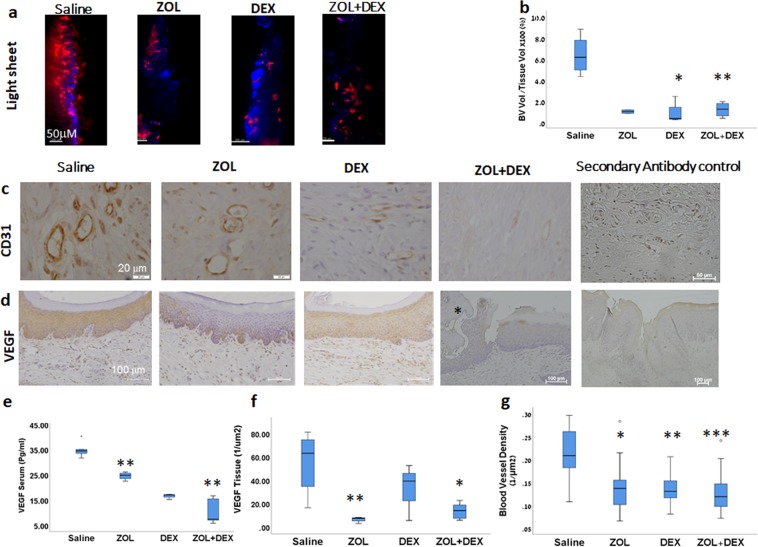
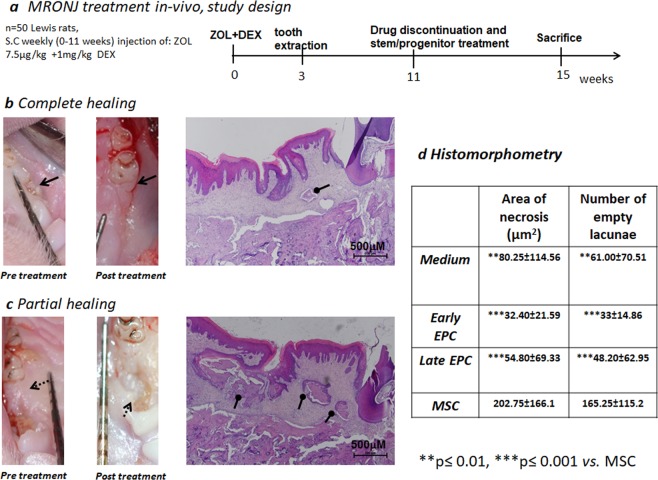
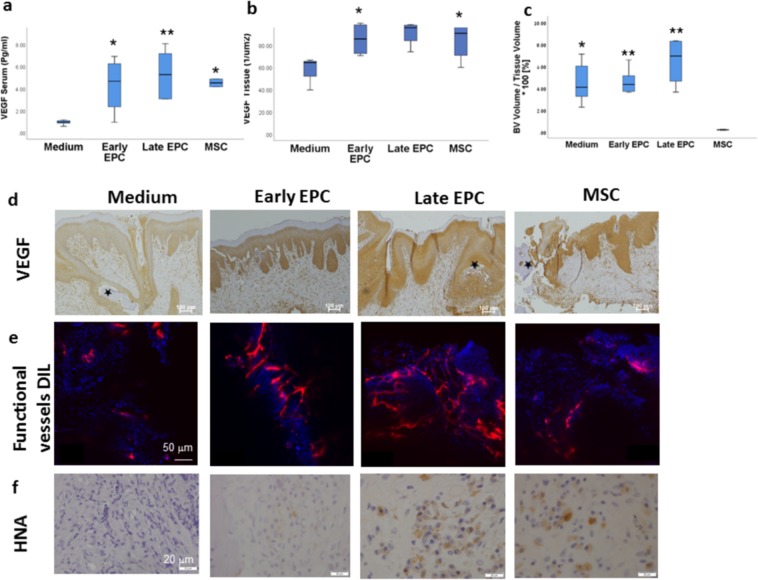
Medication-related osteonecrosis of the jaw (MRONJ) is a serious adverse effect of antiresorptive and antiangiogenic therapies. MRONJ is identified by chronic wounds in the oral mucosa associated with exposed necrotic bone. We hypothesized that zoledronic acid (ZOL) impairs keratinocyte and fibroblast function and reduces soft tissue vascularization; therefore, treating MRONJ with proangiogenic cells may benefit MRONJ patients. The effect of ZOL and dexamethasone (DEX) on gingival fibroblasts and keratinocytes was investigated. In-vitro, ZOL inhibited fibroblast and keratinocyte proliferation, delaying scratch healing. In-vivo, exposed bone was detected at tooth extraction sites, mainly in ZOL(+)/DEX(+) rats; and was associated with significantly decreased soft tissue vascularization, serum-VEGF, and tissue-VEGF. Local injection of early and late endothelial progenitor cells (EPCs) healed 13 of 14 MRONJ lesions compared with 2/7 lesions in the mesenchymal stem cells, and 2/6, in culture-medium group. The EPCs reduced necrotic bone area, increased serum and tissue VEGF levels. EPCs engraftment was minimal, suggesting their paracrine role in MRONJ healing. The EPC-conditioned medium improved scratch healing of keratinocytes and fibroblasts via VEGF pathway and elevated mRNA of VEGFA and collagen1A1. In conclusion, a novel MRONJ treatment with EPCs, increased vascularization and improved epithelial and fibroblast functions as well as cured the lesion.
药物相关性颌骨坏死(MRONJ)是抗吸收和抗血管生成治疗的严重不良反应。MRONJ 通过与暴露的坏死骨相关的口腔粘膜慢性创伤来识别。我们假设唑来膦酸(ZOL)会损害角质形成细胞和成纤维细胞的功能,并减少软组织血管化;因此,用促血管生成细胞治疗 MRONJ 可能使 MRONJ 患者受益。研究了 ZOL 和地塞米松(DEX)对牙龈成纤维细胞和角质形成细胞的影响。在体外,ZOL 抑制成纤维细胞和角质形成细胞的增殖,延迟划痕愈合。在体内,在牙齿拔除部位检测到暴露的骨,主要在 ZOL(+)/DEX(+)大鼠中;并且与软组织血管化、血清-VEGF 和组织-VEGF 显著减少相关。早期和晚期内皮祖细胞(EPC)的局部注射治愈了 14 例 MRONJ 病变中的 13 例,而间充质干细胞中的 2/7 例,培养物组中的 2/6 例。EPC 减少了坏死骨面积,增加了血清和组织 VEGF 水平。EPC 移植很少,表明它们在 MRONJ 愈合中的旁分泌作用。EPC 条件培养基通过 VEGF 途径改善了角质形成细胞和成纤维细胞的划痕愈合,并提高了 VEGFA 和胶原 1A1 的 mRNA。总之,用 EPC 治疗新的 MRONJ,增加了血管化,改善了上皮和成纤维细胞的功能,并治愈了病变。