The Texas Lung Injury Institute, Tyler, TX, USA.
Department of Cellular and Molecular Biology, The University of Texas Health Science Center at Tyler, Tyler, TX, USA.
Sci Rep. 2019 Dec 12;9(1):18925. doi: 10.1038/s41598-019-55176-w.
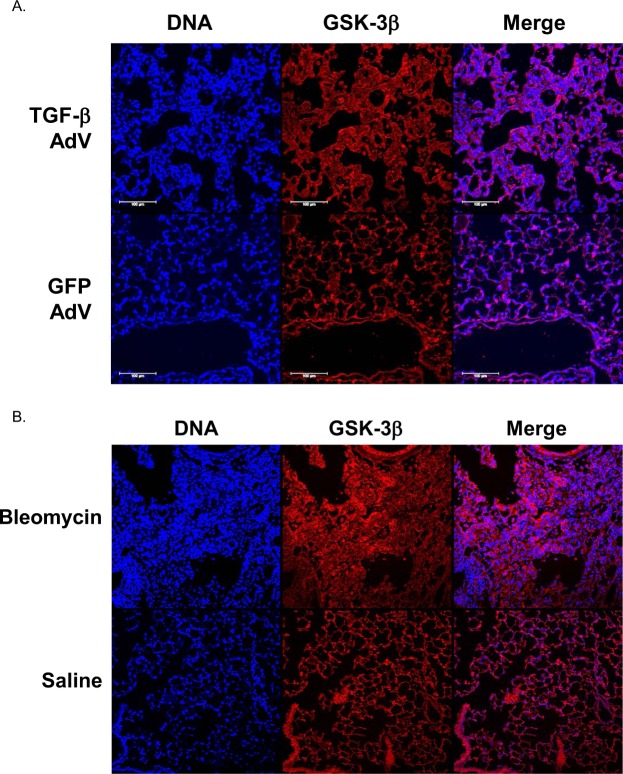
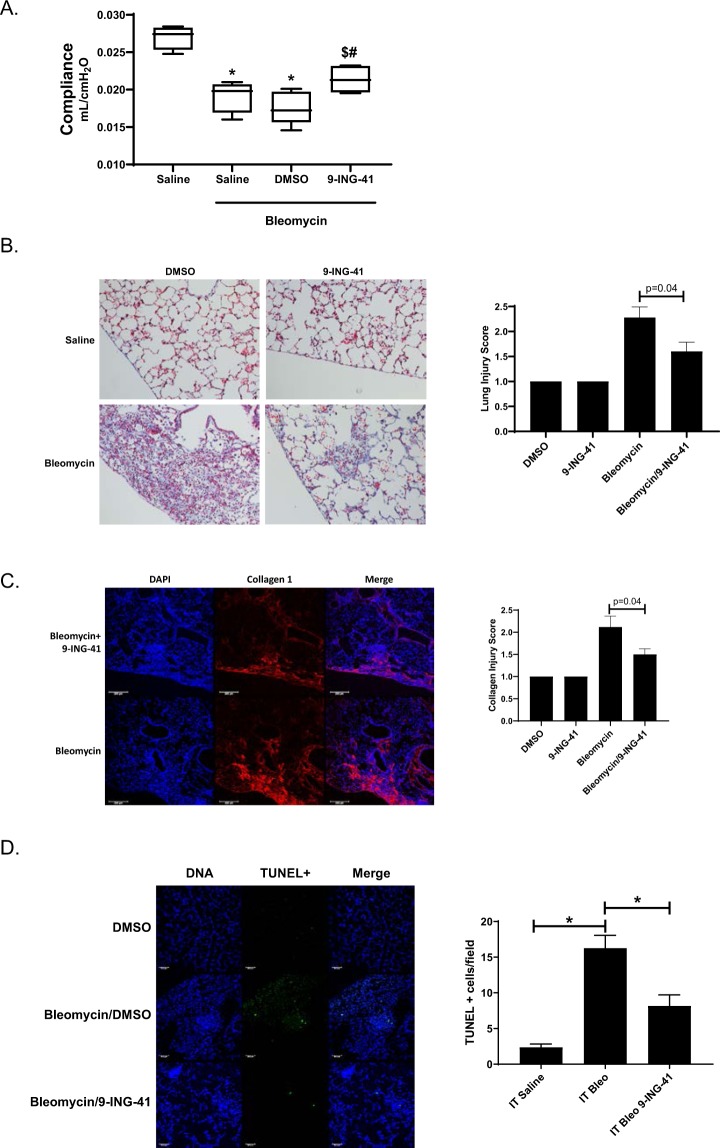
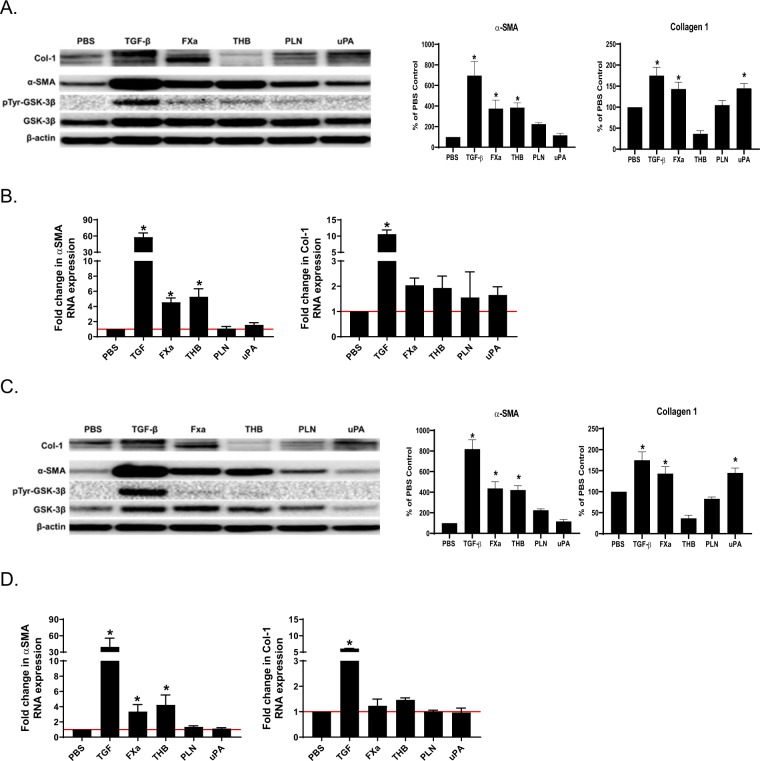
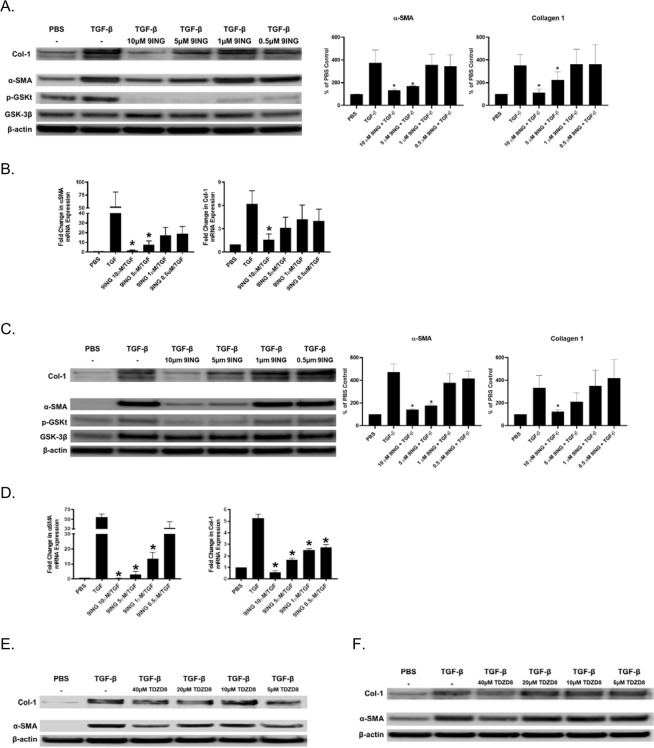
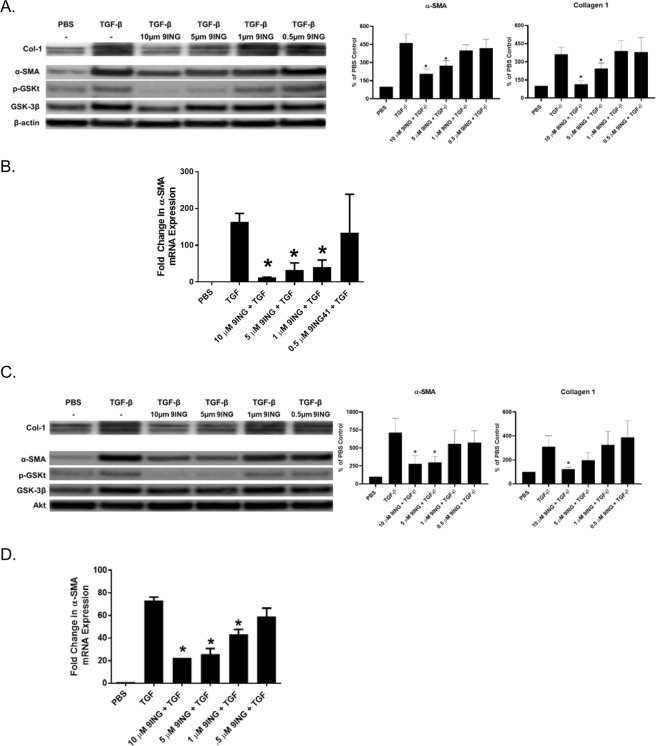
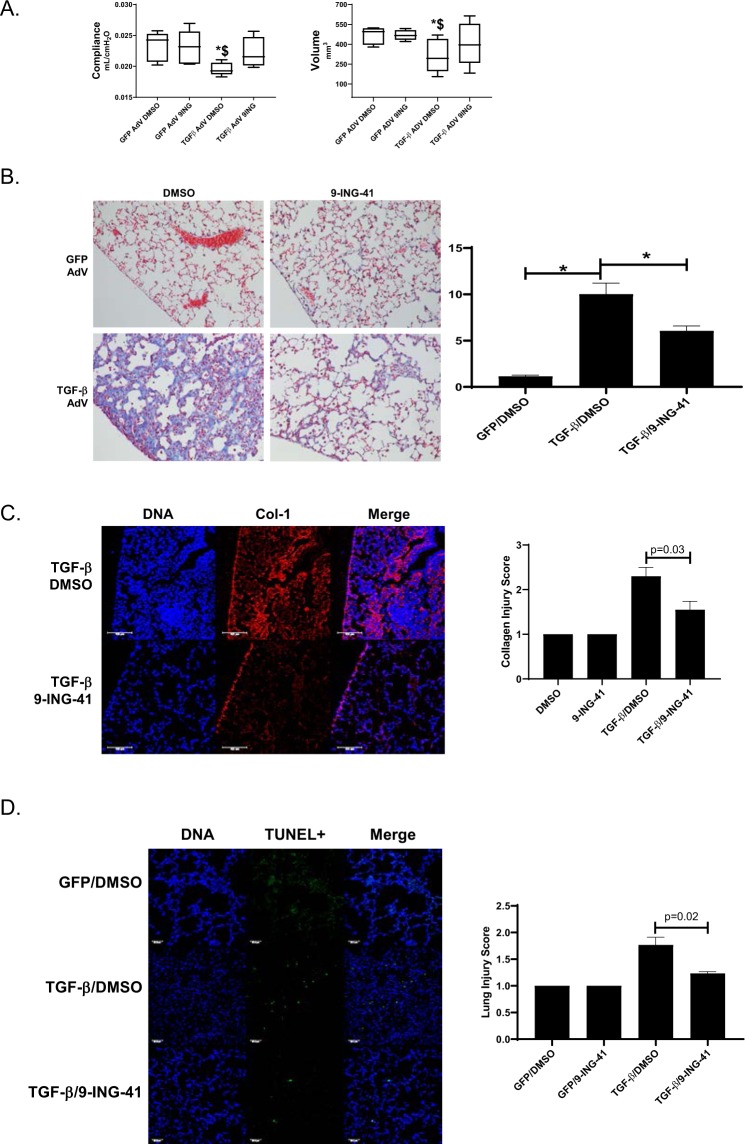
Idiopathic pulmonary fibrosis (IPF) is a progressive interstitial lung disease with a median survival of 3 years after diagnosis. Although the etiology of IPF is unknown, it is characterized by extensive alveolar epithelial cell apoptosis and proliferation of myofibroblasts in the lungs. While the origins of these myofibroblast appear to be diverse, fibroblast differentiation contributes to expansion of myofibroblasts and to disease progression. We found that agents that contribute to neomatrix formation and remodeling in pulmonary fibrosis (PF); TGF-β, Factor Xa, thrombin, plasmin and uPA all induced fibroblast/myofibroblast differentiation. These same mediators enhanced GSK-3β activation via phosphorylation of tyrosine-216 (p-Y216). Inhibition of GSK-3β signaling with the novel inhibitor 9-ING-41 blocked the induction of myofibroblast markers; α-SMA and Col-1 and reduced morphological changes of myofibroblast differentiation. In in vivo studies, the progression of TGF-β and bleomycin mediated PF was significantly attenuated by 9-ING-41 administered at 7 and 14 days respectively after the establishment of injury. Specifically, 9-ING-41 treatment significantly improved lung function (compliance and lung volumes; p < 0.05) of TGF-β adenovirus treated mice compared to controls. Similar results were found in mice with bleomycin-induced PF. These studies clearly show that activation of the GSK-3β signaling pathway is critical for the induction of myofibroblast differentiation in lung fibroblasts ex vivo and pulmonary fibrosis in vivo. The results offer a strong premise supporting the continued investigation of the GSK-3β signaling pathway in the control of fibroblast-myofibroblast differentiation and fibrosing lung injury. These data provide a strong rationale for extension of clinical trials of 9-ING-41 to patients with IPF.
特发性肺纤维化(IPF)是一种进行性间质性肺疾病,诊断后中位生存期为 3 年。虽然 IPF 的病因尚不清楚,但它的特征是广泛的肺泡上皮细胞凋亡和肺中成纤维细胞的肌成纤维细胞增生。虽然这些肌成纤维细胞的起源似乎多种多样,但成纤维细胞分化有助于肌成纤维细胞的扩张和疾病的进展。我们发现,在肺纤维化(PF)中有助于新生基质形成和重塑的因子;TGF-β、因子 Xa、凝血酶、纤溶酶和 uPA 都诱导成纤维细胞/肌成纤维细胞分化。这些相同的介质通过磷酸化酪氨酸-216(p-Y216)增强 GSK-3β 的激活。新型抑制剂 9-ING-41 抑制 GSK-3β 信号通路,阻断肌成纤维细胞标志物的诱导;α-SMA 和 Col-1,并减少肌成纤维细胞分化的形态变化。在体内研究中,9-ING-41 在 TGF-β 和博来霉素介导的 PF 建立后 7 天和 14 天分别给药,显著减轻了 PF 的进展。具体来说,与对照组相比,9-ING-41 治疗显著改善了 TGF-β 腺病毒处理小鼠的肺功能(顺应性和肺容积;p<0.05)。在博来霉素诱导的 PF 小鼠中也发现了类似的结果。这些研究清楚地表明,GSK-3β 信号通路的激活对于体外肺成纤维细胞中肌成纤维细胞分化和体内肺纤维化的诱导是至关重要的。这些结果为继续研究 GSK-3β 信号通路在控制成纤维细胞-肌成纤维细胞分化和纤维性肺损伤中的作用提供了强有力的前提。这些数据为将 9-ING-41 临床试验扩展到 IPF 患者提供了强有力的依据。