National Engineering Laboratory for Cereal Fermentation Technology (NELCF), School of Biotechnology, Jiangnan University, 1800 Lihu Road, Wuxi, Jiangsu 214122, China.
China-Canada Joint Lab of Food Nutrition and Health (Beijing), Beijing Technology & Business University, Beijing 100048, China, and.
G3 (Bethesda). 2020 Feb 6;10(2):479-488. doi: 10.1534/g3.119.400933.
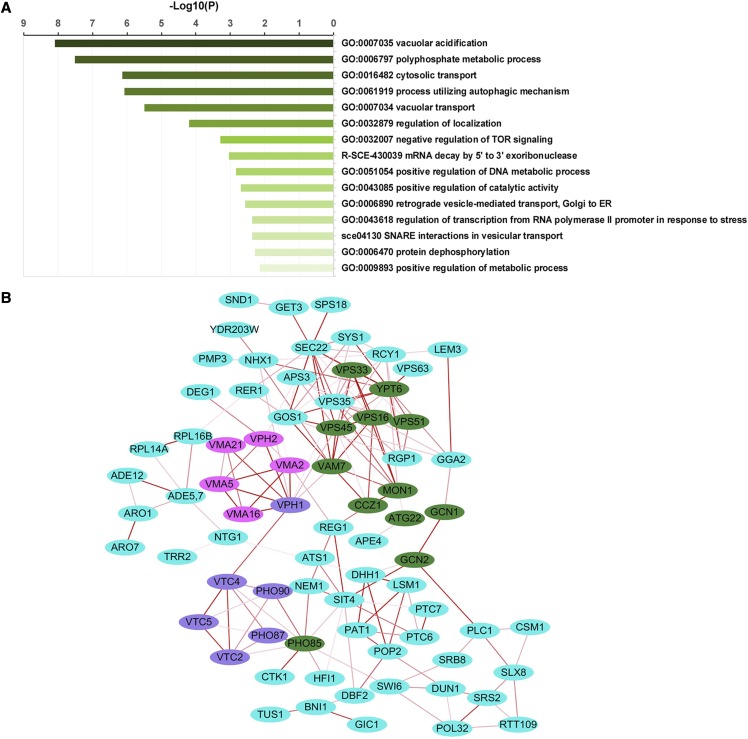
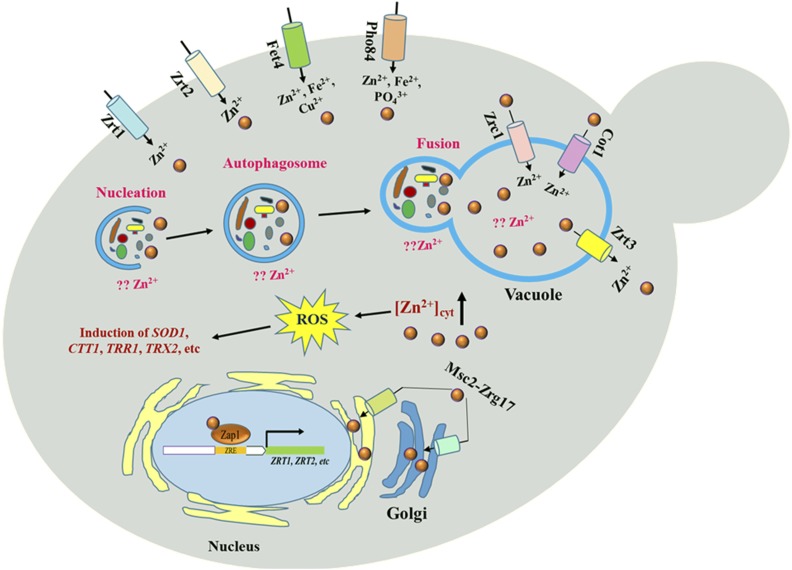
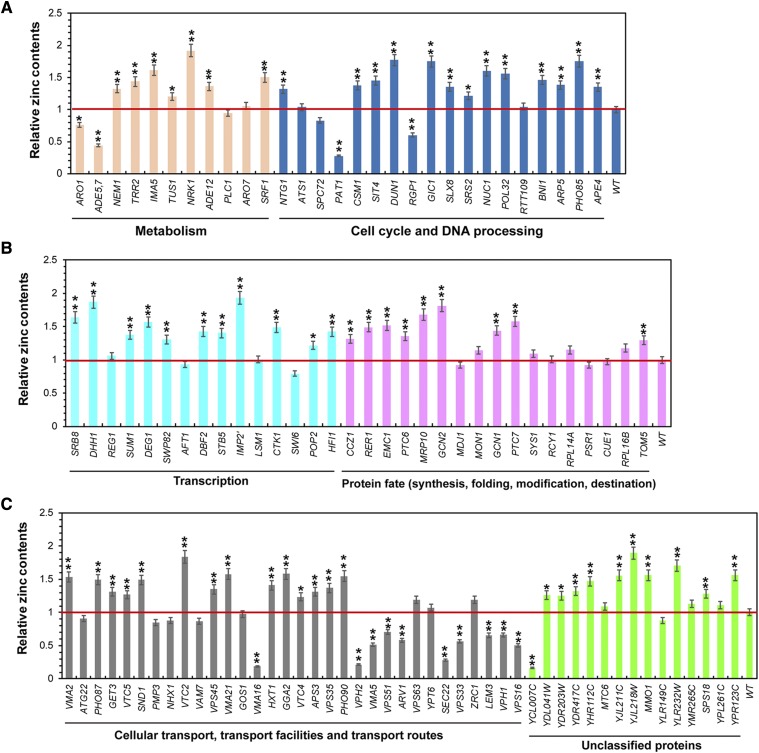
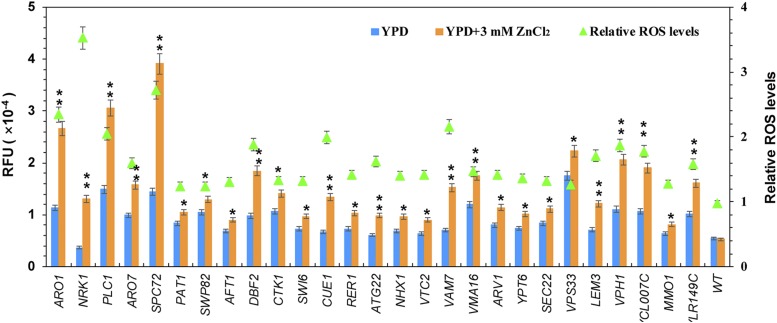
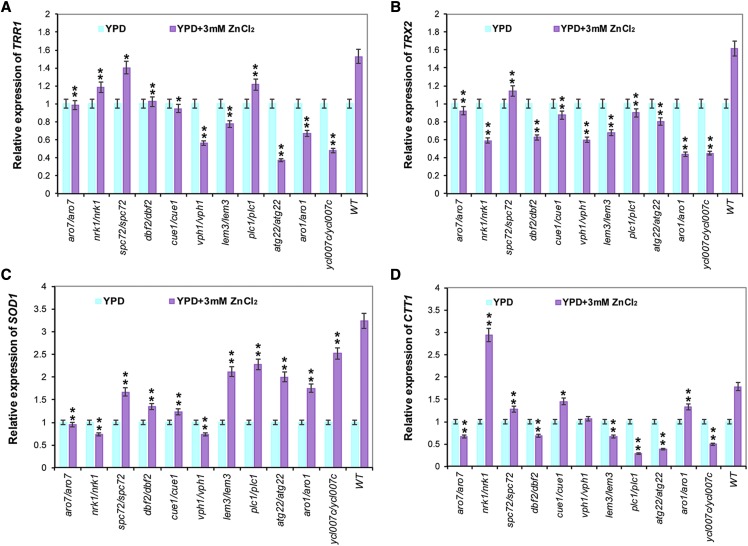
Zinc is essential for almost all living organisms, since it serves as a crucial cofactor for transcription factors and enzymes. However, it is toxic to cell growth when present in excess. The present work aims to investigate the toxicity mechanisms induced by zinc stress in yeast cells. To this end, 108 yeast single-gene deletion mutants were identified sensitive to 6 mM ZnCl through a genome-wide screen. These genes were predominantly related to the biological processes of vacuolar acidification and transport, polyphosphate metabolic process, cytosolic transport, the process utilizing autophagic mechanism. A result from the measurement of intracellular zinc content showed that 64 mutants accumulated higher intracellular zinc under zinc stress than the wild-type cells. We further measured the intracellular ROS (reactive oxygen species) levels of 108 zinc-sensitive mutants treated with 3 mM ZnCl We showed that the intracellular ROS levels in 51 mutants were increased by high zinc stress, suggesting their possible involvement in regulating ROS homeostasis in response to high zinc. The results also revealed that excess zinc could generate oxidative damage and then activate the expression of several antioxidant defenses genes. Taken together, the data obtained indicated that excess zinc toxicity might be mainly due to the high intracellular zinc levels and ROS levels induced by zinc stress in yeast cells. Our current findings would provide a basis to understand the molecular mechanisms of zinc toxicity in yeast cells.
锌是几乎所有生物都必需的,因为它是转录因子和酶的关键辅助因子。然而,当锌过量存在时,它对细胞生长是有毒的。本工作旨在研究锌胁迫在酵母细胞中诱导的毒性机制。为此,通过全基因组筛选,鉴定了 108 个对 6mM ZnCl2 敏感的酵母单基因缺失突变体。这些基因主要与液泡酸化和运输、多磷酸盐代谢过程、细胞质运输、利用自噬机制的过程等生物学过程有关。细胞内锌含量的测量结果表明,在锌胁迫下,64 个突变体比野生型细胞积累了更高的细胞内锌。我们进一步测量了 108 个锌敏感突变体在 3mM ZnCl2 处理下的细胞内 ROS(活性氧)水平。我们发现,高锌应激下 51 个突变体的细胞内 ROS 水平升高,表明它们可能参与调节 ROS 稳态以应对高锌。结果还表明,过量的锌可能会产生氧化损伤,然后激活几种抗氧化防御基因的表达。总之,所得数据表明,过量锌的毒性可能主要是由于锌胁迫诱导酵母细胞内高细胞内锌水平和 ROS 水平所致。我们目前的研究结果将为理解酵母细胞中锌毒性的分子机制提供基础。