Centre for Statistics, Data Science Institute, Hasselt University, Agoralaan, Building D, B-3590, Diepenbeek, Belgium.
Centre for Environmental Sciences, Faculty of Sciences, Hasselt University, Agoralaan, Building D, B-3590, Diepenbeek, Belgium.
Sci Rep. 2019 Dec 13;9(1):19122. doi: 10.1038/s41598-019-55593-x.
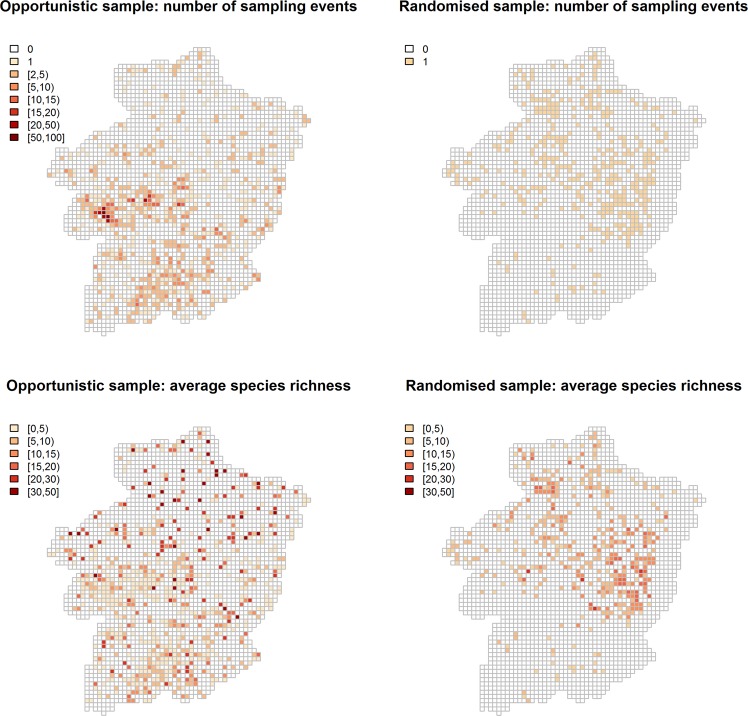
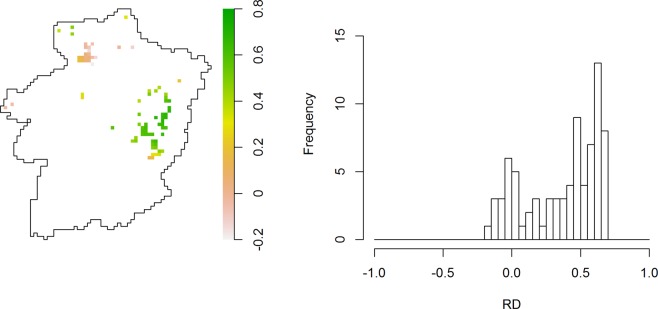
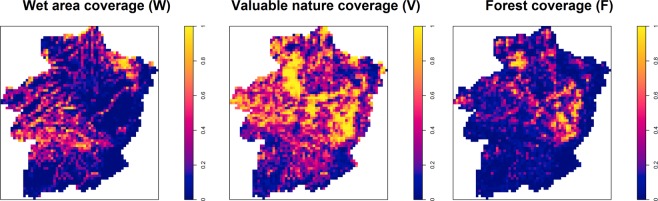
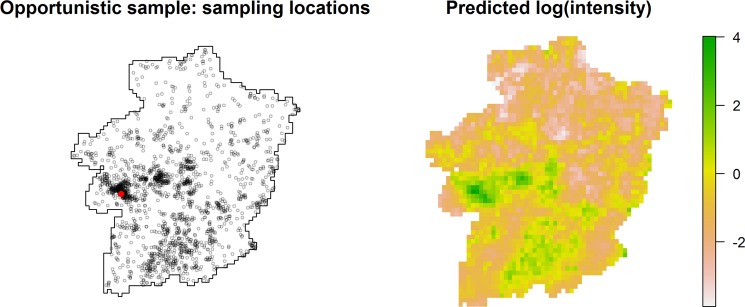
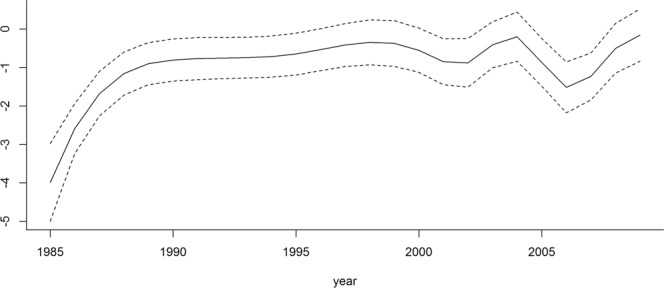
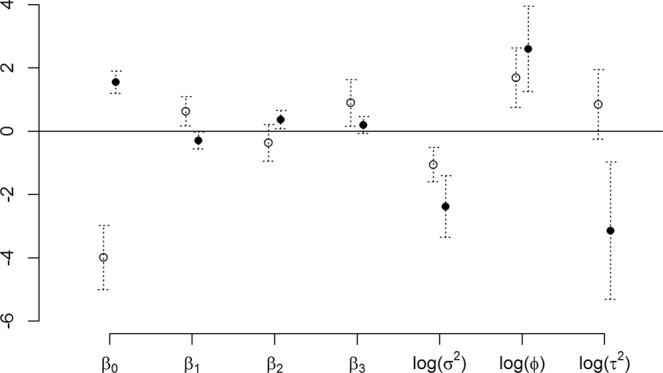
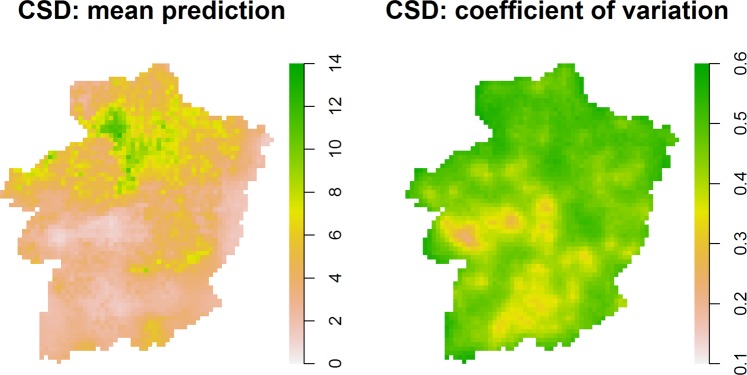
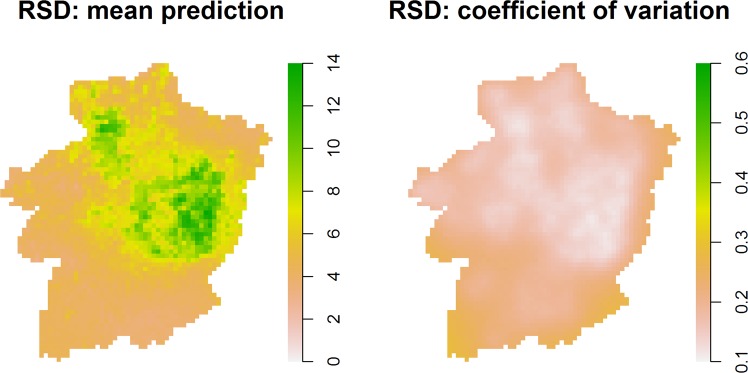
In species richness studies, citizen-science surveys where participants make individual decisions regarding sampling strategies provide a cost-effective approach to collect a large amount of data. However, it is unclear to what extent the bias inherent to opportunistically collected samples may invalidate our inferences. Here, we compare spatial predictions of forest ground-floor bryophyte species richness in Limburg (Belgium), based on crowd- and expert-sourced data, where the latter are collected by adhering to a rigorous geographical randomisation and data collection protocol. We develop a log-Gaussian Cox process model to analyse the opportunistic sampling process of the crowd-sourced data and assess its sampling bias. We then fit two geostatistical Poisson models to both data-sets and compare the parameter estimates and species richness predictions. We find that the citizens had a higher propensity for locations that were close to their homes and environmentally more valuable. The estimated effects of ecological predictors and spatial species richness predictions differ strongly between the two geostatistical models. Unknown inconsistencies in the sampling process, such as unreported observer's effort, and the lack of a hypothesis-driven study protocol can lead to the occurrence of multiple sources of sampling bias, making it difficult, if not impossible, to provide reliable inferences.
在物种丰富度研究中,参与者针对采样策略做出个体决策的公民科学调查为收集大量数据提供了一种具有成本效益的方法。然而,我们尚不清楚机会主义收集样本中固有的偏差在何种程度上会使我们的推断失效。在这里,我们比较了基于众包和专家数据的比利时林堡(Limburg)森林底层苔藓物种丰富度的空间预测,后者是通过严格遵守地理随机化和数据收集协议收集的。我们开发了一个对数高斯柯克斯过程模型来分析众包数据的机会性采样过程,并评估其采样偏差。然后,我们将两个地统计学泊松模型拟合到两个数据集,并比较参数估计和物种丰富度预测。我们发现,公民更倾向于离家较近且环境价值较高的地点。两个地统计学模型中,生态预测因子和空间物种丰富度预测的估计效应差异很大。采样过程中存在未知的不一致性,例如未报告的观测者努力,以及缺乏假设驱动的研究协议,这可能导致多种采样偏差的发生,使得提供可靠推断变得困难(如果不是不可能的话)。