Department of Oncology, Cancer Prevention Research Center, Isfahan University of Medical Sciences, Isfahan, 81746-73461, Iran.
Department of Medical Physics and Radiotherapy, Arak University of Medical Sciences, Arak, 38481-76941, Iran.
Sci Rep. 2019 Dec 16;9(1):19161. doi: 10.1038/s41598-019-55605-w.
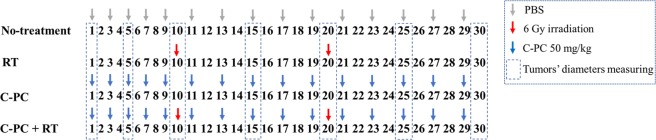
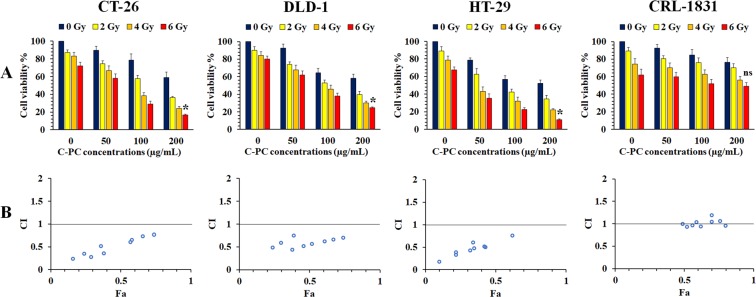
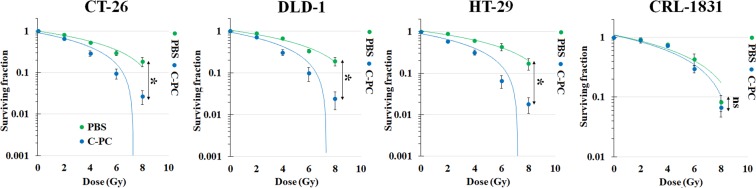
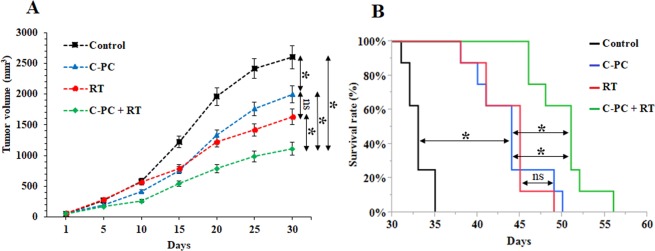
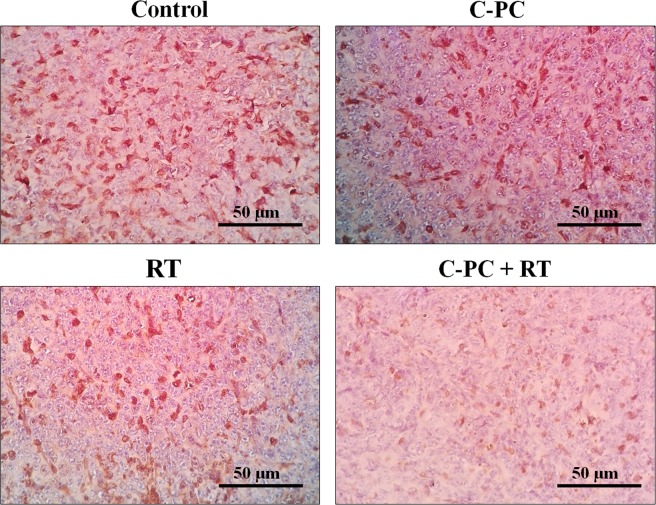
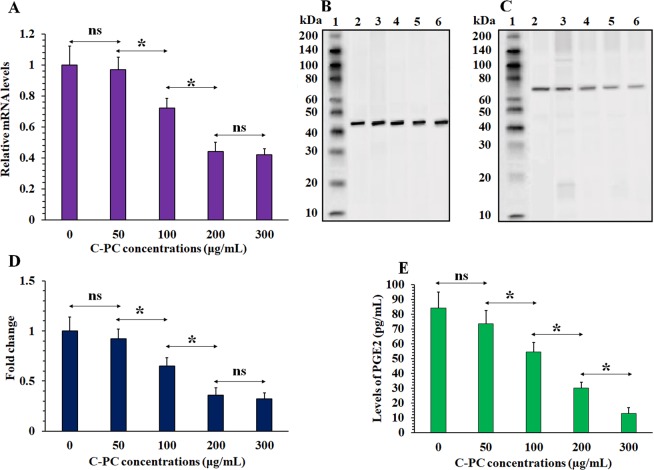
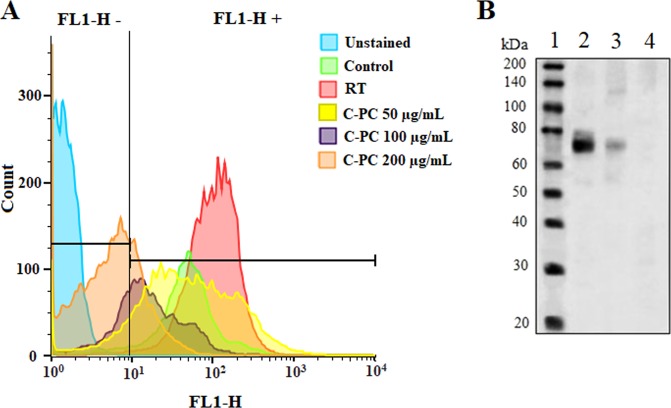
Different chemical and nanomaterial agents have been introduced for radiosensitizing purposes. However, many researchers believe these agents are far away from clinical application due to side effects and limited knowledge about their behavior in the human body. In this study, C-phycocyanin (C-PC) was used as a natural radiosensitizer for enhancement of radiation therapy (RT) efficacy. C-PC treatment's effect on the COX-2 expression of cancer cells was investigated by flow cytometry, western blot, qRT-PCR analyses in vitro and in vivo. Subsequently, the radiosensitizing effect of C-PC treatment was investigated by MTT and clonogenic cell survival assays for CT-26, DLD-1, HT-29 colon cancer cell lines and the CRL-1831 as normal colonic cells. In addition, the C-PC treatment effect on the radiation therapy efficacy was evaluated according to CT-26 tumor's growth progression and immunohistochemistry analyses of Ki-67 labeling index. C-PC treatment (200 µg/mL) could significantly enhance the radiation therapy efficacy in vitro and in vivo. Synergistic interaction was detected at C-PC and radiation beams co-treatment based on Chou and Talalay formula (combination index <1), especially at 200 µg/mL C-PC and 6 Gy radiation dosages. The acquired DEF of C-PC treatment was 1.39, 1.4, 1.63, and 1.05 for CT-26, DLD-1, HT-29, and CRL-1831 cells, respectively. Also, C-PC + RT treated mice exhibited 35.2% lower mean tumors' volume and about 6 days more survival time in comparison with the RT group (P < 0.05). In addition, C-PC + RT group exhibited 54% lower Ki-67 index in comparison with the RT group. Therefore, C-PC can exhibit high radiosensitizing effects. However, the potential cardiovascular risks of C-PC as a COX-2 inhibitor should be evaluated with extensive preclinical testing before developing this agent for clinical trials.
不同的化学和纳米材料试剂已被引入以实现放射增敏。然而,由于副作用和对其在人体中行为的了解有限,许多研究人员认为这些试剂离临床应用还很远。在本研究中,C-藻蓝蛋白(C-PC)被用作天然放射增敏剂,以增强放射治疗(RT)的疗效。通过流式细胞术、western blot、qRT-PCR 分析在体外和体内研究了 C-PC 处理对癌细胞 COX-2 表达的影响。随后,通过 MTT 和克隆形成细胞存活测定研究了 C-PC 处理对 CT-26、DLD-1、HT-29 结肠癌细胞系和 CRL-1831 作为正常结肠细胞的放射增敏作用。此外,根据 CT-26 肿瘤生长进展和 Ki-67 标记指数的免疫组织化学分析,评估了 C-PC 处理对放射治疗疗效的影响。C-PC 处理(200μg/ml)可显著增强体外和体内放射治疗的疗效。基于 Chou 和 Talalay 公式(组合指数<1)检测到 C-PC 和放射束联合治疗的协同作用,特别是在 200μg/ml C-PC 和 6Gy 辐射剂量下。C-PC 处理的获得的 DEF 分别为 CT-26、DLD-1、HT-29 和 CRL-1831 细胞的 1.39、1.4、1.63 和 1.05。此外,与 RT 组相比,C-PC+RT 处理的小鼠的平均肿瘤体积降低了 35.2%,存活时间延长了约 6 天(P<0.05)。此外,与 RT 组相比,C-PC+RT 组的 Ki-67 指数降低了 54%。因此,C-PC 可以表现出很高的放射增敏作用。然而,在开发该药物进行临床试验之前,应通过广泛的临床前测试评估 C-PC 作为 COX-2 抑制剂的潜在心血管风险。