Department of Oncology-Pathology, Karolinska Institutet, BioClinicum, Solna, 171 64, Sweden.
Department of Urology, Erasmus Medical Centre, Rotterdam, The Netherlands.
Sci Rep. 2019 Dec 18;9(1):19384. doi: 10.1038/s41598-019-55526-8.
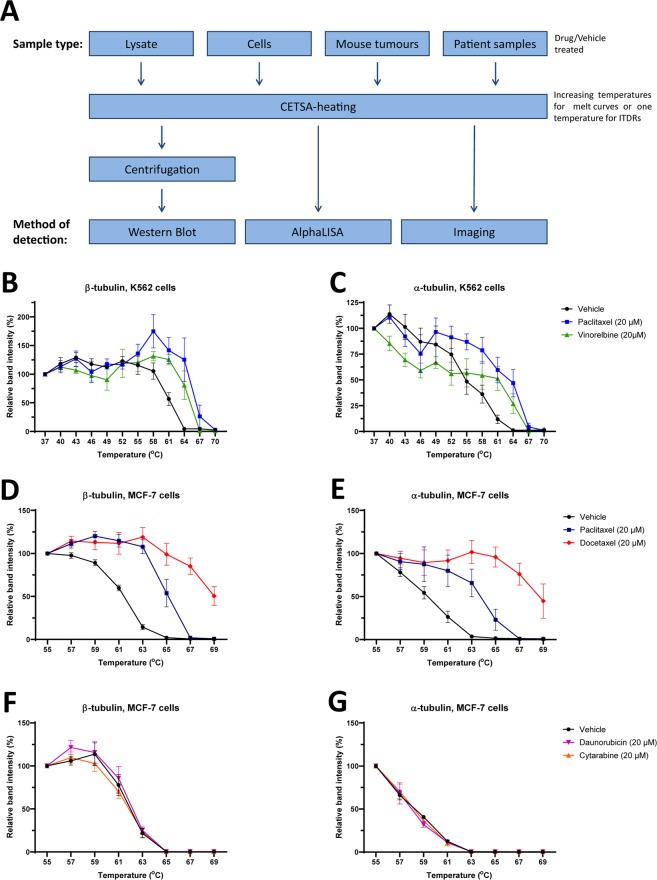
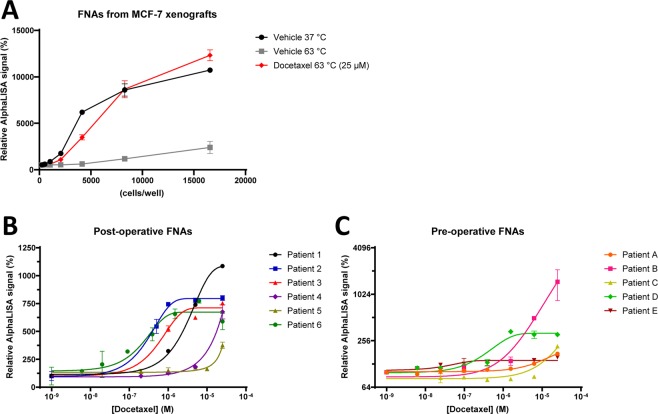
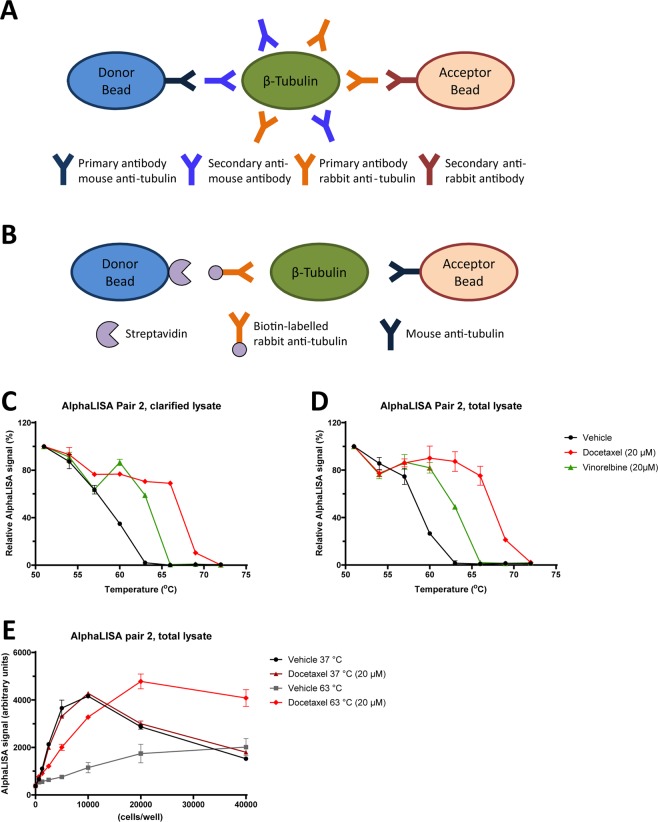
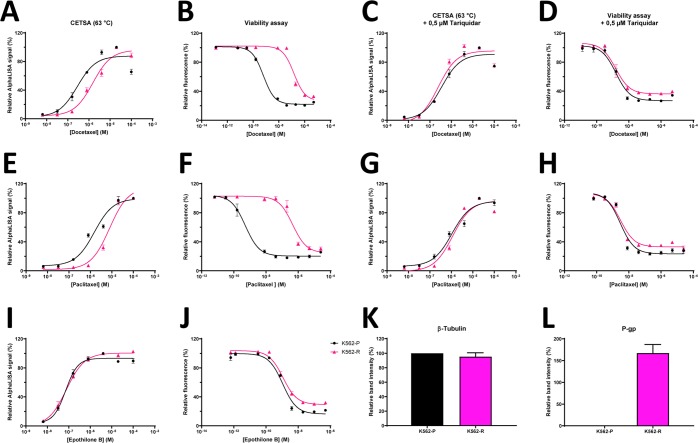
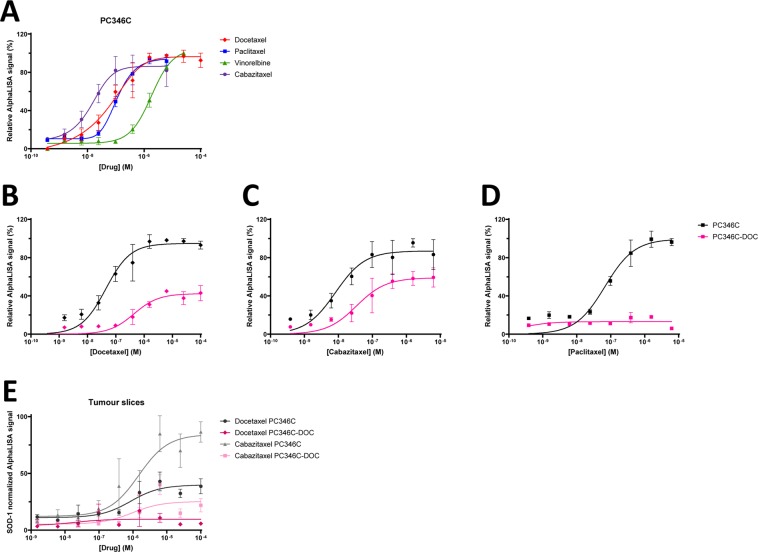
The use of taxanes has for decades been crucial for treatment of several cancers. A major limitation of these therapies is inherent or acquired drug resistance. A key to improved outcome of taxane-based therapies is to develop tools to predict and monitor drug efficacy and resistance in the clinical setting allowing for treatment and dose stratification for individual patients. To assess treatment efficacy up to the level of drug target engagement, we have established several formats of tubulin-specific Cellular Thermal Shift Assays (CETSAs). This technique was evaluated in breast and prostate cancer models and in a cohort of breast cancer patients. Here we show that taxanes induce significant CETSA shifts in cell lines as well as in animal models including patient-derived xenograft (PDX) models. Furthermore, isothermal dose response CETSA measurements allowed for drugs to be rapidly ranked according to their reported potency. Using multidrug resistant cancer cell lines and taxane-resistant PDX models we demonstrate that CETSA can identify taxane resistance up to the level of target engagement. An imaging-based CETSA format was also established, which in principle allows for taxane target engagement to be accessed in specific cell types in complex cell mixtures. Using a highly sensitive implementation of CETSA, we measured target engagement in fine needle aspirates from breast cancer patients, revealing a range of different sensitivities. Together, our data support that CETSA is a robust tool for assessing taxane target engagement in preclinical models and clinical material and therefore should be evaluated as a prognostic tool during taxane-based therapies.
几十年来,紫杉烷类药物的应用一直是治疗多种癌症的关键。这些疗法的一个主要局限性是固有或获得性耐药性。提高基于紫杉烷的治疗效果的关键是开发工具,以预测和监测临床环境中的药物疗效和耐药性,从而为个体患者进行治疗和剂量分层。为了评估治疗效果直至药物靶点结合水平,我们已经建立了几种微管蛋白特异性细胞热转移分析(CETSA)的格式。该技术在乳腺癌和前列腺癌模型以及乳腺癌患者队列中进行了评估。在这里,我们表明紫杉烷在细胞系以及动物模型(包括患者来源的异种移植(PDX)模型)中引起明显的 CETSA 位移。此外,等温剂量反应 CETSA 测量允许根据其报道的效力快速对药物进行排序。使用多药耐药性癌细胞系和紫杉烷耐药性 PDX 模型,我们证明 CETSA 可以识别直至靶点结合水平的紫杉烷耐药性。还建立了基于成像的 CETSA 格式,该格式原则上允许在复杂细胞混合物中的特定细胞类型中访问紫杉烷靶标结合。使用 CETSA 的高度敏感实施,我们测量了来自乳腺癌患者的细针抽吸物中的靶标结合,显示出不同的敏感性范围。总之,我们的数据支持 CETSA 是一种用于评估临床前模型和临床材料中紫杉烷靶标结合的强大工具,因此应作为基于紫杉烷的治疗中的预后工具进行评估。