Cardio-Oncology Program, Division of Cardiovascular Medicine, Department of Medicine, Lahey Hospital and Medical Center, Burlington, Massachusetts; Cardio-Oncology and Adult Cancer Survivorship Program, Dana Farber Cancer Institute, Boston, Massachusetts; Division of Cardiovascular Medicine, Department of Medicine, Brigham and Women's Hospital, Boston, Massachusetts.
Cardio-Oncology Program, Division of Cardiovascular Medicine, Department of Medicine, Abramson Cancer Center, University of Pennsylvania, Philadelphia, Pennsylvania.
J Am Coll Cardiol. 2019 Dec 24;74(25):3153-3163. doi: 10.1016/j.jacc.2019.10.049.
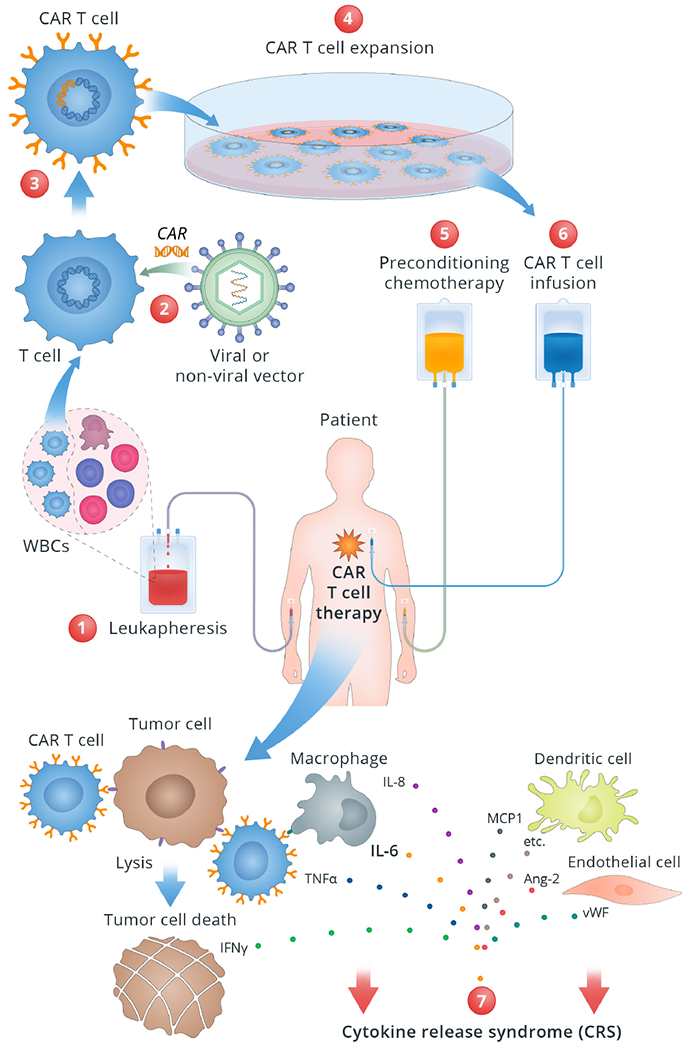
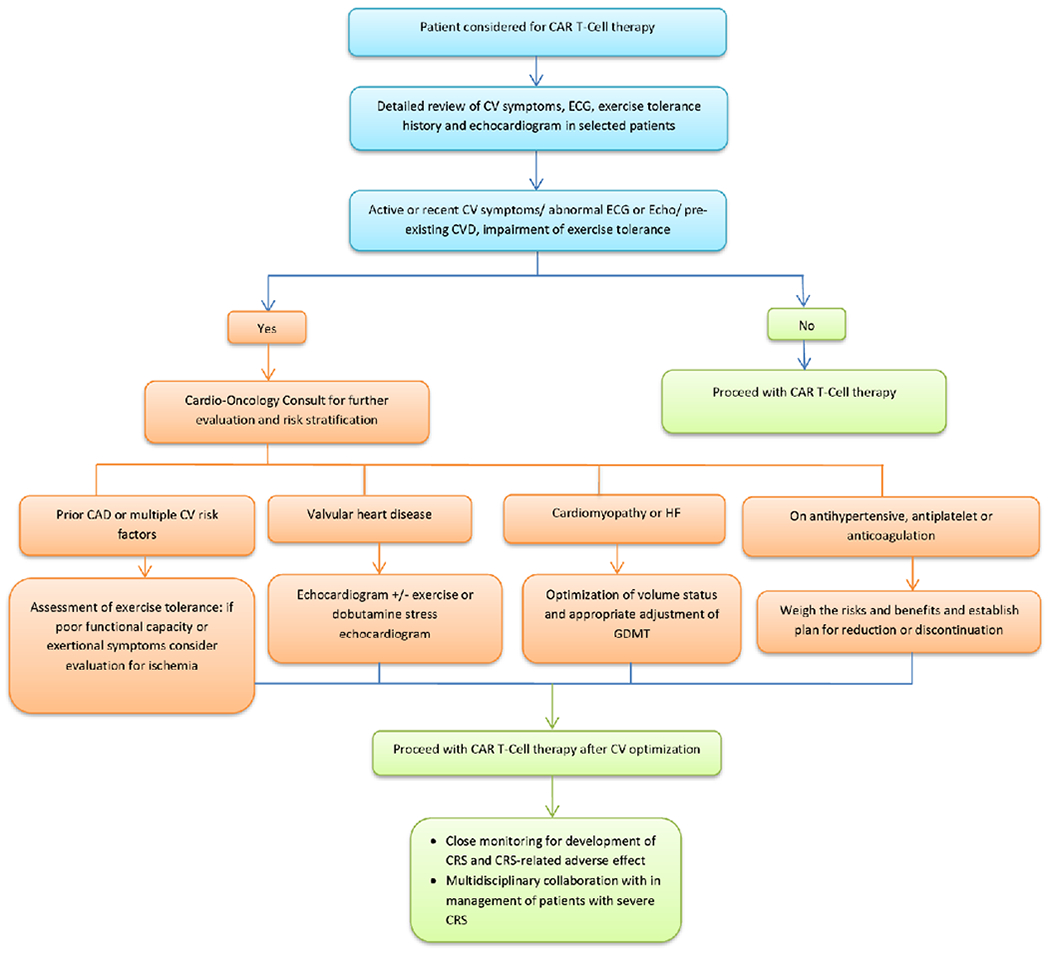
Chimeric antigen receptor (CAR) T-cell therapy has significantly advanced the treatment of patients with relapsed and refractory hematologic malignancies and is increasingly investigated as a therapeutic option of other malignancies. The main adverse effect of CAR T-cell therapy is potentially life-threatening cytokine release syndrome (CRS). Clinical cardiovascular (CV) manifestations of CRS include tachycardia, hypotension, troponin elevation, reduced left ventricular ejection fraction, pulmonary edema, and cardiogenic shock. Although insults related to CRS toxicity might be transient and reversible in most instances in patients with adequate CV reserve, they can be particularly challenging in higher-risk, often elderly patients with pre-existing CV disease. As the use of CAR T-cell therapy expands to include a wider patient population, careful patient selection, pre-treatment cardiac evaluation, and CV risk stratification should be considered within the CAR T-cell treatment protocol. Early diagnosis and management of CV complications in patients with CRS require awareness and multidisciplinary collaboration.
嵌合抗原受体 (CAR) T 细胞疗法显著改善了复发和难治性血液系统恶性肿瘤患者的治疗效果,并且越来越多地被探索作为其他恶性肿瘤的治疗选择。CAR T 细胞疗法的主要不良反应是潜在危及生命的细胞因子释放综合征 (CRS)。CRS 的临床心血管 (CV) 表现包括心动过速、低血压、肌钙蛋白升高、左心室射血分数降低、肺水肿和心源性休克。虽然在大多数情况下,具有足够 CV 储备的患者中,与 CRS 毒性相关的损伤可能是短暂和可逆的,但在存在预先存在的 CV 疾病的高风险、年龄较大的患者中,这些损伤可能特别具有挑战性。随着 CAR T 细胞疗法的应用范围扩大到更广泛的患者人群,应在 CAR T 细胞治疗方案中考虑仔细的患者选择、治疗前心脏评估和 CV 风险分层。早期诊断和管理 CRS 患者的 CV 并发症需要意识和多学科合作。