Department of Radiation and Medical Oncology, Zhongnan Hospital of Wuhan University, 169 Donghu Road, Wuhan, Hubei, 430070, People's Republic of China.
Hubei Radiotherapy Quality Control Center, Wuhan University, Wuhan, Hubei, China.
Radiat Oncol. 2019 Dec 27;14(1):238. doi: 10.1186/s13014-019-1433-7.
BACKGROUND & PURPOSE: Helical tomotherapy has been applied to total marrow irradiation (HT-TMI). Our objective was to apply failure mode and effects analysis (FMEA) two times separated by 1 year to evaluate and improve the safety of HT-TMI.
A multidisciplinary team was created. FMEA consists of 4 main steps: (1) Creation of a process map; (2) Identification of all potential failure mode (FM) in the process; (3) Evaluation of the occurrence (O), detectability (D) and severity of impact (S) of each FM according to a scoring criteria (1-10), with the subsequent calculation of the risk priority number (RPN=ODS) and (4) Identification of the feasible and effective quality control (QC) methods for the highest risks. A second FMEA was performed for the high-risk FMs based on the same risk analysis team in 1 year later.
A total of 39 subprocesses and 122 FMs were derived. First time RPN ranged from 3 to 264.3. Twenty-five FMs were defined as being high-risk, with the top 5 FMs (first RPN/ second RPN): (1) treatment couch movement failure (264.3/102.8); (2) section plan dose junction error in delivery (236.7/110.4); (3) setup check by megavoltage computed tomography (MVCT) failure (216.8/94.6); (4) patient immobilization error (212.5/90.2) and (5) treatment interruption (204.8/134.2). A total of 20 staff members participated in the study. The second RPN value of the top 5 high-risk FMs were all decreased.
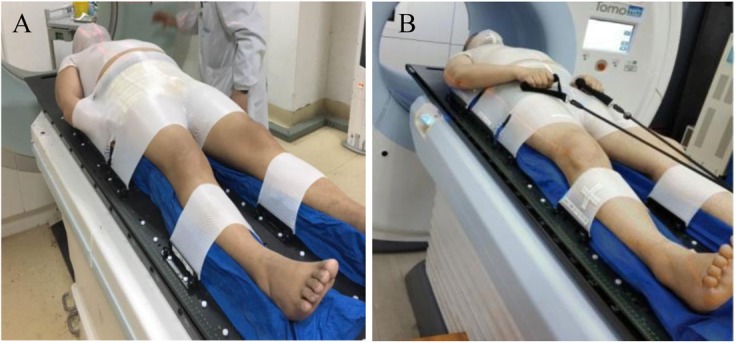
QC interventions were implemented based on the FMEA results. HT-TMI specific treatment couch tests; the arms immobilization methods and strategy of section plan dose junction in delivery were proved to be effective in the improvement of the safety.
螺旋断层放疗(HT)已应用于全骨髓照射(HT-TMI)。我们的目标是通过失败模式和影响分析(FMEA),每 1 年进行 2 次,评估和改进 HT-TMI 的安全性。
成立了一个多学科团队。FMEA 包括 4 个主要步骤:(1)创建流程图;(2)识别过程中所有潜在的失效模式(FM);(3)根据评分标准(1-10),对每个 FM 的发生(O)、可检测性(D)和影响严重性(S)进行评估,随后计算风险优先数(RPN=ODS);(4)确定最高风险的可行且有效的质量控制(QC)方法。1 年后,同一风险分析团队对高风险 FM 进行了第二次 FMEA。
共得出 39 个子过程和 122 个 FM。第一次 RPN 范围为 3 至 264.3。25 个 FM 被定义为高风险,前 5 个 FM(第一 RPN/第二 RPN)为:(1)治疗床运动故障(264.3/102.8);(2)在传输中部分计划剂量交界处的剂量误差(236.7/110.4);(3)兆伏 CT(MVCT)失败时的设置检查(216.8/94.6);(4)患者固定误差(212.5/90.2)和(5)治疗中断(204.8/134.2)。共有 20 名工作人员参与了研究。前 5 个高风险 FM 的第二 RPN 值均有所下降。
根据 FMEA 结果实施了 QC 干预措施。HT-TMI 特定的治疗床测试;手臂固定方法和部分计划剂量交界处的传输策略,被证明在提高安全性方面是有效的。