Schrittwieser Stefan, Haslinger Michael J, Mitteramskogler Tina, Mühlberger Michael, Shoshi Astrit, Brückl Hubert, Bauch Martin, Dimopoulos Theodoros, Schmid Barbara, Schotter Joerg
AIT Austrian Institute of Technology, Molecular Diagnostics, 1210 Vienna, Austria.
PROFACTOR GmbH, 4407 Steyr, Austria.
Nanomaterials (Basel). 2019 Dec 16;9(12):1790. doi: 10.3390/nano9121790.
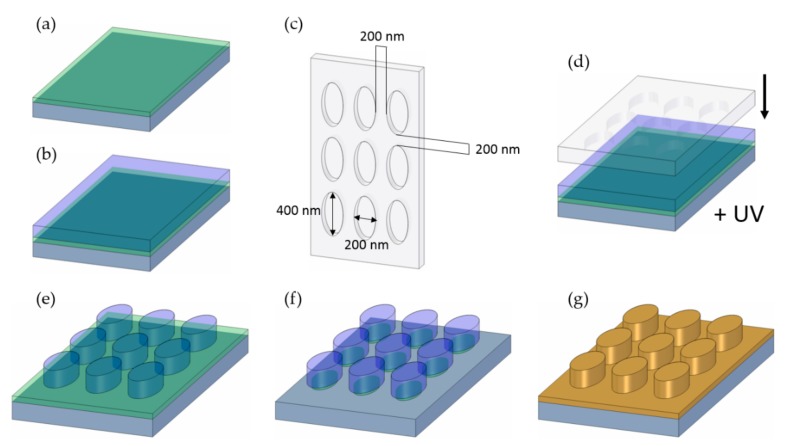
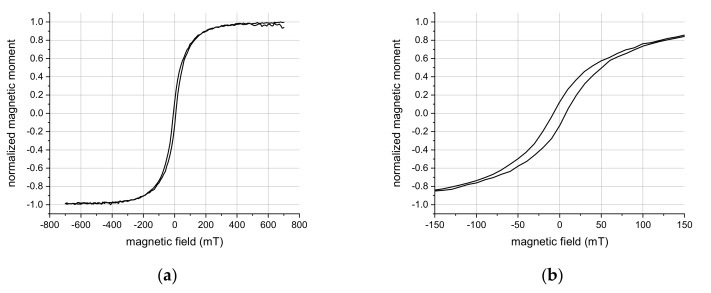
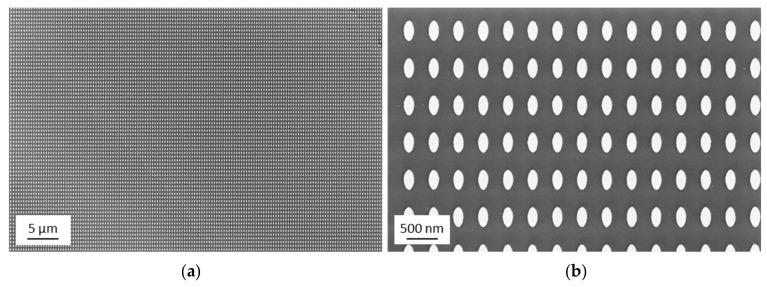
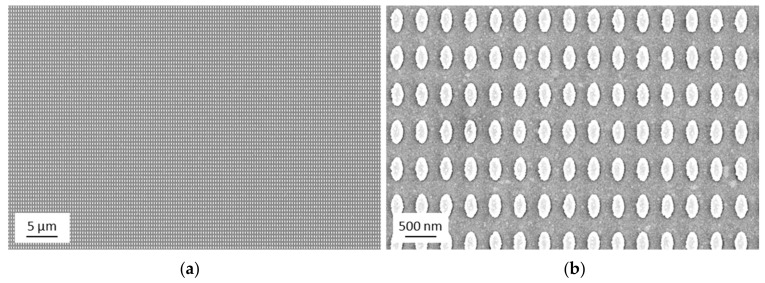
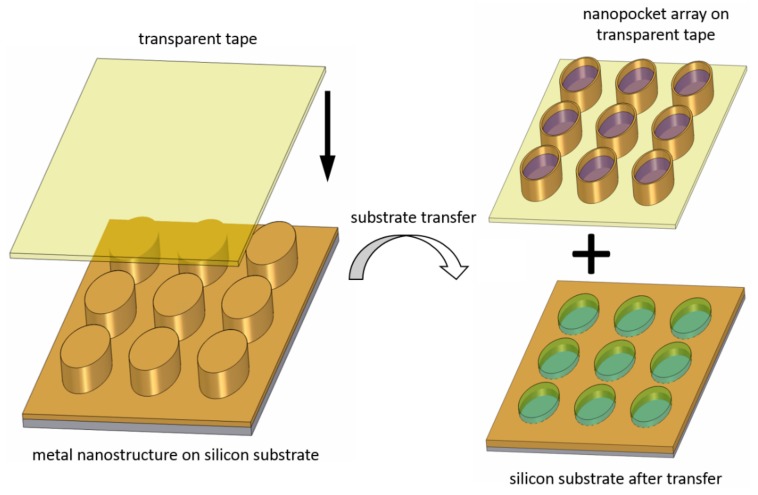
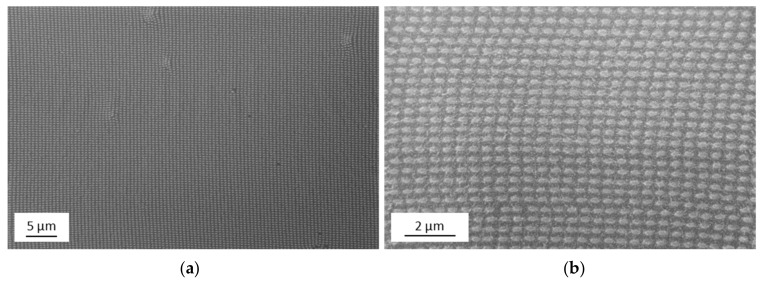
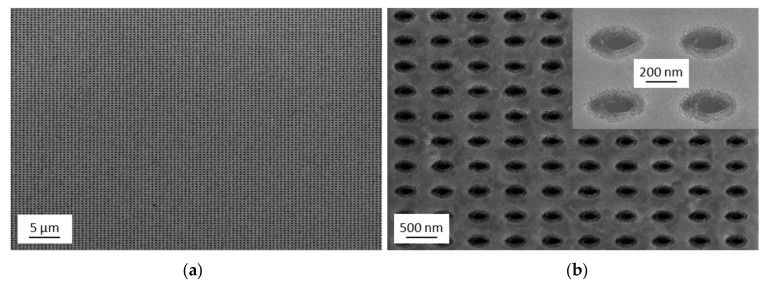
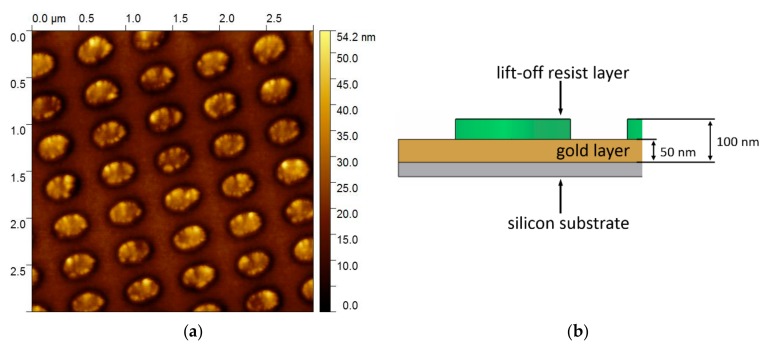
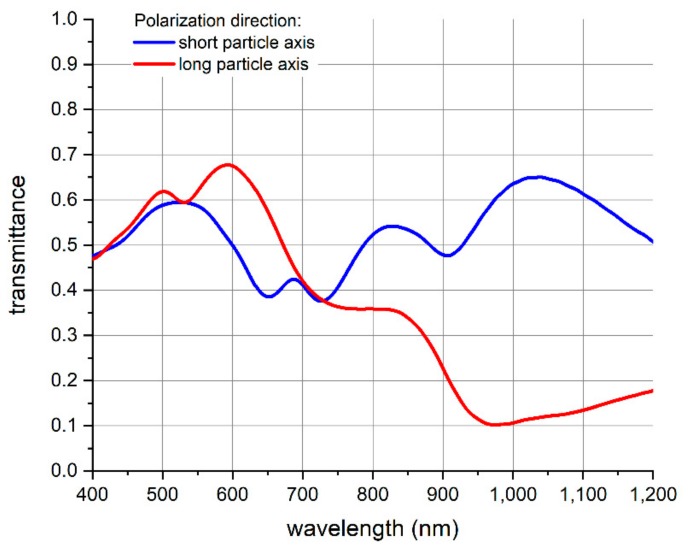
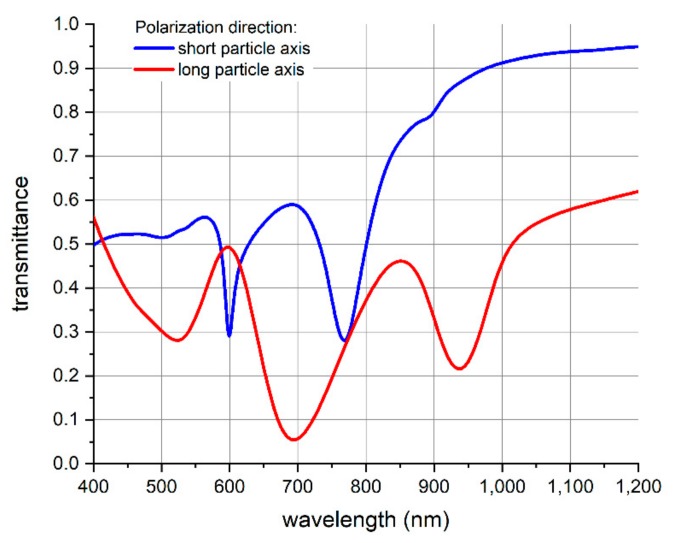
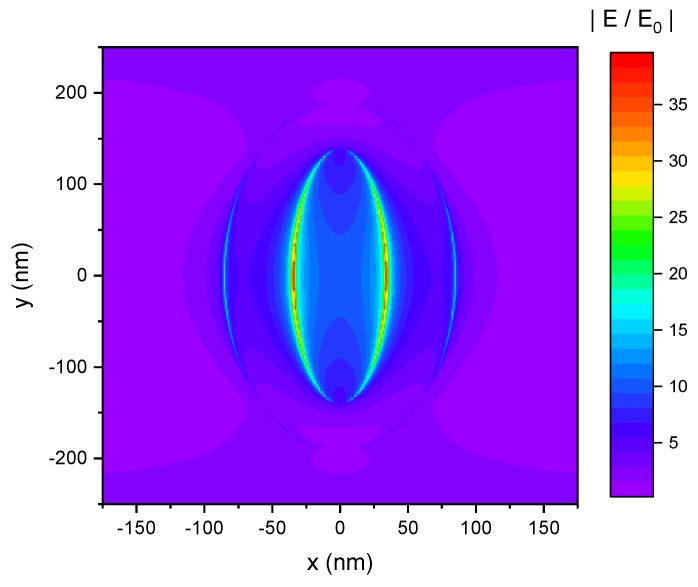
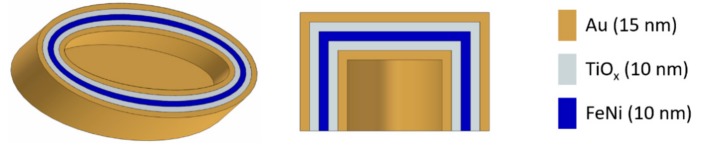
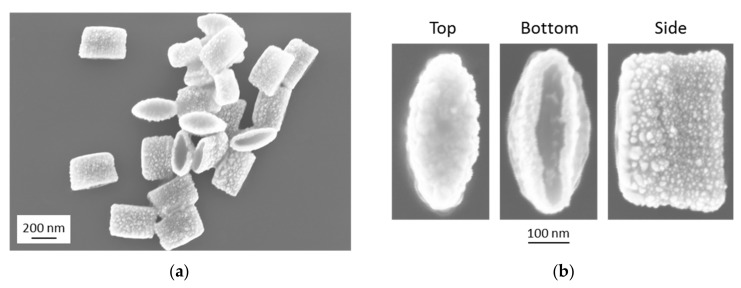
Nanostructured surfaces and nanoparticles are already widely employed in many different fields of research, and there is an ever-growing demand for reliable, reproducible and scalable nanofabrication methods. This is especially valid for multifunctional nanomaterials with physical properties that are tailored for specific applications. Here, we report on the fabrication of two types of nanomaterials. Specifically, we present surfaces comprising a highly uniform array of elliptical pillars as well as nanoparticles with the shape of nanopockets, possessing nano-cavities. The structures are fabricated by nanoimprint lithography, physical and wet-chemical etching and sputter deposition of thin films of various materials to achieve a multifunctional nanomaterial with defined optical and magnetic properties. We show that the nanopockets can be transferred to solution, yielding a nanoparticle dispersion. All fabrication steps are carefully characterized by microscopic and optical methods. Additionally, we show optical simulation results that are in good agreement with the experimentally obtained data. Thus, this versatile method allows to fabricate nanomaterials with specific tailor-made physical properties that can be designed by modelling prior to the actual fabrication process. Finally, we discuss possible application areas of these nanomaterials, which range from biology and medicine to electronics, photovoltaics and photocatalysis.
纳米结构表面和纳米颗粒已在许多不同的研究领域中广泛应用,并且对可靠、可重复和可扩展的纳米制造方法的需求也在不断增长。这对于具有针对特定应用定制的物理特性的多功能纳米材料尤其适用。在此,我们报告了两种类型纳米材料的制造。具体而言,我们展示了由高度均匀的椭圆形柱阵列组成的表面以及具有纳米口袋形状且带有纳米腔的纳米颗粒。这些结构通过纳米压印光刻、物理和湿化学蚀刻以及各种材料薄膜的溅射沉积来制造,以实现具有确定光学和磁性特性的多功能纳米材料。我们表明纳米口袋可以转移到溶液中,得到纳米颗粒分散体。所有制造步骤都通过显微镜和光学方法进行了仔细表征。此外,我们展示的光学模拟结果与实验获得的数据高度吻合。因此,这种通用方法能够制造具有特定定制物理特性的纳米材料,这些特性可以在实际制造过程之前通过建模进行设计。最后,我们讨论了这些纳米材料可能的应用领域,其范围涵盖从生物学、医学到电子学、光伏和光催化等领域。