Brueckl Hubert, Shoshi Astrit, Schrittwieser Stefan, Schmid Barbara, Schneeweiss Pia, Mitteramskogler Tina, Haslinger Michael J, Muehlberger Michael, Schotter Joerg
Department for Integrated Sensor Systems, Danube University Krems, Wiener Neustadt, Austria.
AIT Austrian Institute of Technology, Vienna, Austria.
Sci Rep. 2021 Mar 16;11(1):6039. doi: 10.1038/s41598-021-85524-8.
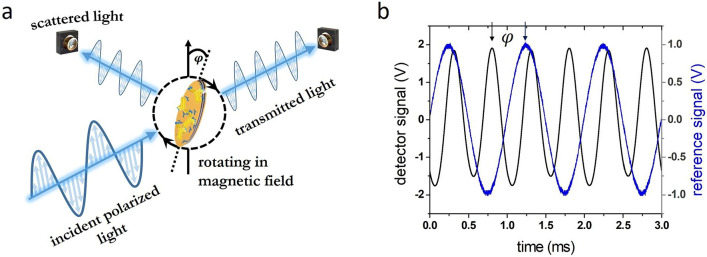
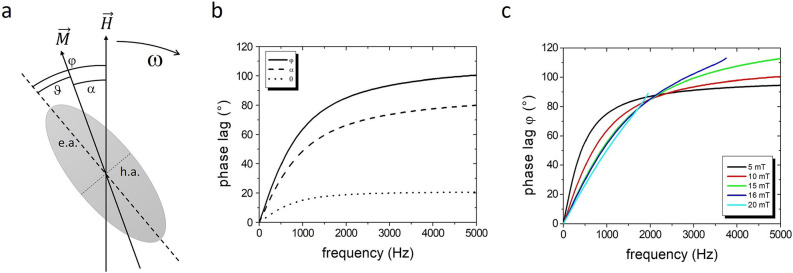
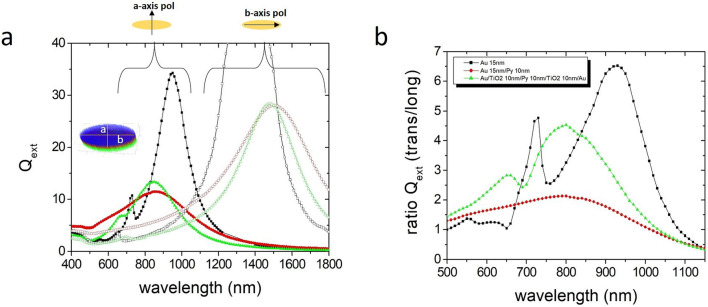
Multifunctional nanoparticles are discussed as versatile probes for homogeneous immunoassays for in-vitro diagnostics. Top-down fabrication allows to combine and tailor magnetic and plasmonic anisotropic properties. The combination of nanoimprint lithography, thin film deposition, and lift-off processing provides a top-down fabrication platform, which is both flexible and reliable. Here, we discuss the material compositions and geometrical designs of monodisperse multicomponent nanoparticles and their consequences on optical and magnetic properties. The rotational hydrodynamics of nanoparticles is measured and considered under the influence of magnetic shape anisotropy in the framework of the Stoner-Wohlfarth theory. The plasmon-optical properties are explained by discrete-dipole finite-element simulations. Rotational dynamical measurements of imprinted nanoprobes for two test proteins demonstrate the applicability as highly sensitive biomolecular nanoprobes.
多功能纳米粒子被视为用于体外诊断的均相免疫分析的通用探针。自上而下的制造方法能够结合并定制磁性和等离子体各向异性特性。纳米压印光刻、薄膜沉积和剥离工艺的结合提供了一个既灵活又可靠的自上而下制造平台。在此,我们讨论单分散多组分纳米粒子的材料组成和几何设计及其对光学和磁性特性的影响。在斯托纳 - 沃尔法斯理论的框架内,测量并考虑了纳米粒子在磁性形状各向异性影响下的旋转流体动力学。通过离散偶极子有限元模拟解释了等离子体光学特性。针对两种测试蛋白质的印迹纳米探针的旋转动力学测量证明了其作为高灵敏度生物分子纳米探针的适用性。