Department of Pharmacology, Second Military Medical University / Naval Medical University, 325 Guo He Road, Shanghai, 200433, China.
Department of Cell Biology, Second Military Medical University / Naval Medical University, 800 Xiang Yin Road, Shanghai, 200433, China.
Transl Stroke Res. 2020 Oct;11(5):983-1000. doi: 10.1007/s12975-019-00773-0. Epub 2019 Dec 30.
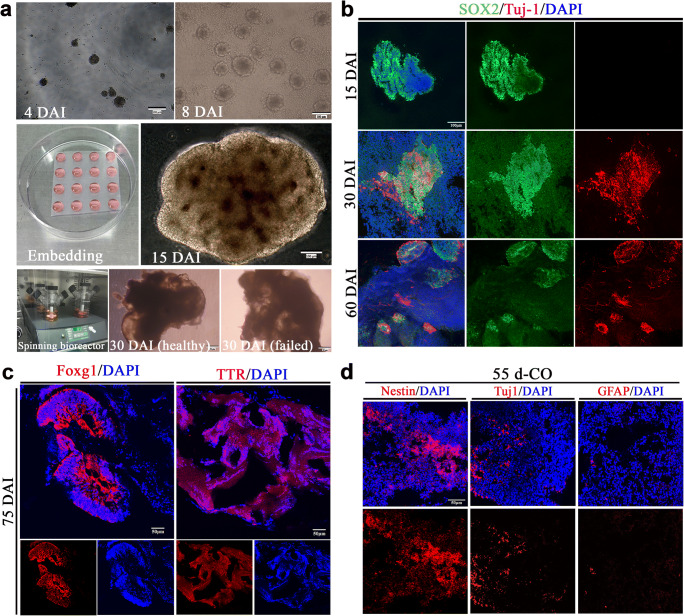
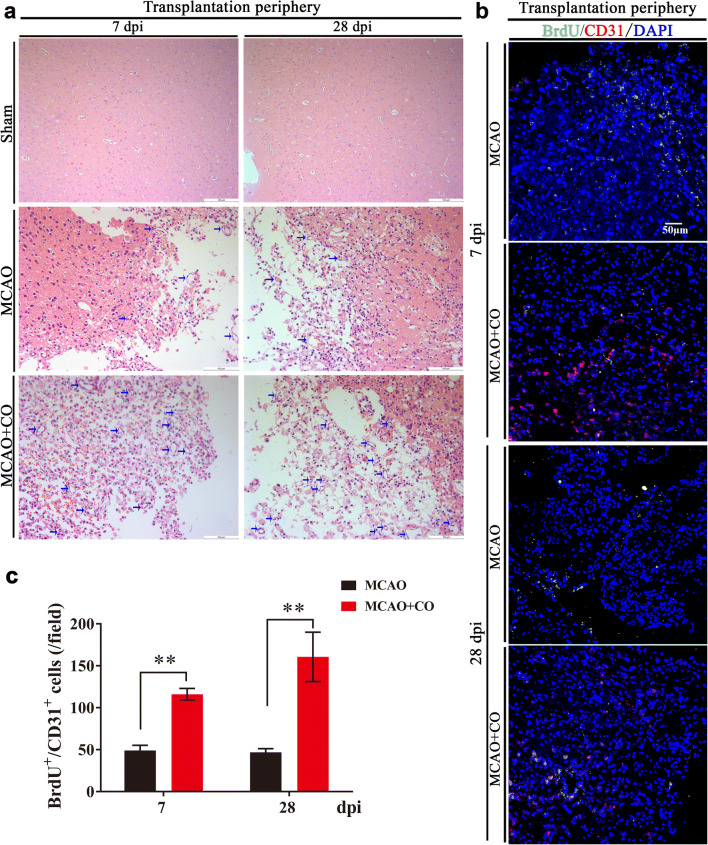
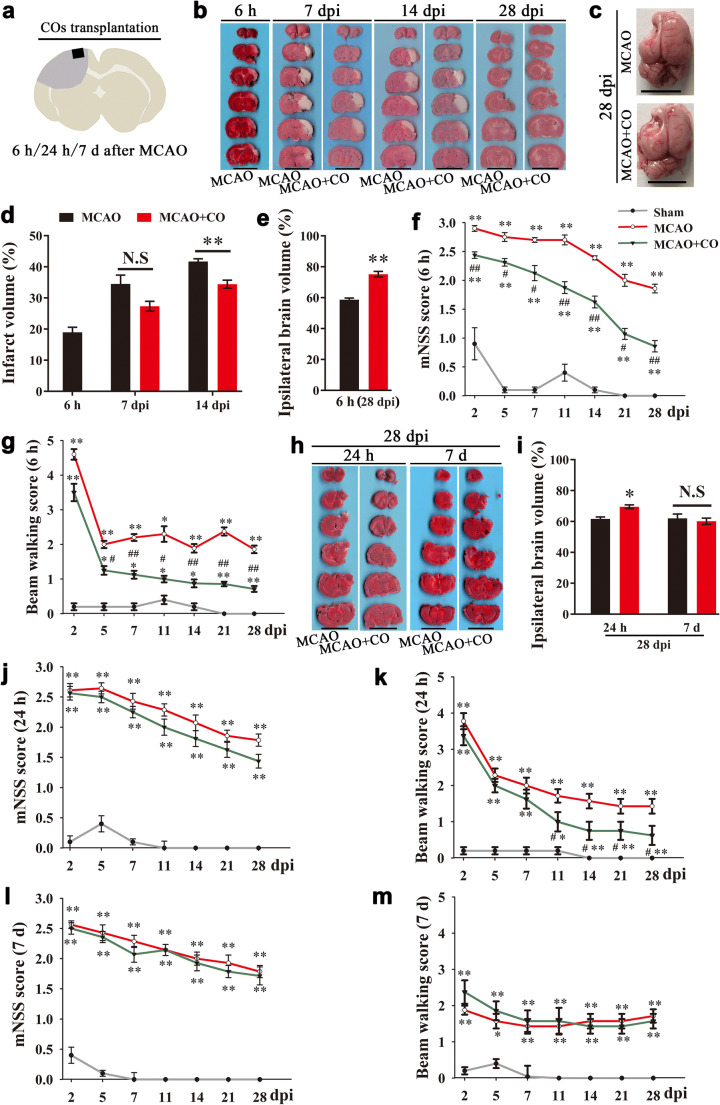
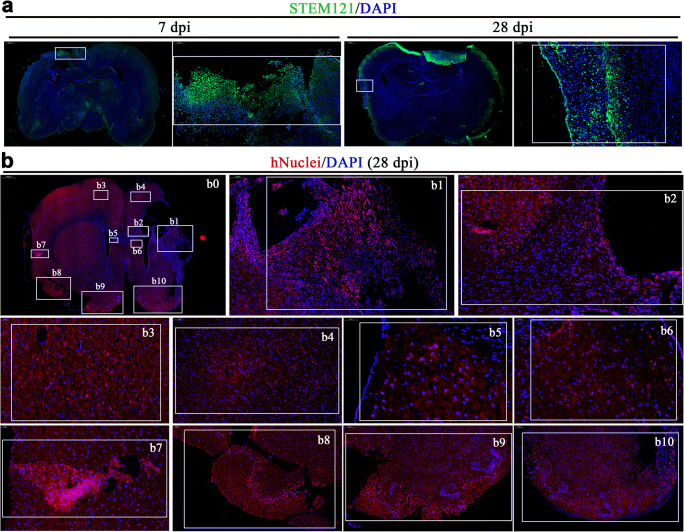
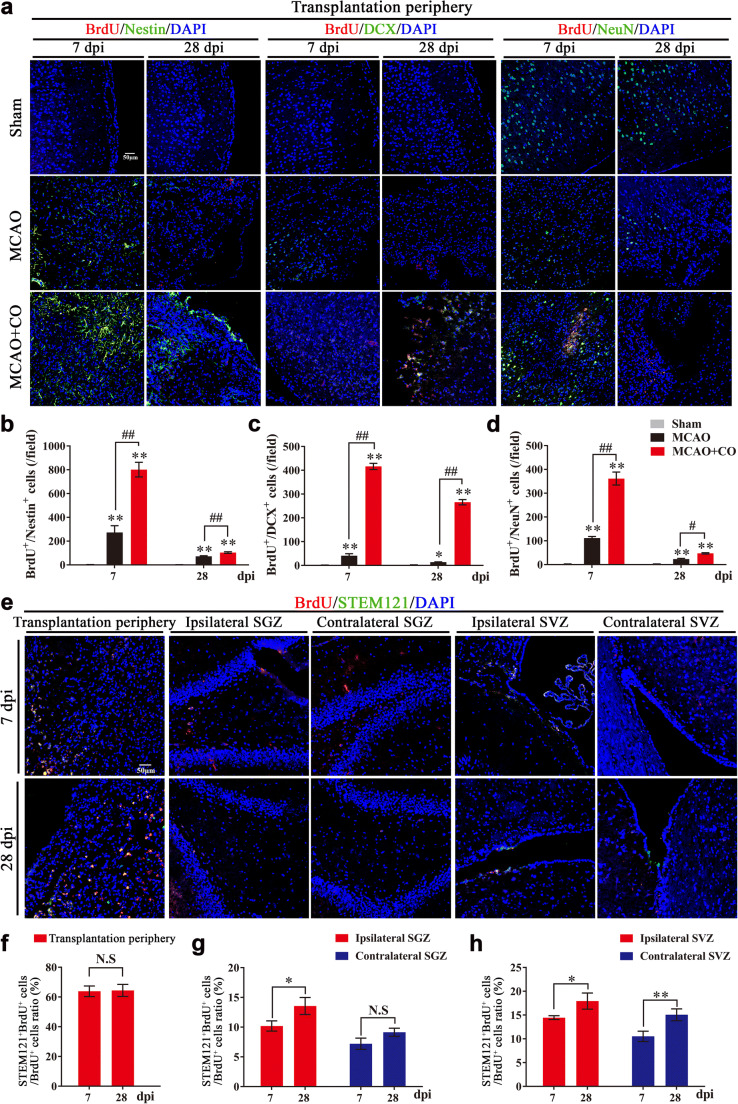
Stroke is the second leading cause of death and main cause of disability worldwide, but with few effective therapies. Although stem cell-based therapy has been proposed as an exciting regenerative medicine strategy for brain injury, there are limitations. The developed cerebral organoids (COs) represent a promising transplantation source for stroke that remains to be answered. Here, we transplanted COs at 55 days and explored the feasibility in the rat middle cerebral artery occlusion (MCAO) model of stroke. COs transplantation at 6 h or even 24 h after MCAO significantly reduces brain infarct volume and improves neurological motor function. Transplanted COs show the potential of multilineage differentiation to mimic in vivo cortical development, support motor cortex region-specific reconstruction, form neurotransmitter-related neurons, and achieve synaptic connection with host brain via in situ differentiation and cell replacement in stroke. Cells from transplanted COs show extensive migration into different brain regions along corpus callosum. The mechanisms underlying COs transplantation therapy are also associated with enhanced neurogenesis, synaptic reconstruction, axonal regeneration and angiogenesis, and decreased neural apoptosis with more survival neurons after stroke. Moreover, COs transplantation promotes predominantly exogenous neurogenesis in the transplantation periphery of ipsilateral cortex and predominantly endogenous neurogenesis in the hippocampus and subventricular zone. Together, we demonstrate the efficacy and underlying mechanisms of COs transplantation in stroke. This preliminary but promising study provides first-hand preclinical evidence for COs transplantation as a potential and effective intervention for stroke treatment.
中风是全球范围内的第二大致死原因和主要致残原因,但目前有效的治疗方法却寥寥无几。虽然基于干细胞的疗法已被提出作为一种令人兴奋的脑损伤再生医学策略,但仍存在局限性。已经开发出的类脑器官(COs)代表了一种有前途的用于中风的移植来源,这仍有待回答。在这里,我们在 55 天时进行了 CO 移植,并在中风的大鼠大脑中动脉闭塞(MCAO)模型中探索了其可行性。在 MCAO 后 6 小时甚至 24 小时进行 CO 移植,可显著减少脑梗死体积并改善神经运动功能。移植的 CO 具有多能分化的潜力,可以模拟体内皮质发育,支持运动皮层区域特异性重建,形成与宿主大脑的神经递质相关神经元,并通过原位分化和细胞替代在中风中实现与宿主大脑的突触连接。来自移植 CO 的细胞显示出沿着胼胝体向不同脑区广泛迁移的能力。CO 移植治疗的机制还与增强神经发生、突触重建、轴突再生和血管生成有关,并且在中风后具有更多存活神经元的神经细胞凋亡减少。此外,CO 移植促进了同侧皮质移植边缘的主要外源性神经发生和海马和侧脑室下区的主要内源性神经发生。总之,我们证明了 CO 移植在中风中的疗效和潜在机制。这项初步但有前途的研究为 CO 移植作为中风治疗的一种潜在有效干预措施提供了第一手临床前证据。