Liu Zhe, Mutukumira Anthony N, Chen Hongjun
School of Management Henan University of Technology Zhengzhou China.
School of Food and Nutrition Massey University Auckland New Zealand.
Food Sci Nutr. 2019 Nov 20;7(12):4127-4139. doi: 10.1002/fsn3.1281. eCollection 2019 Dec.
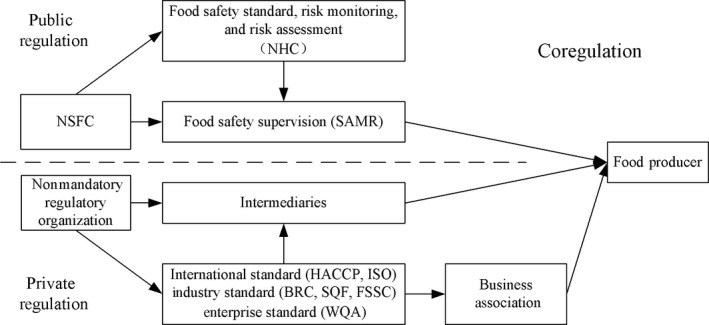
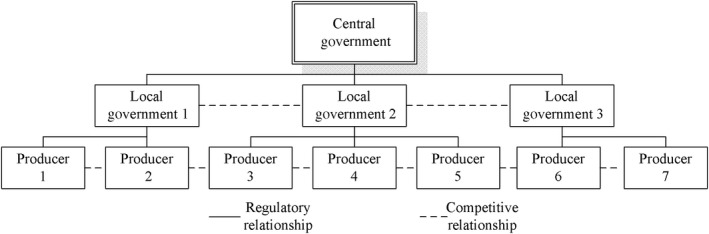
The food control and regulatory system in China is beset by several challenges. While firms have to reduce their costs in pursuit of benefits, customers are increasingly focusing on safety and quality of food products. Although the Chinese government has developed more stringent regulatory measures, food safety incidents still occur, including abuse of food additives, adulterated products as well as contamination by pathogenic microorganisms, pesticides, veterinary drug residues, and heavy metals, and use of substandard materials. A national food safety strategy has been proposed to assure food safety from "farm to table." This paper begins with the analysis of current food regulatory systems and then discusses cogovernance of food safety management in China. We explore the practice in the city of Shenzhen where government intervention has strengthened food control, thereby creating an opportunity to form a coregulatory system. The review highlights that the current food safety regulatory system of multi-agency structure can inevitably lead to insufficient incentives for business entities. Due to asymmetric information, lack of regulatory resources, and consumer advocacy, coregulation has been developed and is increasingly being promoted as an important instrument of food regulation.
中国的食品控制与监管体系面临着诸多挑战。企业为追求利润不得不削减成本,而消费者则越来越关注食品的安全与质量。尽管中国政府已制定了更为严格的监管措施,但食品安全事件仍时有发生,包括食品添加剂滥用、产品掺假以及致病微生物、农药、兽药残留和重金属污染,还有使用不合格原料等情况。国家已提出食品安全战略,以确保从“农田到餐桌”的食品安全。本文首先分析当前的食品监管体系,然后探讨中国食品安全管理的协同治理。我们考察了深圳市的实践,在那里政府干预加强了食品控制,从而为形成共同监管体系创造了契机。该综述强调,当前多机构结构的食品安全监管体系不可避免地会导致对企业实体的激励不足。由于信息不对称、监管资源匮乏以及消费者维权等因素,共同监管应运而生,并日益被视作食品监管的一项重要手段而得到推广。