Hadziselimovic Faruk, Verkauskas Gilvydas, Vincel Beata, Stadler Michael B
Cryptorchidism Research Institute, Children's Day Care Center, 4410 Liestal, Switzerland.
2Children's Surgery Centre, Faculty of Medicine, Vilnius University, 01513 Vilnius, Lithuania.
Basic Clin Androl. 2019 Dec 27;29:18. doi: 10.1186/s12610-019-0097-3. eCollection 2019.
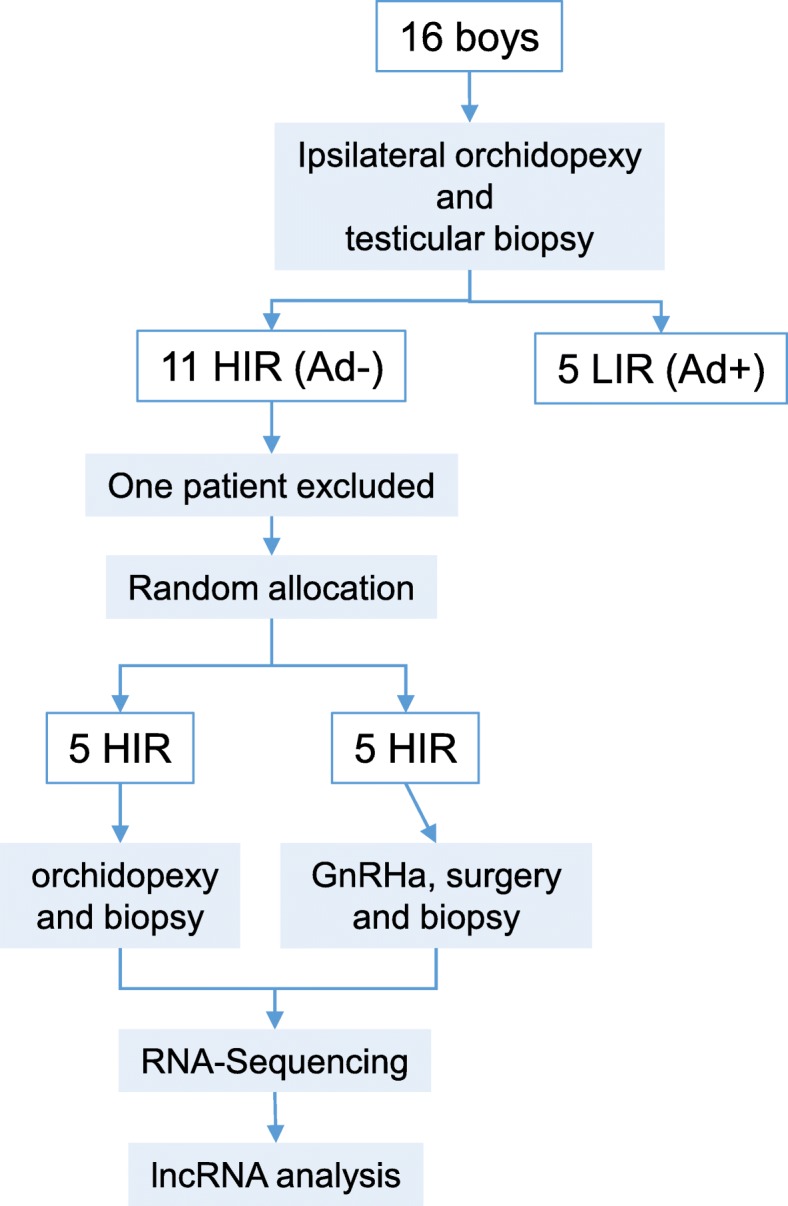
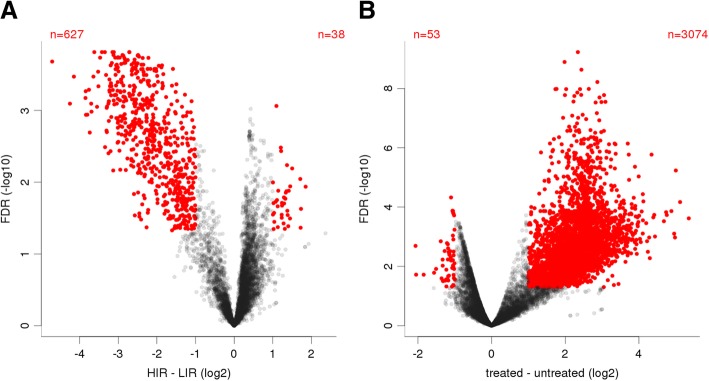
Cryptorchidism is a frequent endocrinopathy in boys that has been associated with an increased risk of developing testicular cancer and infertility. The condition is curable by combined surgery and hormonal treatment during early pre-pubertal stages using gonadotropin releasing hormone agonist (GnRHa). However, whether the treatment also alters the expression of testicular long non-coding RNAs (lncRNAs) is unknown. To gain insight into the effect of GnRHa on testicular lncRNA levels, we re-analyzed an expression dataset generated from testicular biopsies obtained during orchidopexy for bilateral cryptorchidism.
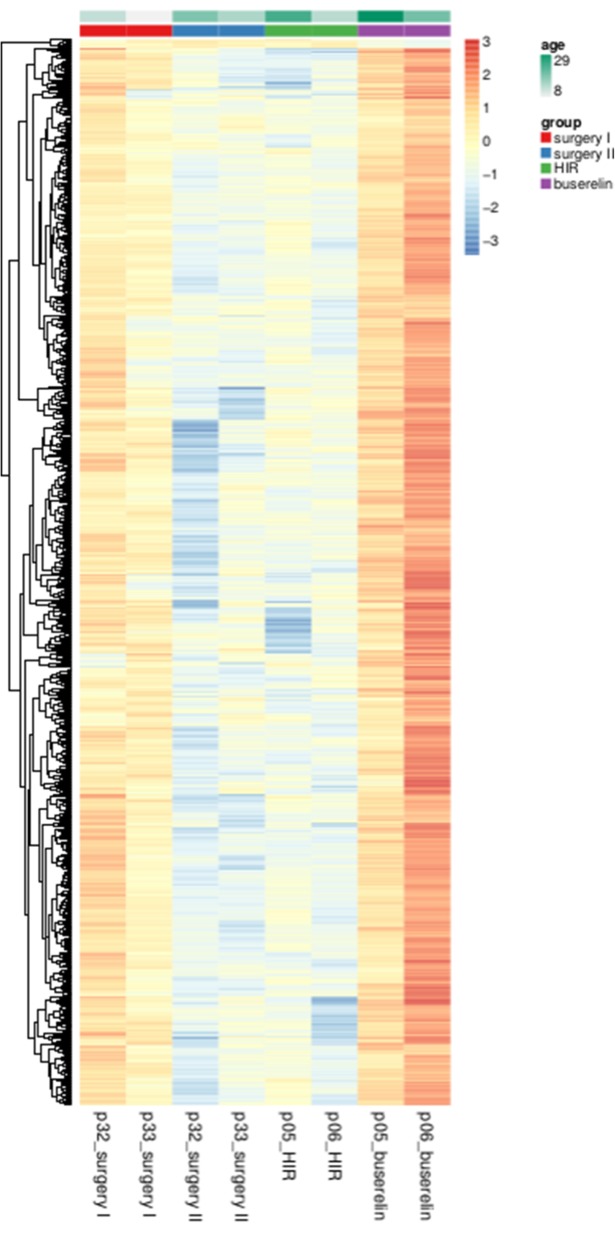
We identified , , and as potentially relevant for the stimulation of cell proliferation mediated by GnRHa based on their direct or indirect association with rapidly dividing cells in normal and pathological tissues. Surgery alone failed to alter the expression of these transcripts.
Given that lncRNAs can cooperate with chromatin-modifying enzymes to promote epigenetic regulation of genes, GnRHa treatment may act as a surrogate for mini-puberty by triggering the differentiation of Ad spermatogonia via lncRNA-mediated epigenetic effects. Our work provides additional molecular evidence that infertility and azoospermia in cryptorchidism, resulting from defective mini-puberty cannot be cured with successful orchidopexy alone.
隐睾症是男孩常见的内分泌疾病,与睾丸癌和不育症的发病风险增加有关。在青春期前早期阶段,使用促性腺激素释放激素激动剂(GnRHa)进行联合手术和激素治疗可治愈该疾病。然而,这种治疗是否也会改变睾丸长链非编码RNA(lncRNA)的表达尚不清楚。为了深入了解GnRHa对睾丸lncRNA水平的影响,我们重新分析了从双侧隐睾症睾丸固定术中获取的睾丸活检样本生成的表达数据集。
基于它们与正常和病理组织中快速分裂细胞的直接或间接关联,我们确定了[具体名称1]、[具体名称2]、[具体名称3]和[具体名称4]可能与GnRHa介导的细胞增殖刺激相关。单独手术未能改变这些转录本的表达。
鉴于lncRNA可与染色质修饰酶协同作用以促进基因的表观遗传调控,GnRHa治疗可能通过lncRNA介导的表观遗传效应触发Ad精原细胞的分化,从而起到小青春期替代物的作用。我们的研究提供了额外的分子证据,表明因小青春期缺陷导致的隐睾症不育和无精子症不能仅通过成功的睾丸固定术治愈。