Ardeljan Daniel, Wang Xuya, Oghbaie Mehrnoosh, Taylor Martin S, Husband David, Deshpande Vikram, Steranka Jared P, Gorbounov Mikhail, Yang Wan Rou, Sie Brandon, Larman H Benjamin, Jiang Hua, Molloy Kelly R, Altukhov Ilya, Li Zhi, McKerrow Wilson, Fenyö David, Burns Kathleen H, LaCava John
1McKusick Nathans Department of Genetic Medicine, Johns Hopkins University School of Medicine, Baltimore, MD 21205 USA.
2Department of Pathology, Johns Hopkins University School of Medicine, Baltimore, MD 21205 USA.
Mob DNA. 2019 Dec 31;11:1. doi: 10.1186/s13100-019-0191-2. eCollection 2020.
Long interspersed element-1 (LINE-1, L1) is the major driver of mobile DNA activity in modern humans. When expressed, LINE-1 loci produce bicistronic transcripts encoding two proteins essential for retrotransposition, ORF1p and ORF2p. Many types of human cancers are characterized by L1 promoter hypomethylation, L1 transcription, L1 ORF1p protein expression, and somatic L1 retrotransposition. ORF2p encodes the endonuclease and reverse transcriptase activities required for L1 retrotransposition. Its expression is poorly characterized in human tissues and cell lines.
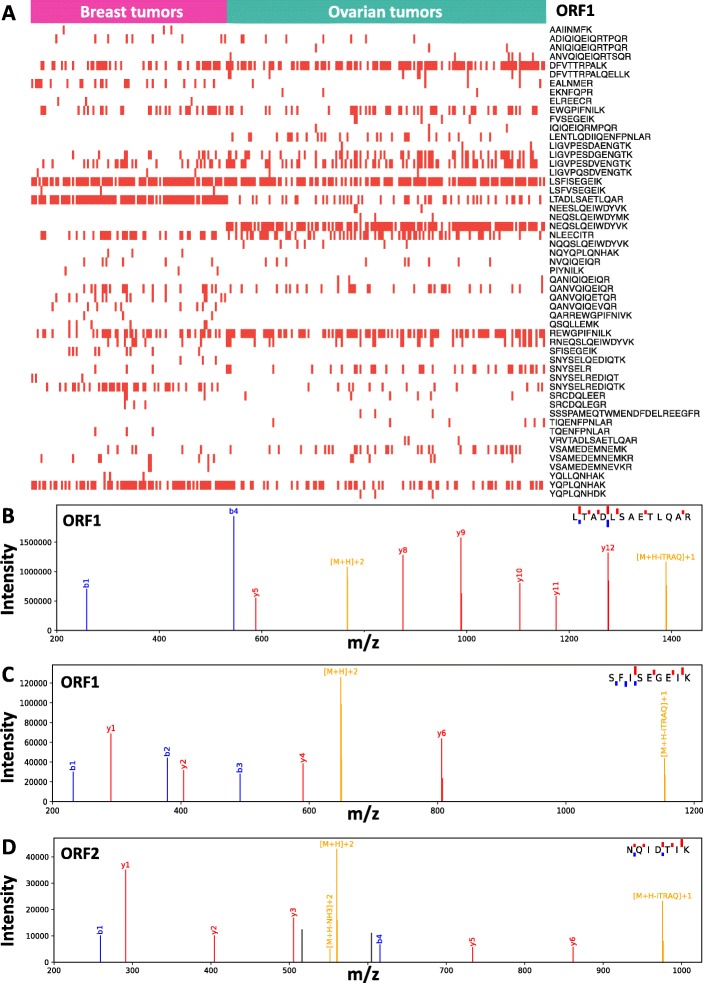
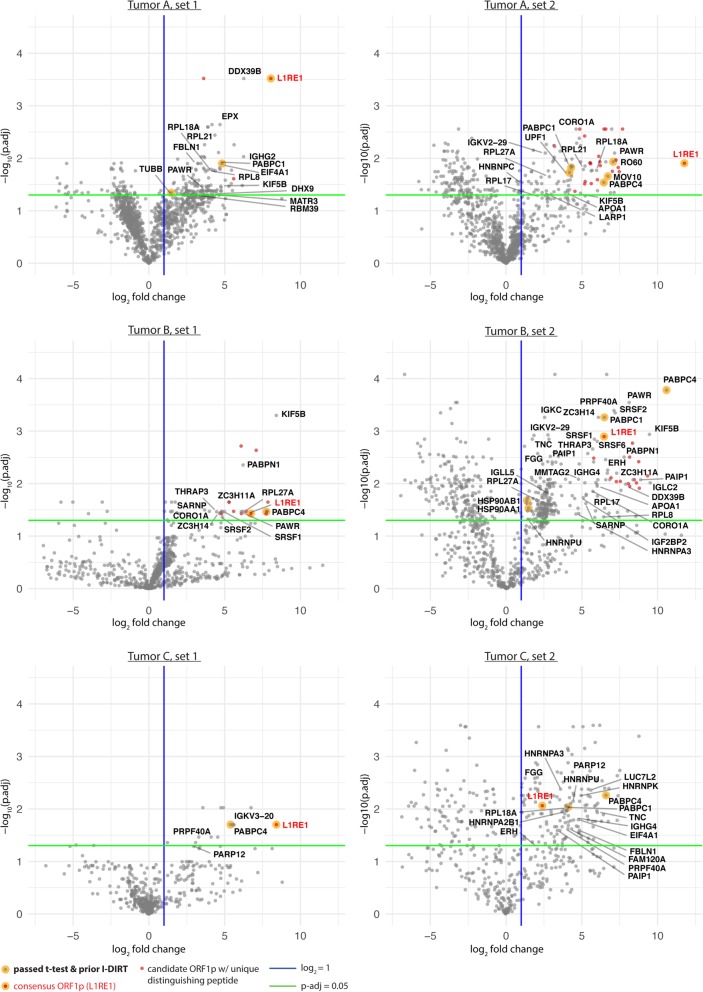
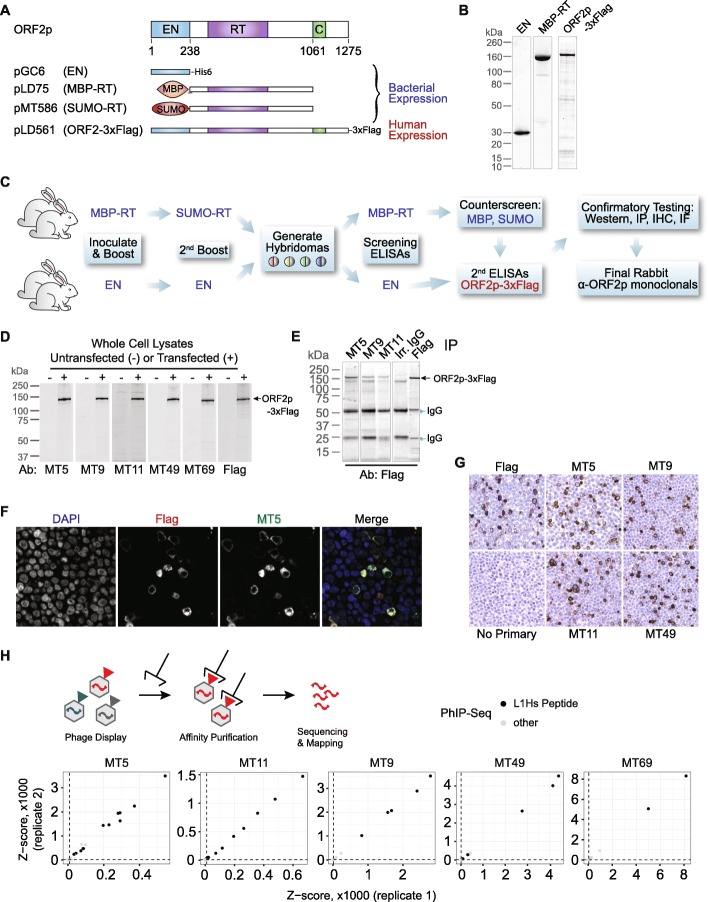
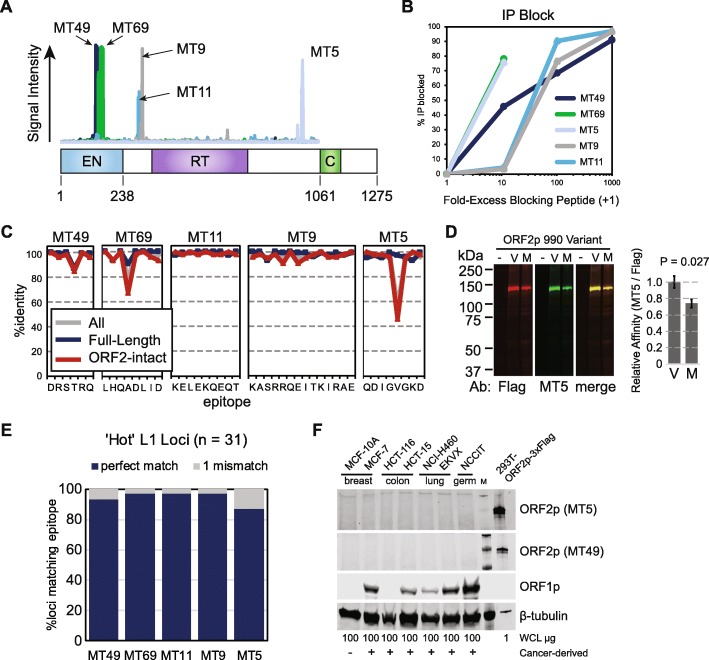
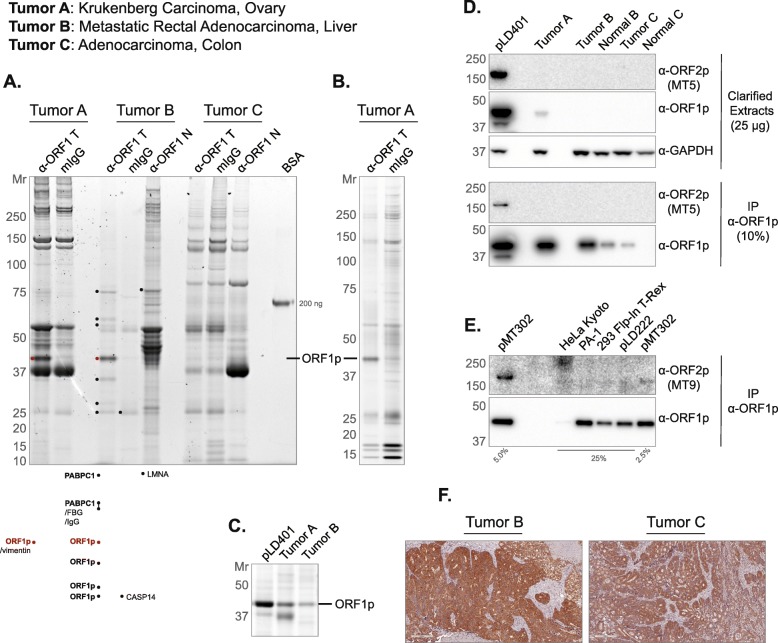
We report mass spectrometry-based tumor proteome profiling studies wherein ORF2p eludes detection. To test whether ORF2p could be detected with specific reagents, we developed and validated five rabbit monoclonal antibodies with immunoreactivity for specific epitopes on the protein. These reagents readily detect ectopic ORF2p expressed from bicistronic L1 constructs. However, endogenous ORF2p is not detected in human tumor samples or cell lines by western blot, immunoprecipitation, or immunohistochemistry despite high levels of ORF1p expression. Moreover, we report endogenous ORF1p-associated interactomes, affinity isolated from colorectal cancers, wherein we similarly fail to detect ORF2p. These samples include primary tumors harboring hundreds of somatically acquired L1 insertions. The new data are available via ProteomeXchange with identifier PXD013743.
Although somatic retrotransposition provides unequivocal genetic evidence for the expression of ORF2p in human cancers, we are unable to directly measure its presence using several standard methods. Experimental systems have previously indicated an unequal stoichiometry between ORF1p and ORF2p, but in vivo, the expression of these two proteins may be more strikingly uncoupled. These findings are consistent with observations that ORF2p is not tolerable for cell growth.
长散在核元件1(LINE-1,L1)是现代人类中移动DNA活性的主要驱动因素。当L1表达时,其基因座会产生双顺反子转录本,编码逆转录转座所必需的两种蛋白质,即开放阅读框1蛋白(ORF1p)和开放阅读框2蛋白(ORF2p)。多种类型的人类癌症具有L1启动子低甲基化、L1转录、L1 ORF1p蛋白表达和体细胞L1逆转录转座的特征。ORF2p编码L1逆转录转座所需的内切核酸酶和逆转录酶活性。其在人体组织和细胞系中的表达情况鲜为人知。
我们报告了基于质谱的肿瘤蛋白质组分析研究,其中未检测到ORF2p。为了测试是否能用特异性试剂检测到ORF2p,我们开发并验证了五种对该蛋白上特定表位具有免疫反应性的兔单克隆抗体。这些试剂能轻易检测到从双顺反子L1构建体表达的异位ORF2p。然而,尽管ORF1p表达水平很高,但通过蛋白质免疫印迹法、免疫沉淀法或免疫组织化学法在人类肿瘤样本或细胞系中均未检测到内源性ORF2p。此外,我们报告了从结直肠癌中亲和分离得到的内源性ORF1p相关相互作用组,同样未检测到ORF2p。这些样本包括含有数百个体细胞获得性L1插入的原发性肿瘤。新数据可通过蛋白质组交换库获取,标识符为PXD013743。
虽然体细胞逆转录转座为ORF2p在人类癌症中的表达提供了明确的遗传学证据,但我们无法使用几种标准方法直接检测到它的存在。实验系统先前表明ORF1p和ORF2p之间存在不等的化学计量比,但在体内,这两种蛋白质的表达可能更明显地解偶联。这些发现与ORF2p对细胞生长不可耐受的观察结果一致。