Department of Urology & Nephrology, Ningbo First Hospital, The affiliated Hospital of Zhejiang University, 59, Liuting Street, Ningbo, Zhejiang, China.
Department of Urology, Medical School of Ningbo University, Zhejiang, China.
World J Surg Oncol. 2020 Jan 4;18(1):4. doi: 10.1186/s12957-019-1776-4.
The purpose of this meta-analysis is to compare the safety and efficacy of en bloc transurethral resection of bladder tumor (EBRT) versus conventional transurethral resection of bladder tumor (CTURBT).
We performed a meta-analysis of relevant articles through November 2019 using PubMed, Embase, and Cochrane Central Register to compare the safety and efficacy of EBRT versus CTURBT. The main endpoint included the operation time (OT), hospitalization time (HT), catheterization time (AT), perioperative period complications, bladder detrusor muscle found in the specimen, the residual tumor on the base, the ratio of the same site recurrence, and 12/24/36-month recurrence rate. Cochrane Collaboration's Revman software, version 5.3, was used for statistical analysis.
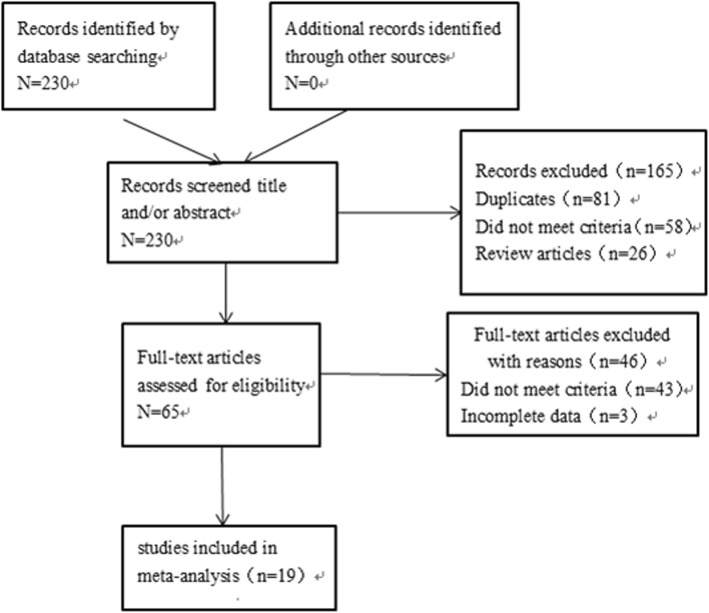
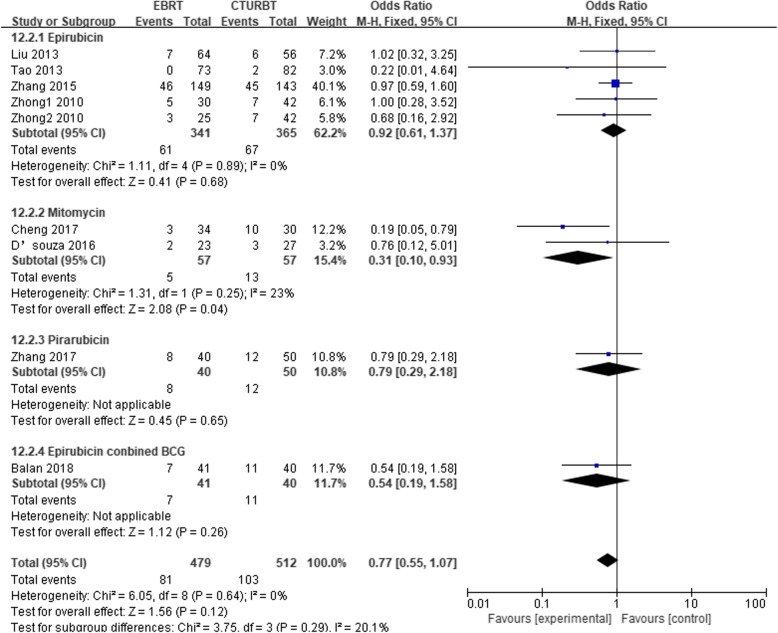
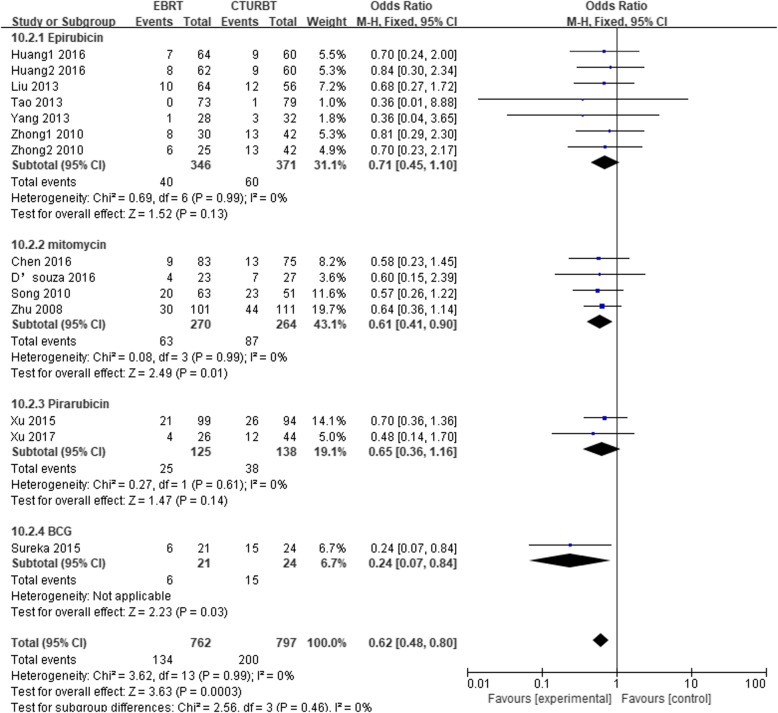
A total of 19 studies with 2651 patients were included, 1369 underwent EBRT and 1282 underwent CTURBT. Patients treated with EBRT had a significantly lower AT, HT, obturator nerve reflex, bladder perforation, bladder irritation, postoperative complications, and 24-month recurrence rate than those who underwent CTURBT. While no significant difference was found in terms of OT, the ratio of bladder detrusor muscle found in the specimen, the residual tumor on the base, 12-month recurrence rate, 36-month recurrence rate, and the ratio of the same site recurrence. In mitomycin subgroup, EBRT was superior to CTURBT in terms of 12/24-month recurrence rate. Similarly, in the prospective subgroup and retrospective subgroup, EBRT had a lower 24-month recurrence rate than CTURBT. However, no significant difference was found in the low, intermediate, and high-risk group in the light of 12-36-month recurrence rate.
Based on the included 19 articles, EBRT had a significantly lower AT, HT, intraoperative and postoperative complications, and 24-month recurrence rate than those treated with CTURBT. Well-designed randomized controlled trials were needed to reevaluate these outcomes.
This meta-analysis was reported in agreement with the PRISMA statement and was registered on PROSPERO 2019 CRD42019121673.
本荟萃分析旨在比较整块经尿道膀胱肿瘤切除术(EBRT)与传统经尿道膀胱肿瘤切除术(CTURBT)的安全性和疗效。
我们通过PubMed、Embase 和 Cochrane 中央注册库检索截至 2019 年 11 月的相关文献,进行荟萃分析,以比较 EBRT 与 CTURBT 的安全性和疗效。主要终点包括手术时间(OT)、住院时间(HT)、导尿管时间(AT)、围手术期并发症、标本中膀胱逼尿肌的发现、基底残留肿瘤、同一部位复发率和 12/24/36 个月复发率。使用 Cochrane 协作 Revman 软件,版本 5.3,进行统计分析。
共纳入 19 项研究,2651 例患者,其中 1369 例行 EBRT,1282 例行 CTURBT。EBRT 组 AT、HT、闭孔神经反射、膀胱穿孔、膀胱刺激征、术后并发症和 24 个月复发率明显低于 CTURBT 组。OT 无明显差异,标本中膀胱逼尿肌的发现、基底残留肿瘤、12 个月复发率、36 个月复发率和同一部位复发率无明显差异。在丝裂霉素亚组中,EBRT 在 12/24 个月复发率方面优于 CTURBT。同样,在前瞻性亚组和回顾性亚组中,EBRT 的 24 个月复发率也低于 CTURBT。然而,根据 12-36 个月的复发率,在低、中、高危组中没有发现明显差异。
基于纳入的 19 篇文章,EBRT 在 AT、HT、术中及术后并发症和 24 个月复发率方面明显低于 CTURBT。需要进行精心设计的随机对照试验来重新评估这些结果。
本荟萃分析符合 PRISMA 声明,并在 PROSPERO 2019 CRD42019121673 上注册。