The Faculty of Physiotherapy, Wroclaw University School of Physical Education, 51-612 Wroclaw, Poland.
Int J Environ Res Public Health. 2020 Jan 1;17(1):307. doi: 10.3390/ijerph17010307.
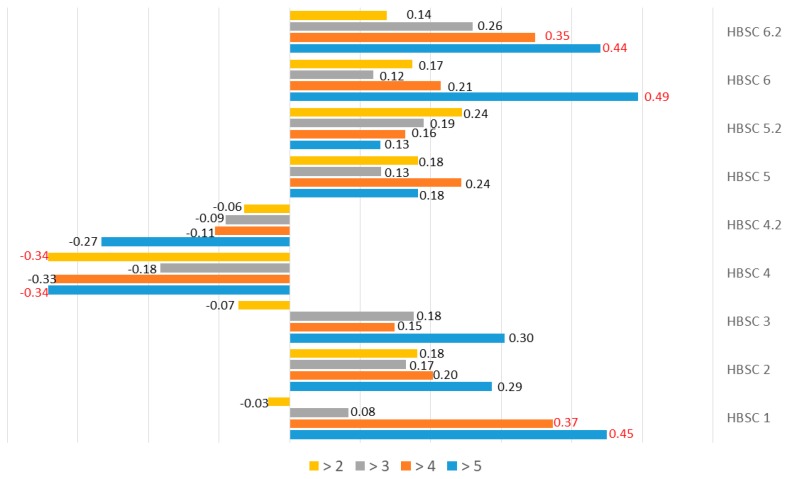
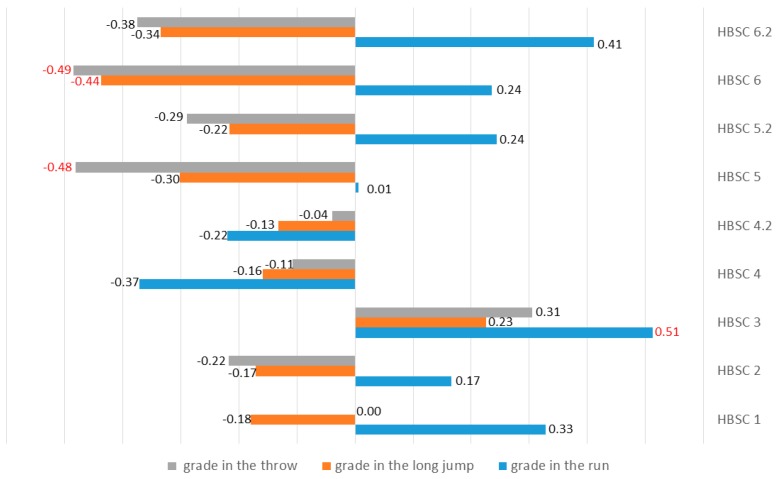
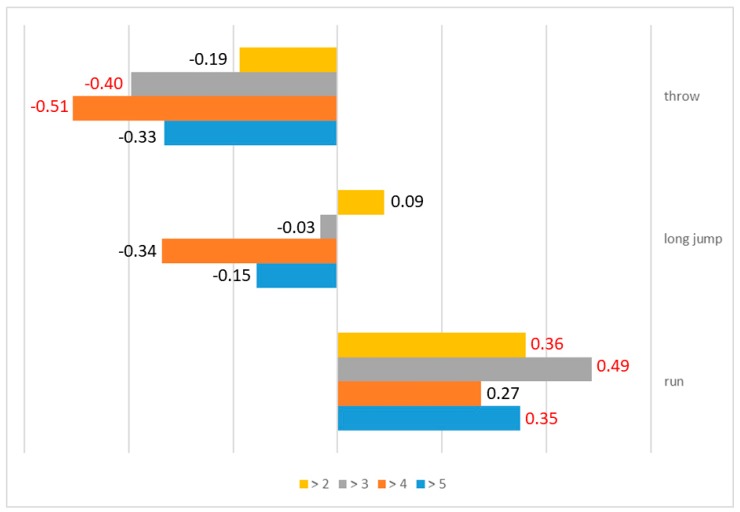
The aim of the study was to assess daily physical activity level and its influence on the physical efficiency of children after the treatment of leukemia. The study was comprised of 34 children (23 boys and 11 girls) after the treatment of acute lymphoblastic leukemia or myeloid leukemia (mean age of 11.29 ± 2.81 years, mean body height of 146.88 ± 16.11 cm, and mean body weight of 43.68 ± 13.93 kg). The mean time since treatment completion was 3.09 ± 1.80 years. The level of physical activity was assessed with the Health Behavior in School-Aged Children questionnaire (HBSC). Physical efficiency was assessed based on the palant ball throw (assessment of strength, coordination, and upper limb speed), the long jump (assessment of jumping ability, speed and coordination) and the 60 m run (assessment of speed). Measurements of motor skills were normalized, classified according to age and sex, and converted into grades. The mean values obtained in the run and the ball throw showed low pass grades in the study group. In the case of the long jump, satisfactory grades were obtained. A correlation of r = 0.512 was found between vigorous physical activity (HBSC 3) and the grade in the run. A correlation of r = -0.437 was observed between the duration of computer use in leisure time (HBSC 6) and the grade in the long jump, whereas correlations of r = -0.482 and -0.485 were noted between the number hours per week spent on games (HBSC 5) and the duration of computer use in leisure time (HBSC 6) and the grade obtained in the ball throw, respectively. In addition, different levels of physical activity and physical efficiency were demonstrated depending on the time elapsed since treatment completion. Supervised programs promoting daily physical activity should include children after the treatment of leukemia. These programs should also be aimed at improving their physical efficiency.
本研究旨在评估儿童在急性淋巴细胞白血病或髓性白血病治疗后的日常体力活动水平及其对身体效率的影响。该研究包括 34 名儿童(23 名男孩和 11 名女孩),他们在完成急性淋巴细胞白血病或髓性白血病治疗后(平均年龄为 11.29 ± 2.81 岁,平均身高为 146.88 ± 16.11cm,平均体重为 43.68 ± 13.93kg)。从治疗结束到现在的平均时间为 3.09 ± 1.80 年。体力活动水平通过《青少年健康行为调查问卷》(HBSC)进行评估。身体效率通过投球测试(评估力量、协调能力和上肢速度)、跳远(评估跳跃能力、速度和协调能力)和 60 米跑(评估速度)来评估。运动技能测量值经标准化处理后,按照年龄和性别分类,并转换为等级。研究组的跑步和投球成绩平均值显示等级较低。在跳远方面,成绩则令人满意。在研究组中,发现剧烈体力活动(HBSC 3)与跑步成绩之间存在 r = 0.512 的相关性。在休闲时间使用电脑的时间(HBSC 6)与跳远成绩之间观察到 r = -0.437 的相关性,而每周玩游戏的时间(HBSC 5)和休闲时间使用电脑的时间(HBSC 6)与投球成绩之间分别存在 r = -0.482 和 r = -0.485 的相关性。此外,根据治疗结束后时间的不同,表现出不同的体力活动水平和身体效率。应针对治疗后的白血病儿童制定促进日常体力活动的监督计划。这些计划还应旨在提高他们的身体效率。