National Engineering Laboratory for Druggable Gene and Protein Screening, Northeast Normal University, 130107 Jilin, China.
School of pharmacy, Changchun University of Chinese Medicine,130107 Jilin, China.
Molecules. 2020 Jan 2;25(1):192. doi: 10.3390/molecules25010192.
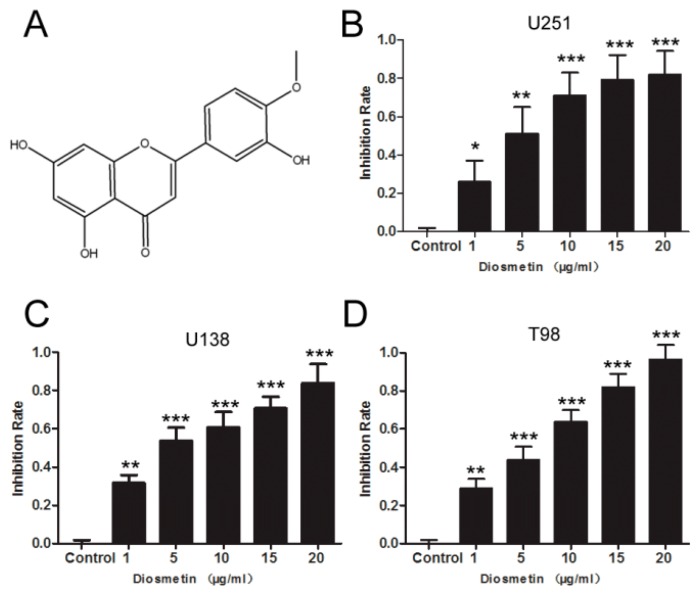
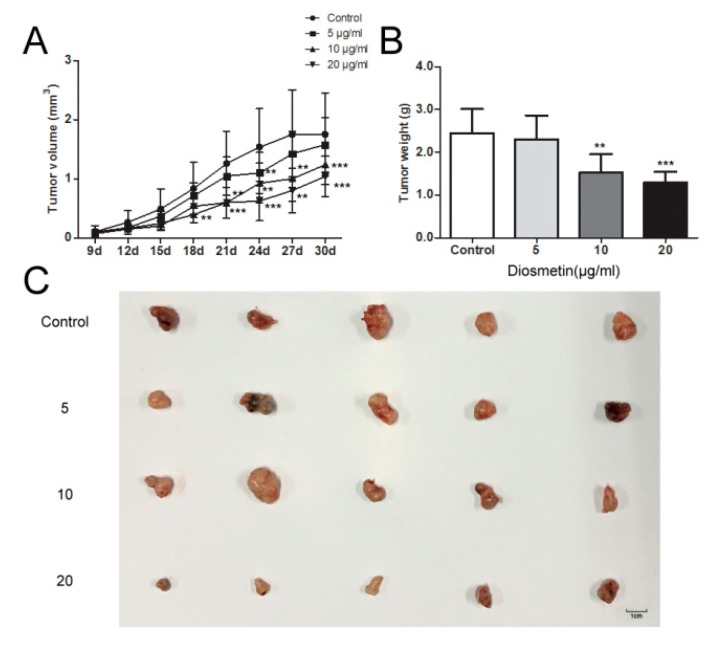
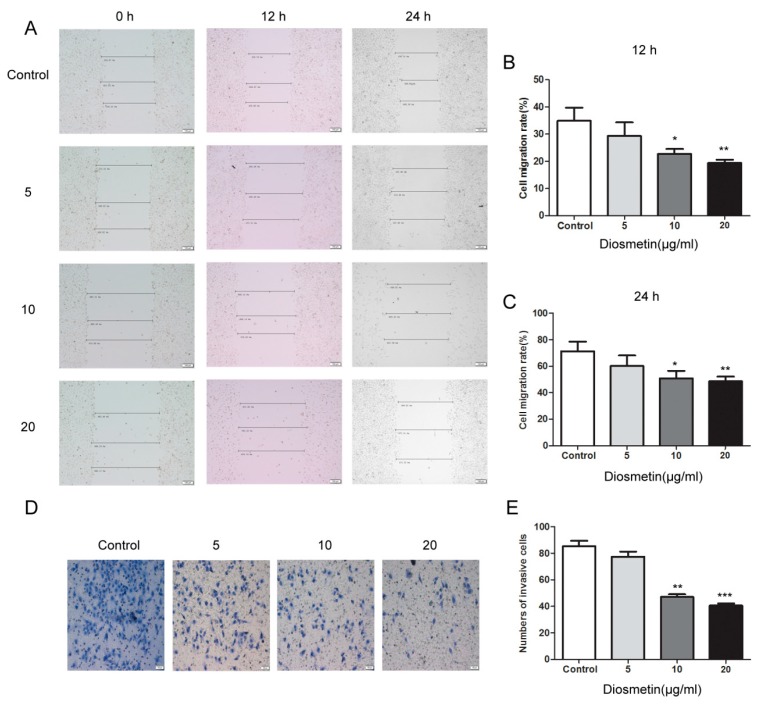
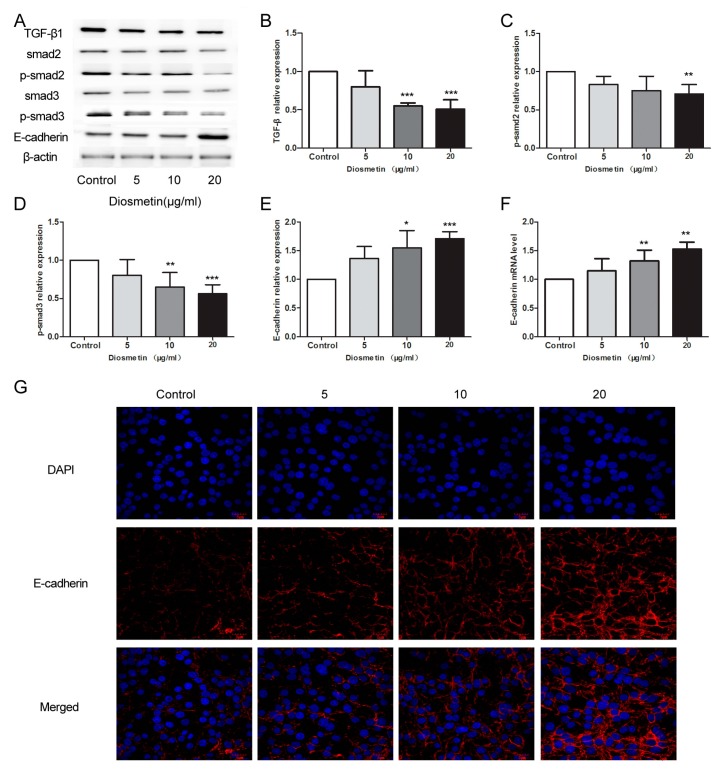
L, a traditional Kazakh medicine, has good expectorant, anti-cough, and to some degree, anti-asthmatic effects. Diosmetin (3',5,7-trihydroxy-4'-methoxyflavone), a natural flavonoid found in traditional Chinese herbs, is the main flavonoid in L. and has been used in various medicinal products because of its anticancer, antimicrobial, antioxidant, estrogenic, and anti-inflammatory effects. The present study aimed to investigate the effects of diosmetin on the proliferation, invasion, and migration of glioma cells, as well as the possible underlying mechanisms. 3-(4,5-dimethylthiazol-2-yl)-2,5-diphenyltetrazolium bromide (MTT), scratch wound, and Transwell assays were used to demonstrate the effects of diosmetin in glioma. Protein levels of Bcl-2, Bax, cleaved caspase-3, transforming growth factor-β (TGF-β), E-cadherin, and phosphorylated and unphosphorylated smad2 and smad3 were determined by Western blots. U251 glioma cell development and progression were measured in vivo in a mouse model. Diosmetin inhibited U251 cell proliferation, migration, and invasion in vitro, the TGF-β signaling pathway, and Bcl-2 expression. In contrast, there was a significant increase in E-cadherin, Bax, and cleaved caspase-3 expression. Furthermore, it effectively reduced the tumorigenicity of glioma cells and promoted apoptosis in vivo. The results of this study suggest that diosmetin suppresses the growth of glioma cells in vitro and in vivo, possibly by activating E-cadherin expression and inhibiting the TGF-β signaling pathway.
L,一种传统的哈萨克药物,具有良好的祛痰、止咳、在某种程度上平喘作用。木犀草素(3',5,7-三羟基-4'-甲氧基黄酮),一种存在于传统中药中的天然类黄酮,是 L 中的主要类黄酮,由于其抗癌、抗菌、抗氧化、雌激素和抗炎作用,已被用于各种药物中。本研究旨在探讨木犀草素对神经胶质瘤细胞增殖、侵袭和迁移的影响及其可能的机制。3-(4,5-二甲基噻唑-2-基)-2,5-二苯基四氮唑溴盐(MTT)、划痕实验和 Transwell 实验用于证明木犀草素对神经胶质瘤的作用。通过 Western blot 测定 Bcl-2、Bax、裂解的 caspase-3、转化生长因子-β(TGF-β)、E-钙黏蛋白以及磷酸化和非磷酸化的 smad2 和 smad3 的蛋白水平。在小鼠模型中测量体内 U251 神经胶质瘤细胞的发展和进展。木犀草素抑制 U251 细胞在体外的增殖、迁移和侵袭,抑制 TGF-β 信号通路和 Bcl-2 表达。相反,E-钙黏蛋白、Bax 和裂解的 caspase-3 的表达显著增加。此外,它还能有效降低神经胶质瘤细胞的致瘤性,促进体内细胞凋亡。本研究结果表明,木犀草素在体外和体内抑制神经胶质瘤细胞的生长,可能通过激活 E-钙黏蛋白表达和抑制 TGF-β 信号通路。