State Key Laboratory of Pathogen and Biosecurity, Beijing Institute of Microbiology and Epidemiology, Beijing, People's Republic of China.
Chinese PLA Center for Disease Control and Prevention, Beijing, People's Republic of China.
Infect Immun. 2020 Mar 23;88(4). doi: 10.1128/IAI.00686-19.
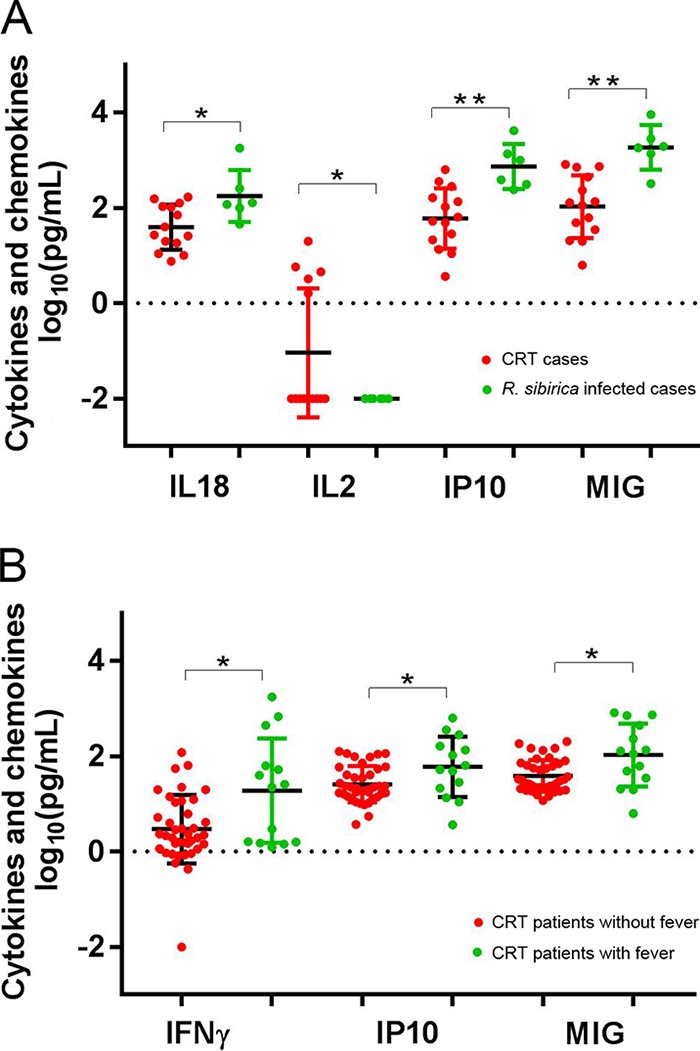
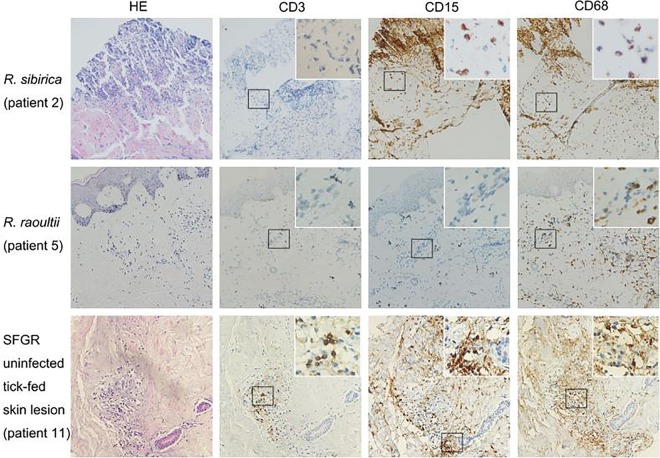
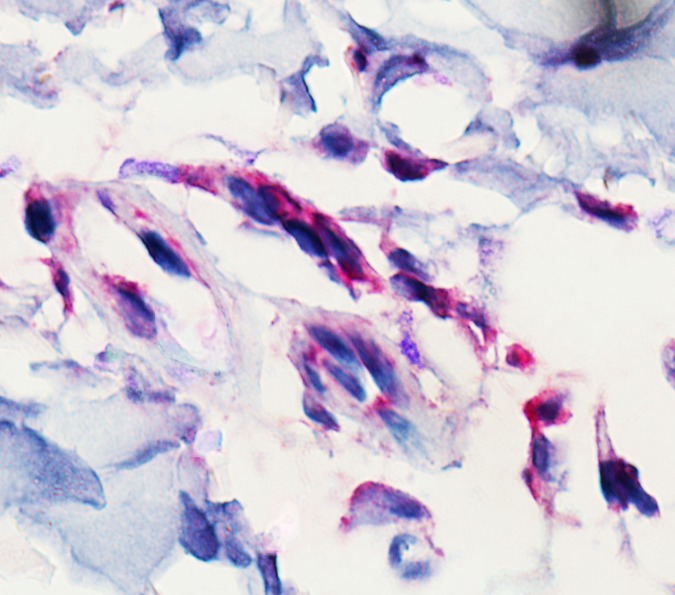
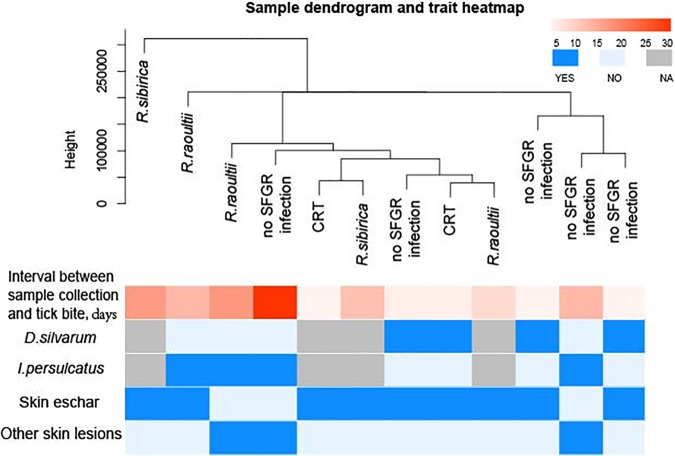
Spotted fever group rickettsia (SFGR) can cause mild to fatal illness. The early interaction between the host and rickettsia in skin is largely unknown, and the pathogenesis of severe rickettsiosis remains an important topic. A surveillance of SFGR infection by PCR of blood and skin biopsy specimens followed by sequencing and immunohistochemical (IHC) detection was performed on patients with a recent tick bite between 2013 and 2016. Humoral and cutaneous immunoprofiles were evaluated in different SFGR cases by serum cytokine and chemokine detection, skin IHC staining, and transcriptome sequencing (RNA-seq). A total of 111 SFGR cases were identified, including 79 " Rickettsia tarasevichiae," 22 , 8 , and 2 cases. The sensitivity to detect SFGR in skin biopsy specimens (9/24, 37.5%) was significantly higher than that in blood samples (105/2,671, 3.9%) ( < 0.05). As early as 1 day after the tick bite, rickettsiae could be detected in the skin. infection was more severe than " Rickettsia" and infections. Increased levels of serum interleukin-18 (IL-18), IP10, and monokine induced by gamma interferon (MIG) and decreased levels of IL-2 were observed in febrile patients infected with compared to those infected with " Rickettsia." RNA-seq and IHC staining could not discriminate between SFGR-infected and uninfected tick bite skin lesions. However, the type I interferon (IFN) response was differently expressed between and infections at the cutaneous interface. It is concluded that skin biopsy specimens were more reliable for the detection of SFGR infection in human patients although the immunoprofile may be complicated by immunomodulators induced by the tick bite.
斑点热群立克次体(SFGR)可引起轻度至致命疾病。宿主与皮肤内立克次体的早期相互作用在很大程度上尚不清楚,而严重立克次体病的发病机制仍是一个重要的研究课题。对 2013 年至 2016 年间近期被蜱叮咬的患者进行了血液和皮肤活检标本的 SFGR 感染 PCR 检测、测序和免疫组化(IHC)检测。通过血清细胞因子和趋化因子检测、皮肤 IHC 染色和转录组测序(RNA-seq)评估不同 SFGR 病例的体液和皮肤免疫谱。共鉴定出 111 例 SFGR 病例,包括 79 例“拉氏立克次体”、22 例、8 例和 2 例。皮肤活检标本检测 SFGR 的敏感性(9/24,37.5%)明显高于血液标本(105/2671,3.9%)(<0.05)。早在蜱叮咬后 1 天,即可在皮肤中检测到立克次体。感染比“拉氏立克次体”和感染更严重。与“拉氏立克次体”感染相比,感染患者血清白细胞介素-18(IL-18)、干扰素诱导蛋白 10(IP10)和γ干扰素诱导的单克隆细胞因子(MIG)水平升高,白细胞介素-2 水平降低。RNA-seq 和 IHC 染色不能区分 SFGR 感染和未感染的蜱咬皮肤损伤。然而,在皮肤界面,I 型干扰素(IFN)反应在和感染之间的表达不同。结论:尽管免疫谱可能受到蜱叮咬诱导的免疫调节剂的影响,但皮肤活检标本更可靠地检测人类患者的 SFGR 感染。