Jayaramaraju Dheenadhayalan, Venkataramani Hari, Rajasekaran Raja Bhaskara, Agraharam Devendra, Sabapathy Shanmuganathan Raja, Rajasekaran Shanmuganathan
Department of Orthopaedics & Trauma, Ganga Medical Centre and Hospitals, Coimbatore, Tamil Nadu, India.
Department of Plastic, Hand and Reconstructive Surgery, Ganga Medical Centre & Hospitals, Coimbatore, Tamil Nadu, India.
Indian J Plast Surg. 2019 Sep;52(3):296-303. doi: 10.1055/s-0039-3400672. Epub 2019 Dec 26.
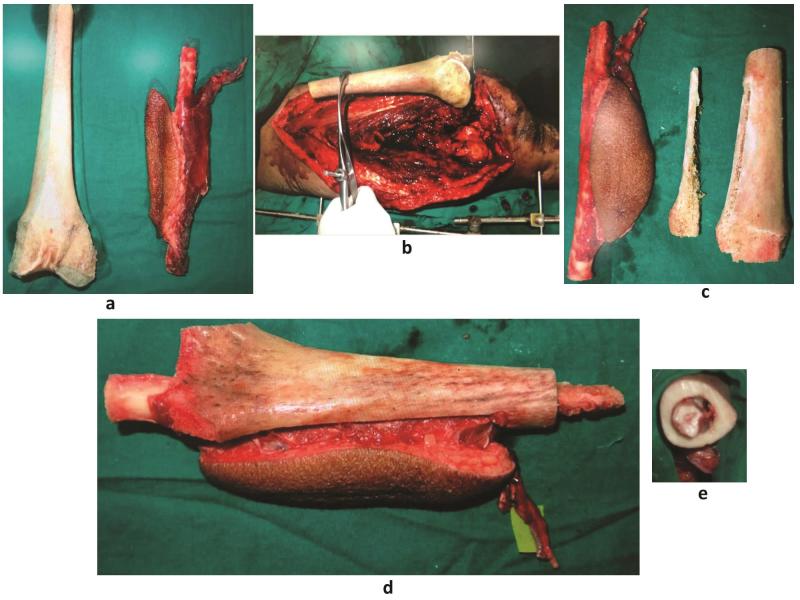
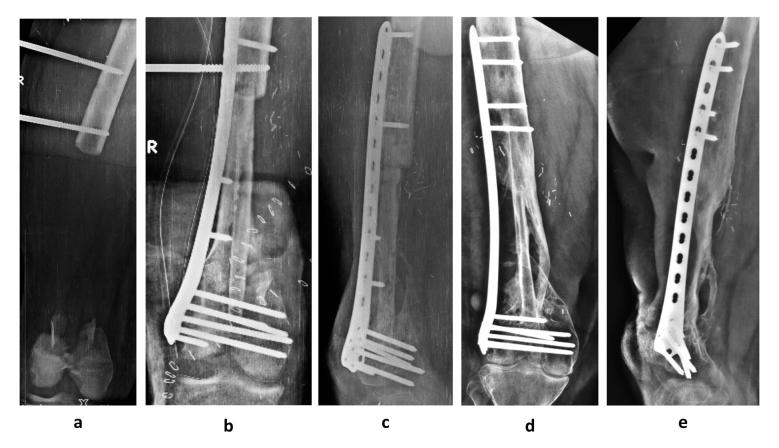
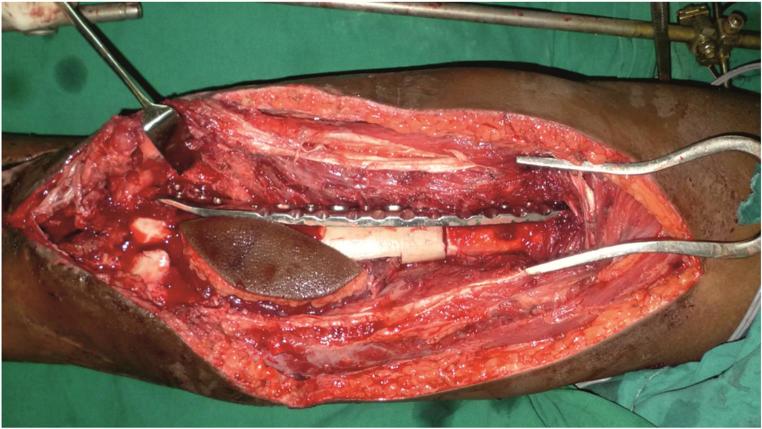
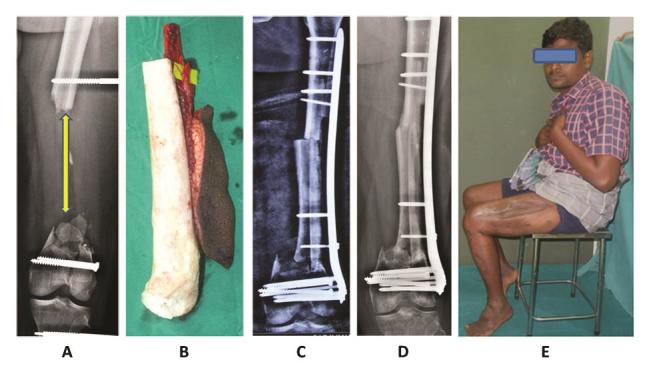
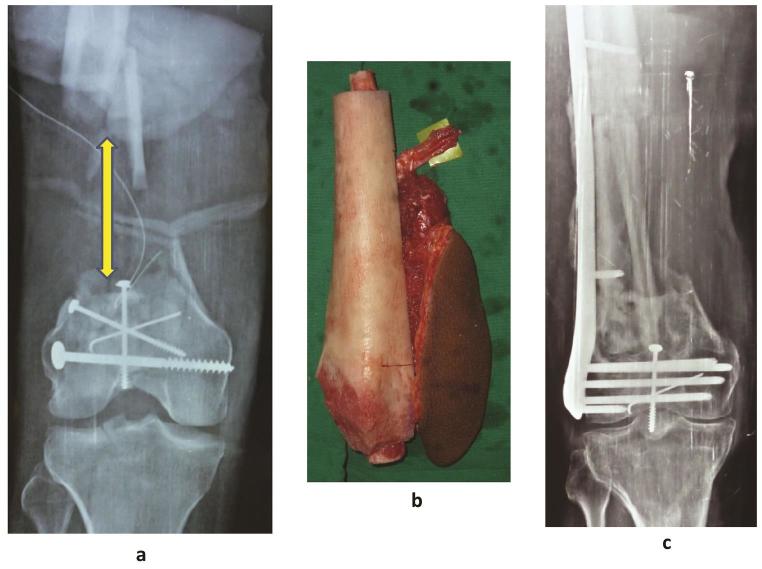
Salvage and reconstruction of posttraumatic defects of the long bone are complex due to the multiple procedures involved and increased chances of poor outcomes. We present the outcomes of the modified Capanna's technique-a reliable single-stage procedure of combining allograft and free vascularized fibular graft-in treating large posttraumatic bone defects in the distal third of the femur. This is a retrospective analysis. Between April 2012 and September 2016, 19 patients with an average age of 33.8 years (range: 18-49 years) and an average defect of 14.5 cm (range: 9.5-20 cm) in the distal femur were managed by the modified Capanna's technique. Bone union time and functional outcome using lower extremity functional score (LEFS) after union were noted. Eighteen grafts went onto achieve bony union at an average of 6.6 months (range: 5-9), with an average knee flexion of 80 degrees (range: 45-110 degrees) and an average LEFS of 63 (range: 46-72). One patient had a nonunion with graft resorption at 8 months following persistent infection and was revised with debridement and augmenting the vascularized fibula from the other leg which went on to achieve union. Three patients had superficial infection, and three patients had delayed union. The modified Capanna's technique provided increased biology and enhanced structural stability and therefore is a good single-stage procedure in the reconstruction of posttraumatic long-segment defects of the distal femur. Level 4. Level I tertiary trauma center.
由于涉及多种手术步骤且预后不良的几率增加,创伤后长骨缺损的挽救和重建较为复杂。我们展示了改良卡潘纳技术(一种可靠的单阶段手术,将同种异体骨与游离血管化腓骨移植相结合)治疗股骨远端三分之一大型创伤后骨缺损的效果。
这是一项回顾性分析。
在2012年4月至2016年9月期间,19例平均年龄33.8岁(范围:18 - 49岁)、股骨远端平均缺损14.5厘米(范围:9.5 - 20厘米)的患者接受了改良卡潘纳技术治疗。记录骨愈合时间以及愈合后使用下肢功能评分(LEFS)评估的功能结果。
18例移植骨平均在6.6个月(范围:5 - 9个月)实现骨愈合,平均膝关节屈曲度为80度(范围:45 - 110度),平均LEFS为63分(范围:46 - 72分)。1例患者在持续感染8个月后出现移植骨吸收且未愈合,接受清创并取自另一条腿的带血管腓骨进行加强修复后实现愈合。3例患者发生浅表感染,3例患者出现延迟愈合。
改良卡潘纳技术增加了生物学活性并增强了结构稳定性,因此是重建股骨远端创伤后长节段缺损的一种良好的单阶段手术。
4级。
一级三级创伤中心。