Diao Yifan, Li Mingshuang, Huang Zhiran, Sun Jing, Chee Yoke Ling, Liu Yunali
School of Public Health, Chinese Academy of Medical Sciences & Peking Union Medical College, Beijing 100730, People's Republic of China.
Third World Network, George Town 10400, Penang, Malaysia.
Risk Manag Healthc Policy. 2019 Dec 18;12:357-367. doi: 10.2147/RMHP.S226379. eCollection 2019.
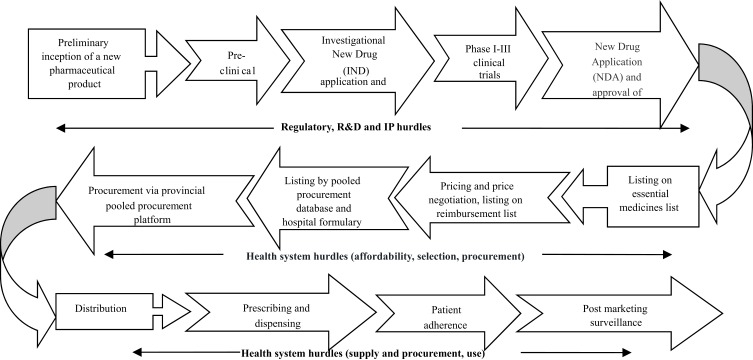
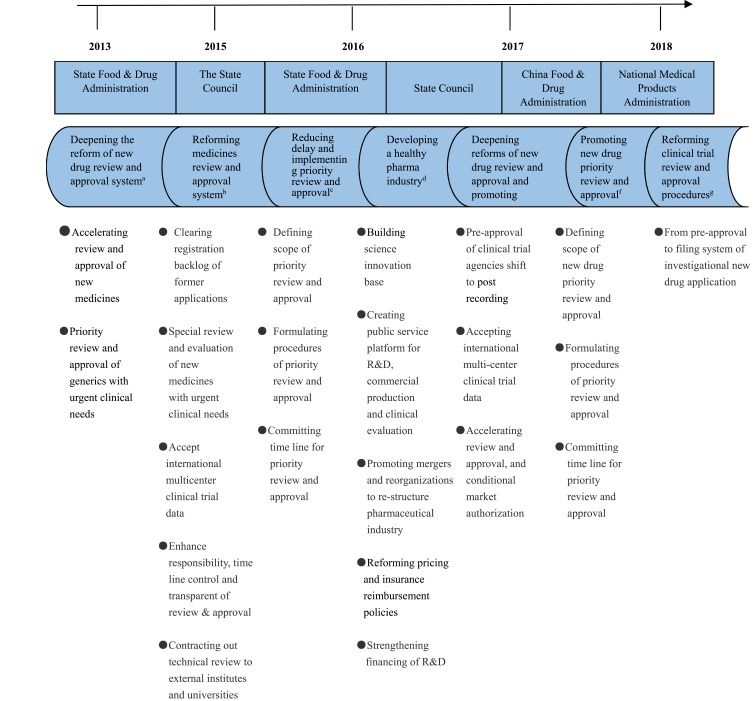
China's healthcare reform aims to provide affordable and equitable basic healthcare for all by 2020. Access to medicines is an essential part of the healthcare. The efforts of promoting access to medicines have been moving from meeting the needs of the basic healthcare, towards increasingly dedicated resources to offer breakthrough therapies. Looking at access to novel medicines from a health system perspective, and placing the changes China has made into that system context, this paper makes a comprehensive review of the progress of access to novel medicines in China. The review drew on two sources of information, which included desk review of published and grey literature, and key informant interview. Five hurdles were identified which create barriers of access to novel medicines, ranging from regulation and financing of medicines, intellectually property rights protection, and development of innovation capacity, to other health system components. Multiple policies have been implementing in China to remove the multiple access barriers gradually. Universal access to medicines has been moving from towards the basic common conditions to the world breakthrough technologies. We see cause for optimism, but recognize that there is a long way to go. Achieving broader and better access to modern medicines for Chinese patients will require multiple and coordinated government efforts, which would need to target the whole lifecycle regulation of novel medicines with a health system perspective, from balancing IP protection, strengthening R&D and public health, to appropriate regulatory approach and financing mechanism, and to supply chain management, as well as smart use.
中国的医疗改革旨在到2020年为全体民众提供负担得起且公平的基本医疗服务。药品可及性是医疗服务的重要组成部分。促进药品可及性的努力已从满足基本医疗需求,转向投入越来越多资源以提供突破性疗法。本文从卫生系统角度审视新型药品的可及性,并将中国所做的变革置于该系统背景下,对中国新型药品可及性的进展进行全面回顾。该回顾借鉴了两类信息来源,包括对已发表文献和灰色文献的案头审查,以及关键信息人访谈。确定了五个阻碍新型药品可及性的障碍,范围从药品监管与融资、知识产权保护、创新能力发展,到其他卫生系统组成部分。中国已在实施多项政策,以逐步消除多重可及性障碍。药品普遍可及性已从基本常见病症迈向世界突破性技术。我们看到了乐观的理由,但也认识到还有很长的路要走。要让中国患者更广泛、更好地获得现代药品,需要政府做出多项协调一致的努力,这需要从卫生系统角度针对新型药品的全生命周期监管,从平衡知识产权保护、加强研发和公共卫生,到采取适当的监管方法和融资机制,再到供应链管理以及合理使用。