Centre of Molecular Inflammation Research, Department of Clinical and Molecular Medicine, Norwegian University of Science and Technology, Trondheim, Norway.
Department of Infectious Diseases, St. Olavs Hospital, Trondheim, Norway.
Nat Commun. 2020 Jan 9;11(1):147. doi: 10.1038/s41467-019-13837-4.
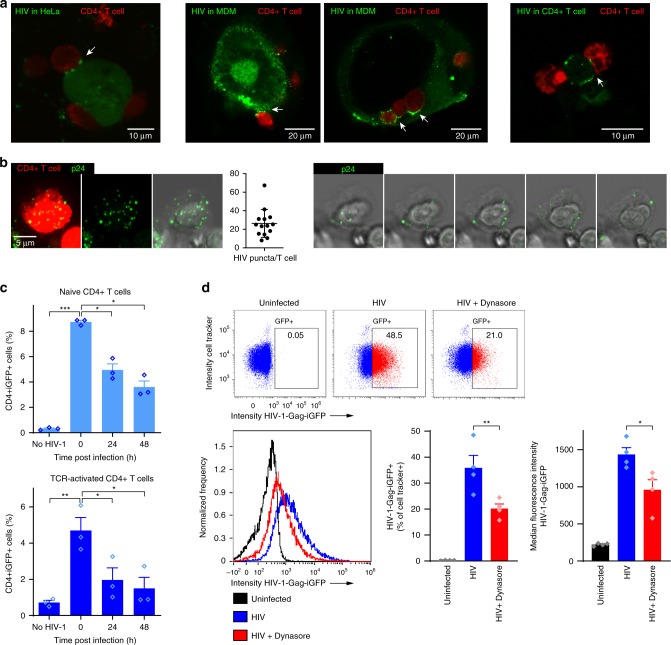
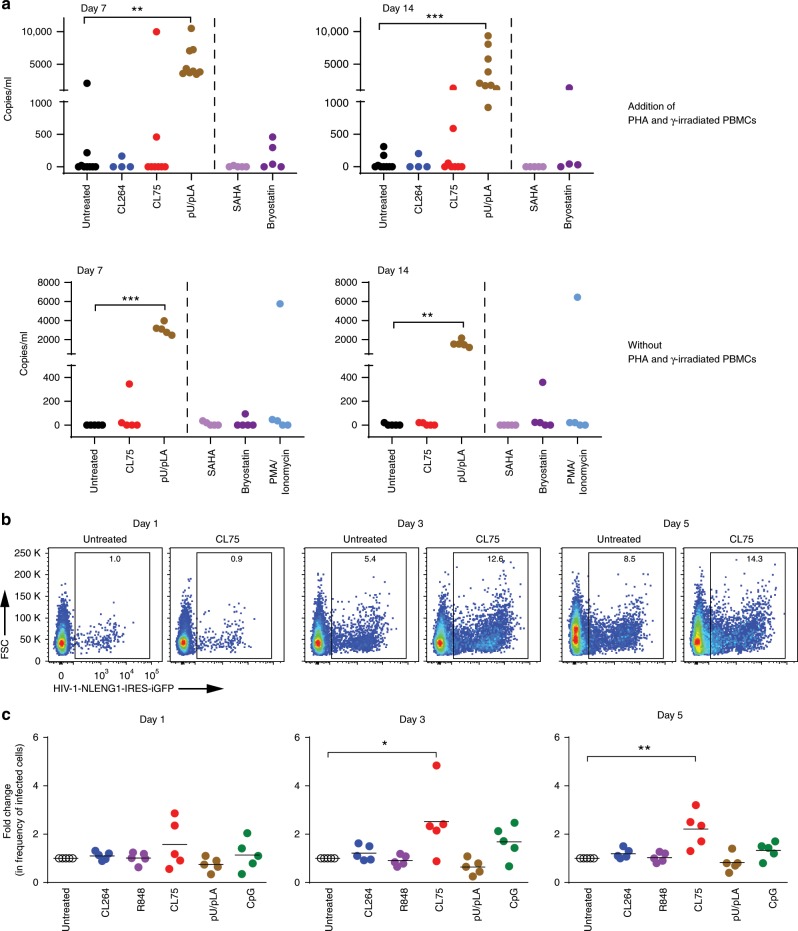
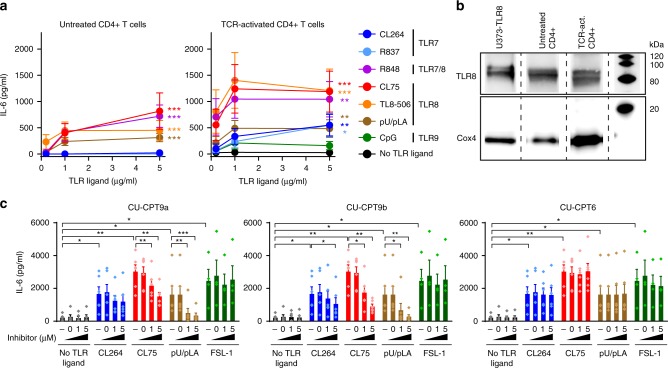
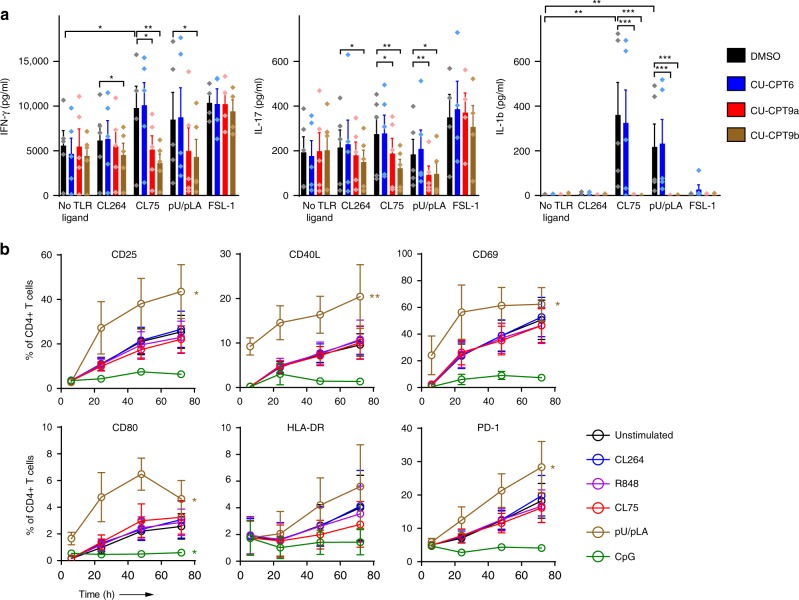
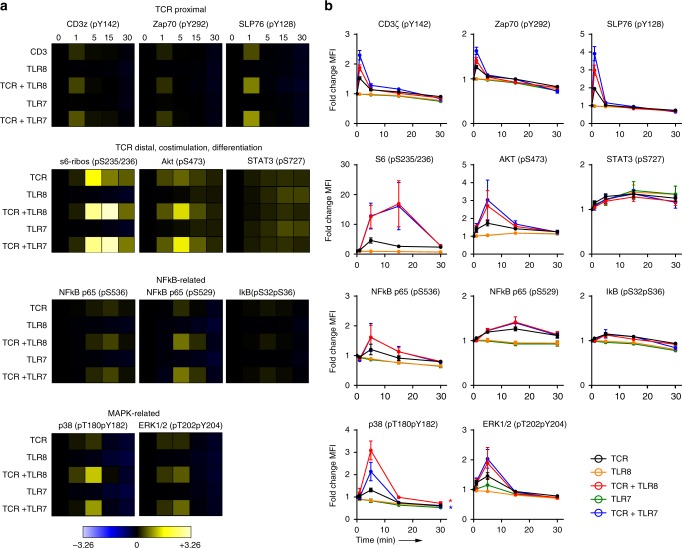
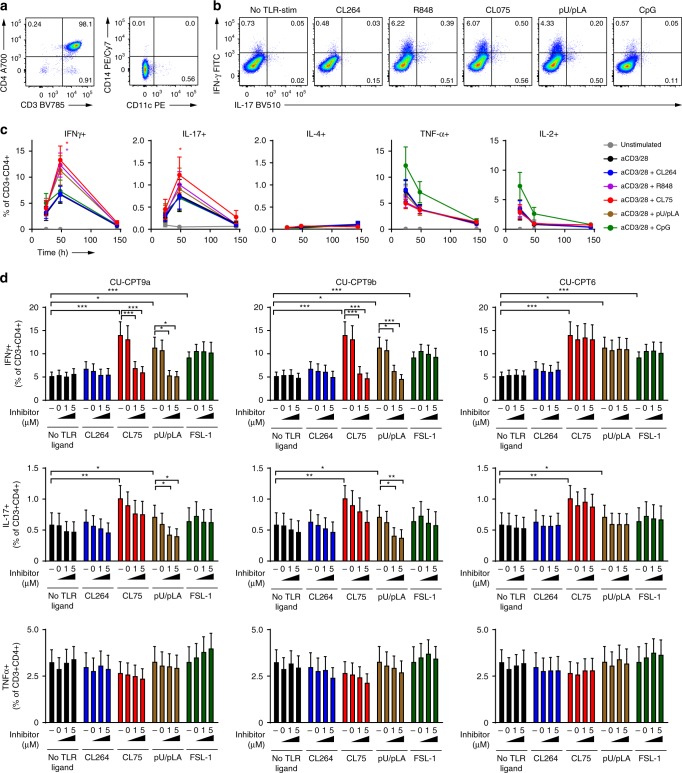
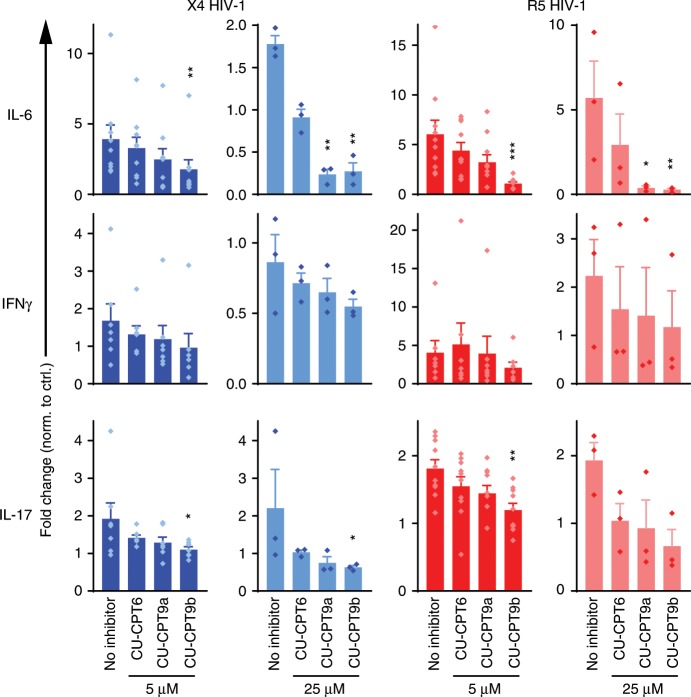
During HIV infection, cell-to-cell transmission results in endosomal uptake of the virus by target CD4+ T cells and potential exposure of the viral ssRNA genome to endosomal Toll-like receptors (TLRs). TLRs are instrumental in activating inflammatory responses in innate immune cells, but their function in adaptive immune cells is less well understood. Here we show that synthetic ligands of TLR8 boosted T cell receptor signaling, resulting in increased cytokine production and upregulation of surface activation markers. Adjuvant TLR8 stimulation, but not TLR7 or TLR9, further promoted T helper cell differentiation towards Th1 and Th17. In addition, we found that endosomal HIV induced cytokine secretion from CD4+ T cells in a TLR8-specific manner. TLR8 engagement also enhanced HIV-1 replication and potentiated the reversal of latency in patient-derived T cells. The adjuvant TLR8 activity in T cells can contribute to viral dissemination in the lymph node and low-grade inflammation in HIV patients. In addition, it can potentially be exploited for therapeutic targeting and vaccine development.
在 HIV 感染过程中,细胞间传播导致病毒被靶 CD4+T 细胞内吞,并使病毒 ssRNA 基因组潜在地暴露于内体 Toll 样受体(TLR)。TLR 在激活先天免疫细胞的炎症反应中起着重要作用,但它们在适应性免疫细胞中的功能还不太清楚。在这里,我们发现 TLR8 的合成配体增强了 T 细胞受体信号转导,导致细胞因子产生增加和表面激活标记物上调。TLR8 的佐剂刺激,而不是 TLR7 或 TLR9,进一步促进了 T 辅助细胞向 Th1 和 Th17 的分化。此外,我们发现内体 HIV 以 TLR8 特异性的方式诱导 CD4+T 细胞分泌细胞因子。TLR8 的结合还增强了 HIV-1 的复制,并增强了患者来源的 T 细胞中潜伏期的逆转。TLR8 在 T 细胞中的佐剂活性可导致淋巴结中的病毒传播和 HIV 患者的低度炎症。此外,它可能被用于治疗性靶向和疫苗开发。