Cancer Research Center, Qatar Biomedical Research Institute (QBRI), Hamad Bin Khalifa University (HBKU), Qatar Foundation (QF), Doha, Qatar.
Department of Pathology, Hamad Medical Corporation, Doha, Qatar.
Front Immunol. 2019 Dec 17;10:2936. doi: 10.3389/fimmu.2019.02936. eCollection 2019.
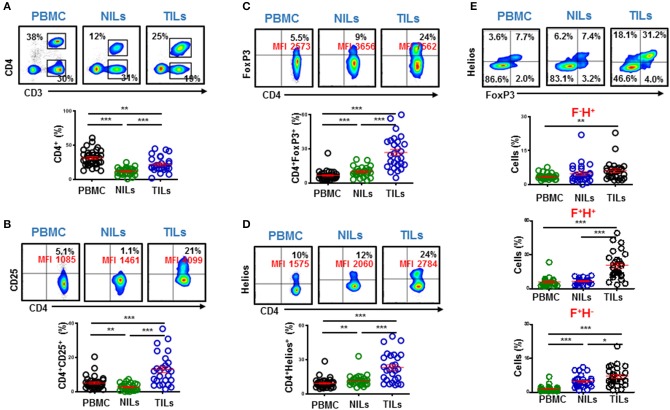
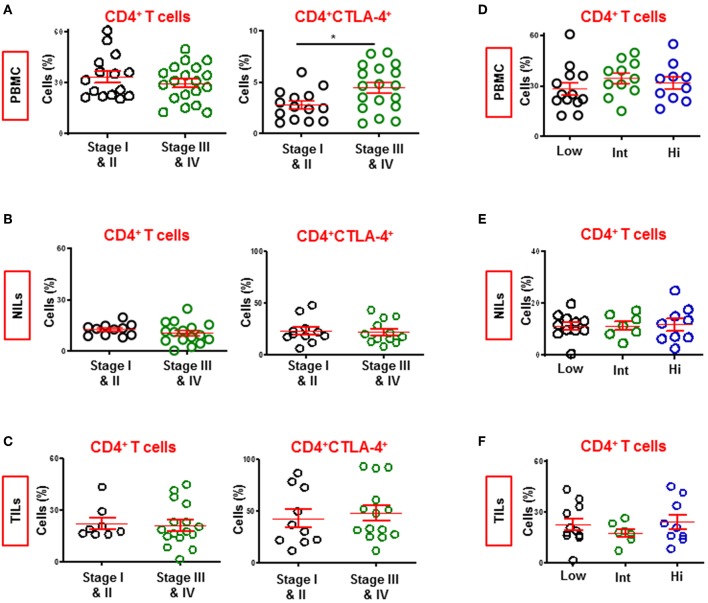
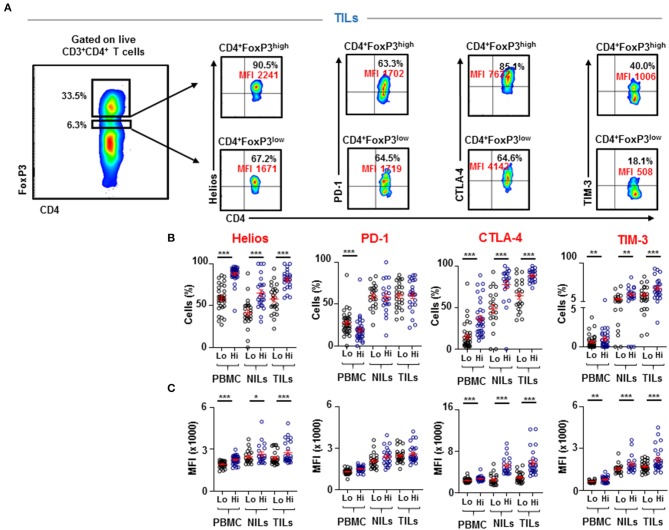
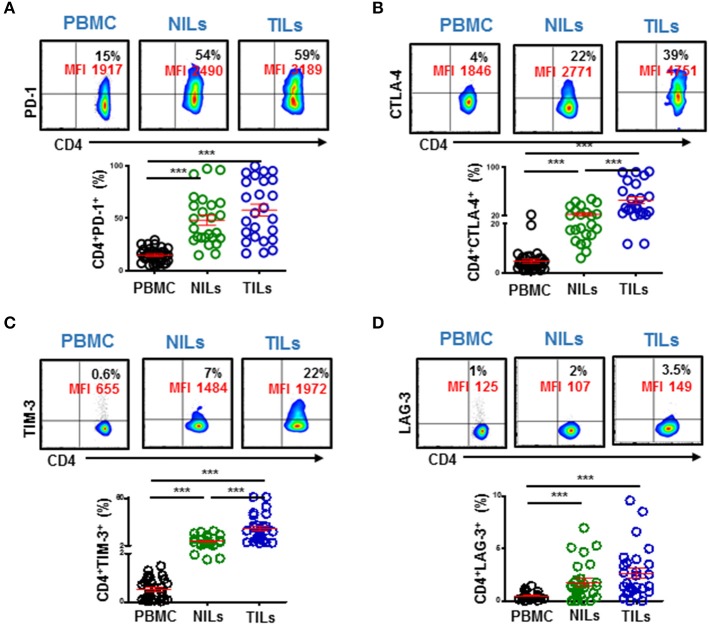
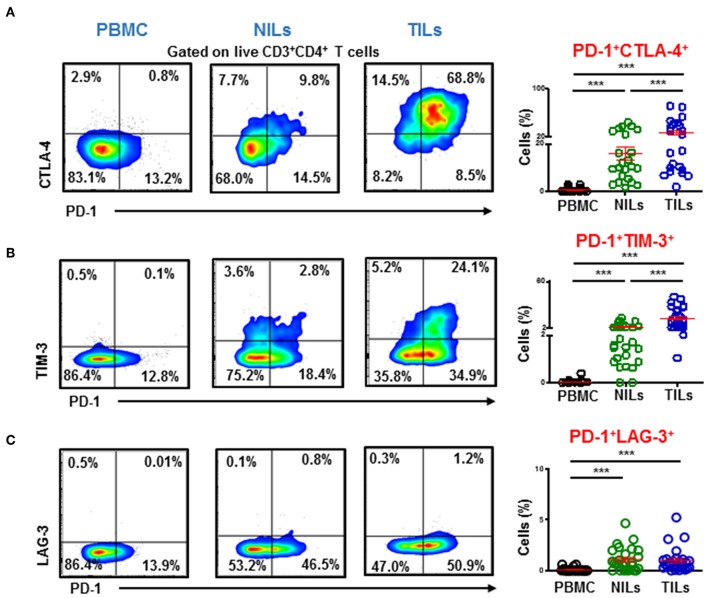
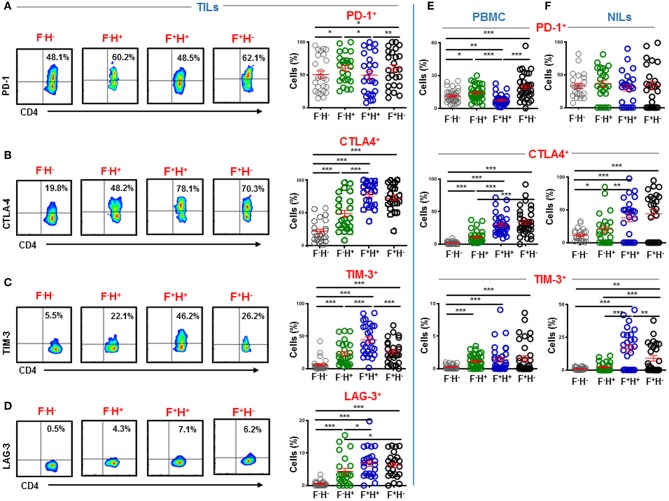
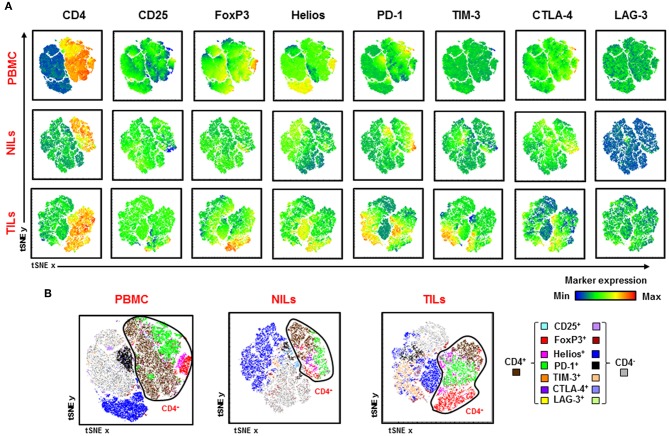
Blockade of inhibitory immune checkpoints (ICs) is a promising therapeutic approach; however, it has shown limited success in some cancers including colorectal cancer (CRC). The tumor microenvironment (TME) is largely responsible for response to therapy, and its constituents may provide robust biomarkers for successful immunotherapeutic approaches. In this study, we performed phenotypical characterization and critical analyses of key inhibitory ICs and T regulatory cell (Treg)-related markers on CD4 T cell subsets in CRC patients, and compared with normal colon tissues and peripheral blood from the same patients. We also investigated correlations between the levels of different CD4 T cell subsets and the clinicopathologic features including disease stage and tumor budding. We found a significant increase in the levels of CD4FoxP3Helios T cells, which represent potentially highly immunosuppressive Tregs, in the CRC TME. Additionally, tumor-infiltrating CD4 T cells upregulated programmed cell death protein-1 (PD-1), cytotoxic T-lymphocyte-associated protein-4 (CTLA-4), T cell immunoglobulin and mucin domain-3 (TIM-3) and lymphocyte-activation gene 3 (LAG-3). We also characterized the expression of PD-1, CTLA-4, TIM-3, and LAG-3 on different CD4FoxP3Helios T cell subsets. Interestingly, we found that CTLA-4, TIM-3, and LAG-3 were mainly co-expressed on FoxP3Helios Tregs in the TME. Additionally, FoxP3 Tregs expressed higher levels of Helios, CTLA-4 and TIM-3 than FoxP3 T cells. These results highlight the significance of Tregs in the CRC TME and suggest that Tregs may hamper response to IC blockade in CRC patients, but effects of different IC inhibition regimes on Treg levels or activity warrants further investigations. We also found that CD4CTLA-4 T cells in circulation are increased in patients with advanced disease stage. This study simultaneously provides important insights into the differential levels of CD4 T cell subpopulations and IC expression in CRC TME, compared to periphery and associations with clinicopathologic features, which could be used as potential biomarkers for CRC progression and response to therapy.
阻断抑制性免疫检查点(ICs)是一种很有前途的治疗方法;然而,它在一些癌症中,包括结直肠癌(CRC)中的疗效有限。肿瘤微环境(TME)在很大程度上决定了治疗反应,其成分可能为成功的免疫治疗方法提供强大的生物标志物。在这项研究中,我们对 CRC 患者的 CD4 T 细胞亚群中的关键抑制性 IC 和 T 调节细胞(Treg)相关标志物进行了表型特征分析和关键分析,并与正常结肠组织和来自同一患者的外周血进行了比较。我们还研究了不同 CD4 T 细胞亚群的水平与临床病理特征(包括疾病分期和肿瘤芽生)之间的相关性。我们发现 CRC TME 中 CD4FoxP3Helios T 细胞水平显著升高,这些细胞代表潜在的高度免疫抑制性 Treg。此外,肿瘤浸润性 CD4 T 细胞上调程序性细胞死亡蛋白-1(PD-1)、细胞毒性 T 淋巴细胞相关蛋白-4(CTLA-4)、T 细胞免疫球蛋白和粘蛋白结构域-3(TIM-3)和淋巴细胞激活基因 3(LAG-3)。我们还对 PD-1、CTLA-4、TIM-3 和 LAG-3 在不同 CD4FoxP3Helios T 细胞亚群上的表达进行了特征描述。有趣的是,我们发现 CTLA-4、TIM-3 和 LAG-3 主要在 TME 中的 FoxP3Helios Treg 上共表达。此外,FoxP3 Treg 表达的 Helios、CTLA-4 和 TIM-3 水平高于 FoxP3 T 细胞。这些结果突出了 Treg 在 CRC TME 中的重要性,并表明 Treg 可能阻碍 CRC 患者对 IC 阻断的反应,但不同 IC 抑制方案对 Treg 水平或活性的影响仍需要进一步研究。我们还发现,晚期疾病患者循环中 CD4CTLA-4 T 细胞增加。这项研究同时提供了关于 CRC TME 中与外周相比 CD4 T 细胞亚群和 IC 表达水平的重要见解,以及与临床病理特征的关联,这些可能作为 CRC 进展和治疗反应的潜在生物标志物。