Wei Feng, Zhao Lihong, Xu Xiangming, Feng Hongjie, Shi Yongqiang, Deakin Greg, Feng Zili, Zhu Heqin
Zhengzhou Research Base, State Key Laboratory of Cotton Biology, Zhengzhou University, Zhengzhou, China.
Institute of Cotton Research, Chinese Academy of Agricultural Sciences, Anyang, China.
Front Plant Sci. 2019 Dec 20;10:1659. doi: 10.3389/fpls.2019.01659. eCollection 2019.
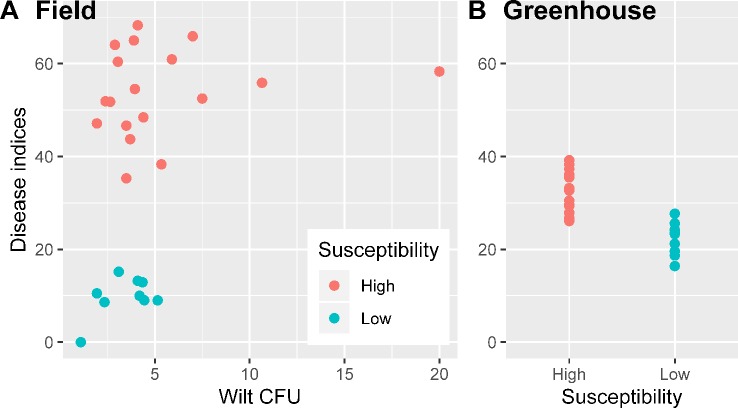
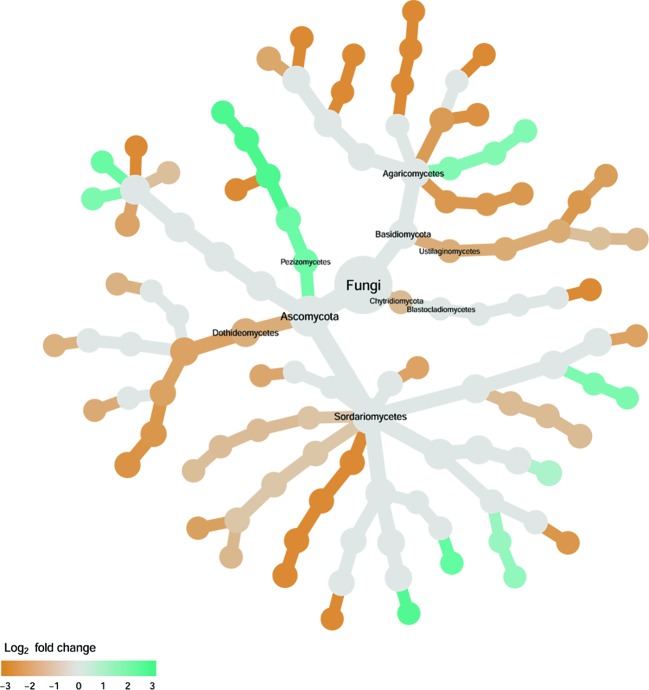
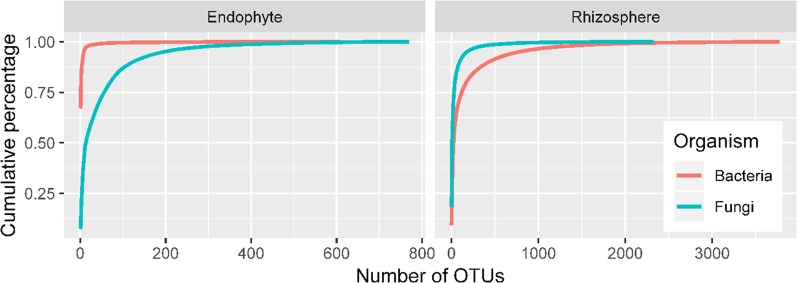
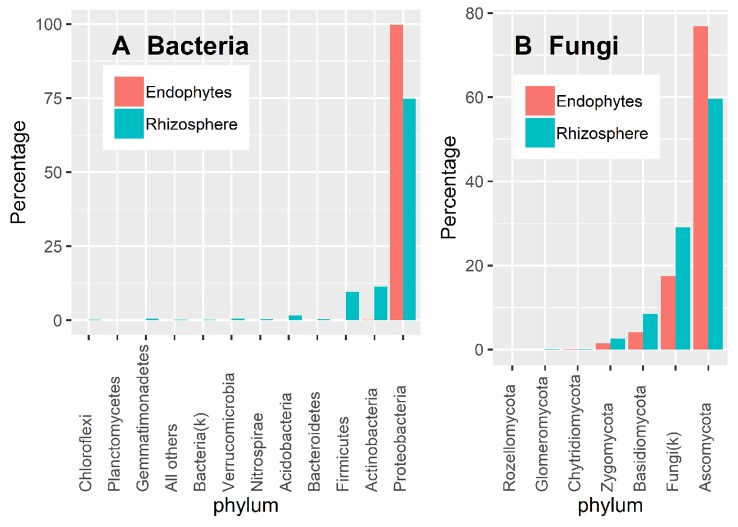
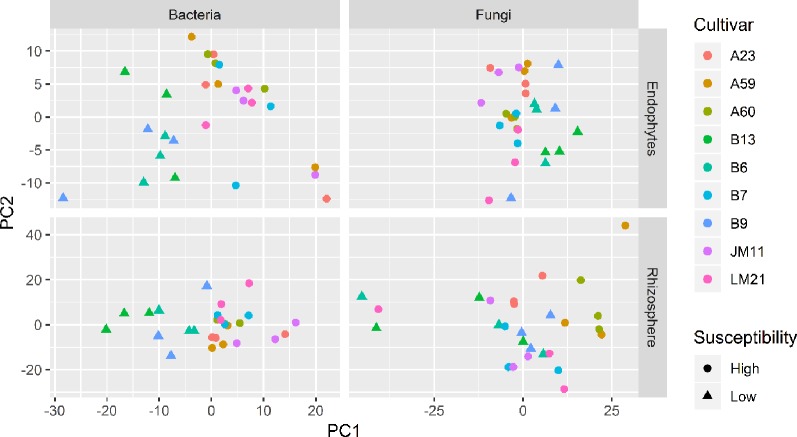
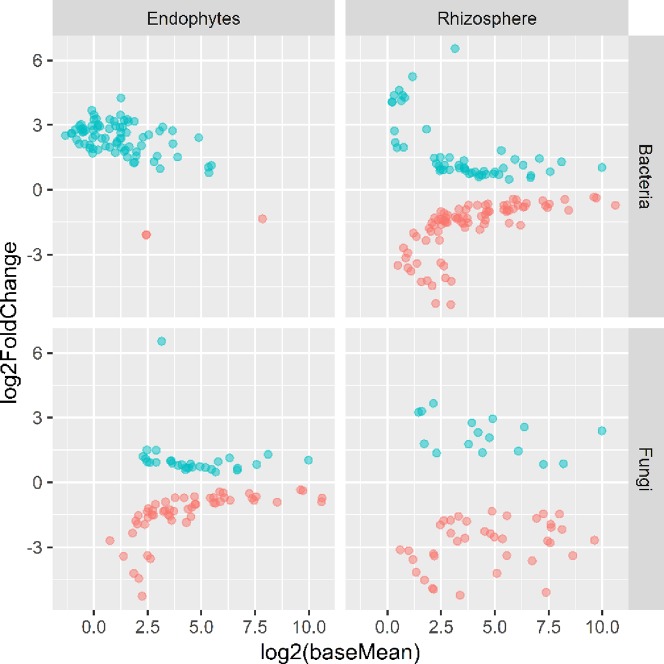
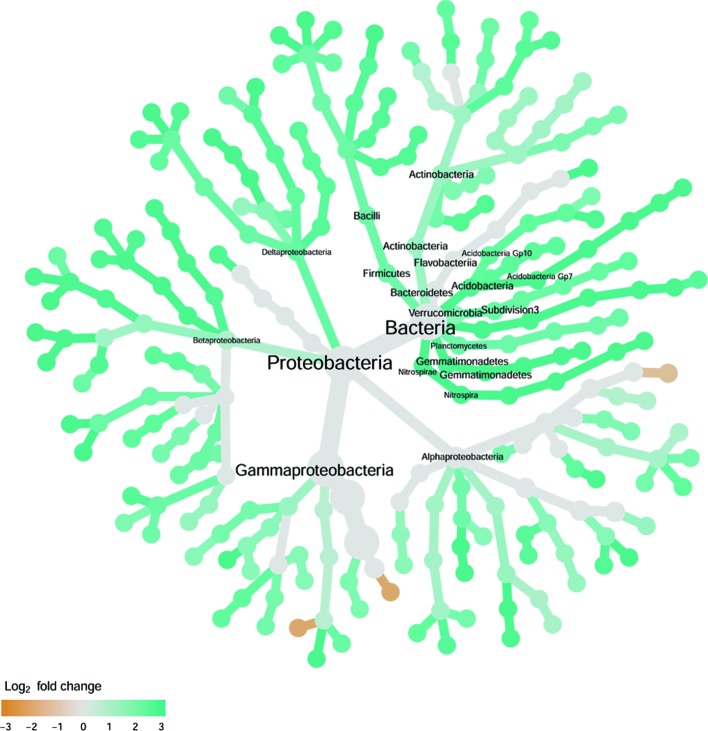
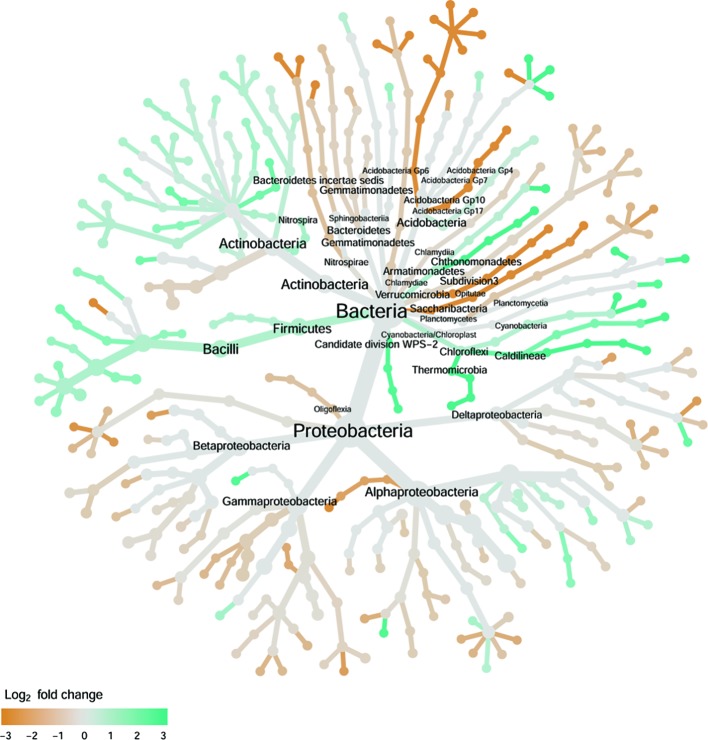
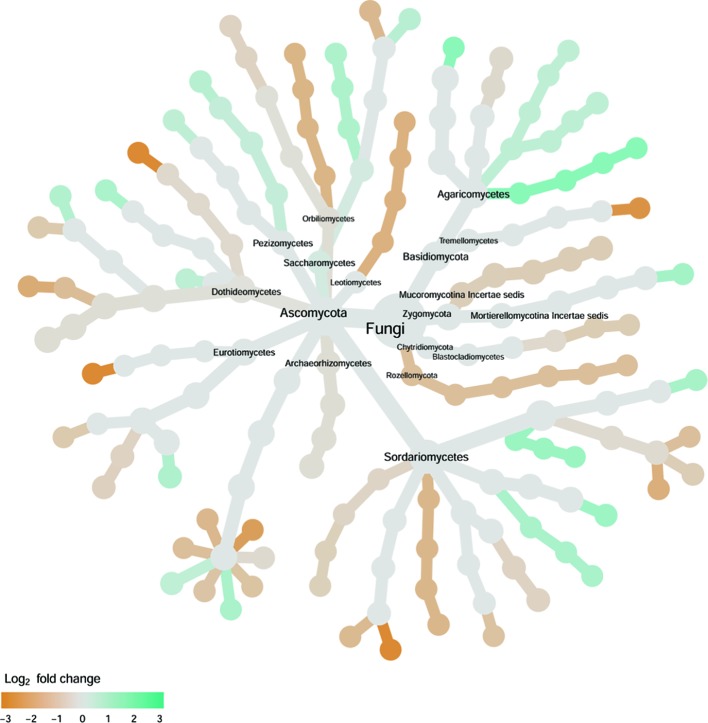
wilt caused by is a common soil-borne disease worldwide, affecting many economically important crop species. Soil microbes can influence plant disease development. We investigated rhizosphere and endosphere microbiomes in relation to cotton cultivars with differential susceptibility to wilt. Soil samples from nine cotton cultivars were assessed for the density of microsclerotia; plants were assessed for disease development. We used amplicon sequencing to profile both bacterial and fungal communities. Unlike wilt severity, wilt inoculum density did not differ significantly among resistant and susceptible cultivars. Overall, there were no significant association of alpha diversity indices with wilt susceptibility. In contrast, there were clear differences in the overall rhizosphere and endosphere microbial communities, particularly bacteria, between resistant and susceptible cultivars. Many rhizosphere and endosphere microbial groups differed in their relative abundance between resistant and susceptible cultivars. These operational taxonomic units included several well-known taxonomy groups containing beneficial microbes, such as Bacillales, Pseudomonadales, Rhizobiales, and , which were higher in their relative abundance in resistant cultivars. Greenhouse studies with sterilized soil supported that beneficial microbes in the rhizosphere contribute to reduced wilt development. These findings suggested that specific rhizosphere and endosphere microbes may contribute to cotton resistance to .
由[病原体名称未给出]引起的枯萎病是一种全球常见的土传病害,影响许多具有重要经济价值的作物品种。土壤微生物会影响植物病害的发展。我们研究了与对[病原体名称未给出]枯萎病易感性不同的棉花品种相关的根际和内生微生物群落。对九个棉花品种的土壤样本进行了[病原体名称未给出]微菌核密度评估;对植株进行了病害发展评估。我们使用扩增子测序来分析细菌和真菌群落。与枯萎病严重程度不同,抗性和感病品种之间的枯萎病菌接种密度没有显著差异。总体而言,α多样性指数与枯萎病易感性没有显著关联。相比之下,抗性和感病品种之间的根际和内生微生物群落总体上存在明显差异,尤其是细菌。许多根际和内生微生物类群在抗性和感病品种之间的相对丰度不同。这些操作分类单元包括几个含有有益微生物的知名分类群,如芽孢杆菌目、假单胞菌目、根瘤菌目和[未明确的分类群名称未给出],它们在抗性品种中的相对丰度较高。在无菌土壤中进行的温室研究表明,根际中的有益微生物有助于减少枯萎病的发展。这些发现表明,特定的根际和内生微生物可能有助于棉花对[病原体名称未给出]的抗性。