do Carmo Fillipe Luiz Rosa, Rabah Houem, Cordeiro Barbara Fernandes, da Silva Sara Heloisa, Pessoa Rafaela Miranda, Fernandes Simone Odília Antunes, Cardoso Valbert Nascimento, Gagnaire Valérie, Deplanche Martine, Savassi Bruna, Figueiroa Alessandra, Oliveira Emiliano Rosa, Fonseca Caio César, Queiroz Maria Izabel Alves, Rodrigues Núbia Morais, Sandes Sávio Henrique de Cicco, Nunes Álvaro Cantini, Lemos Luisa, Alves Juliana de Lima, Faria Ana Maria Caetano, Ferreira Ênio, Le Loir Yves, Jan Gwénaël, Azevedo Vasco
Instituto de Ciências Biológicas, Universidade Federal de Minas Gerais (UFMG), Belo Horizonte, Minas Gerais, Brasil.
STLO, INRA, Agrocampus Ouest, UMR1253, Science & Technologie du Lait & de l'Oeuf, Rennes, France.
Oncotarget. 2019 Dec 31;10(68):7198-7219. doi: 10.18632/oncotarget.27319.
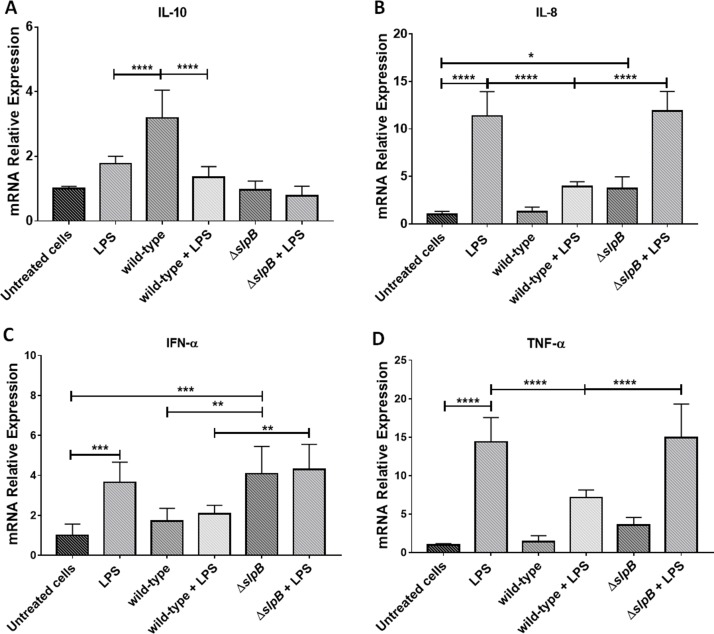
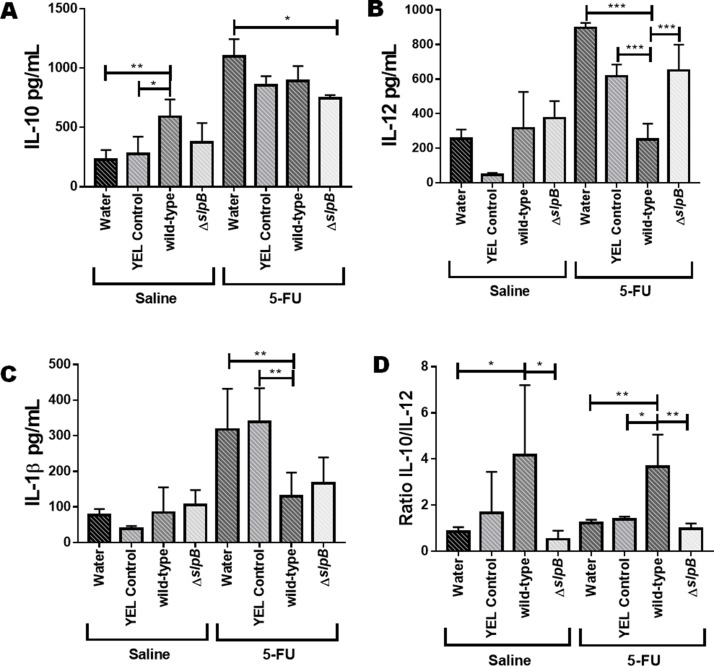
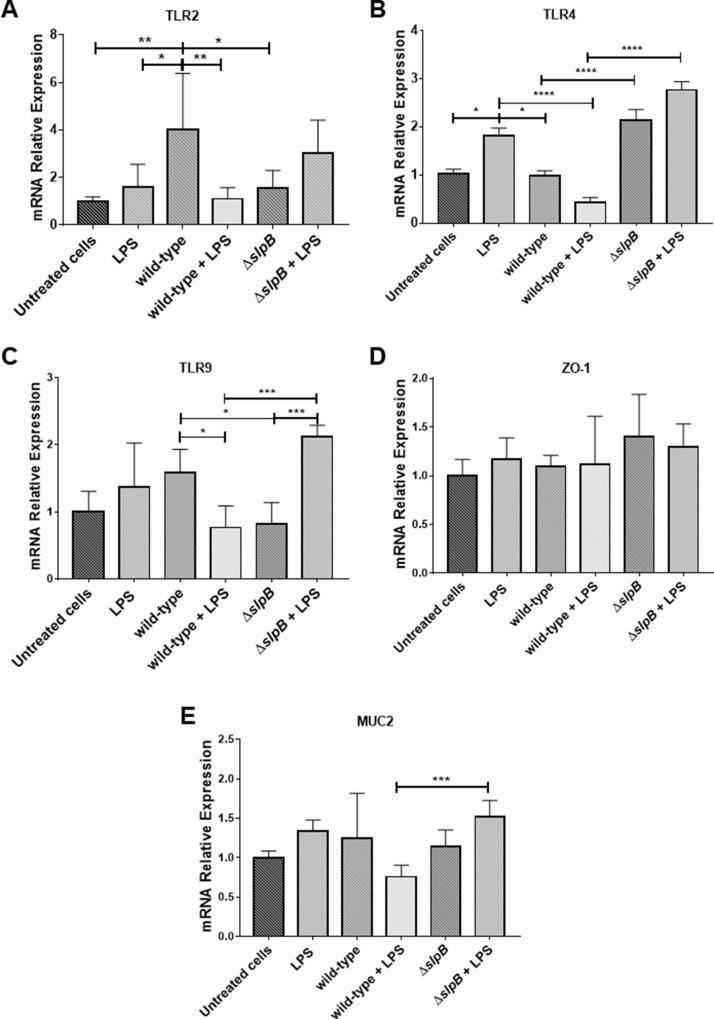
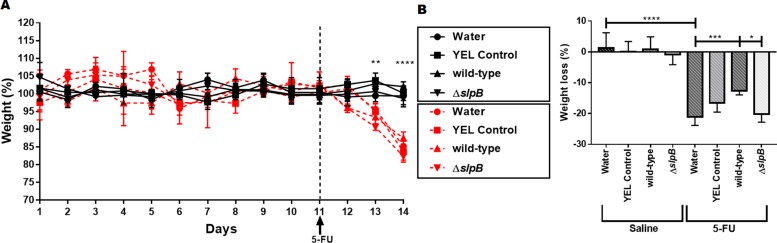
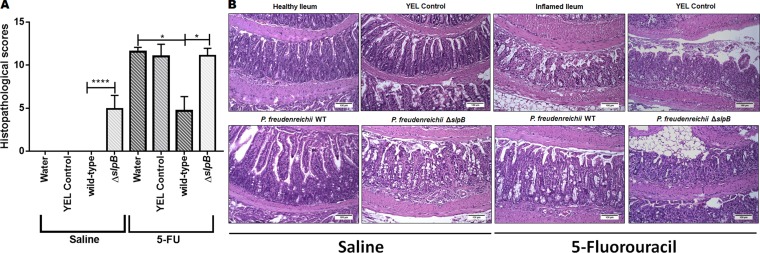
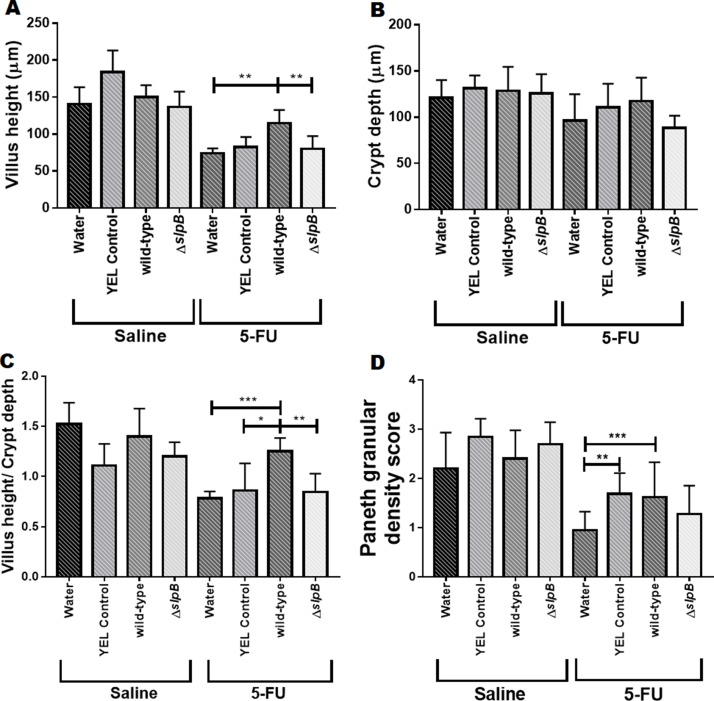
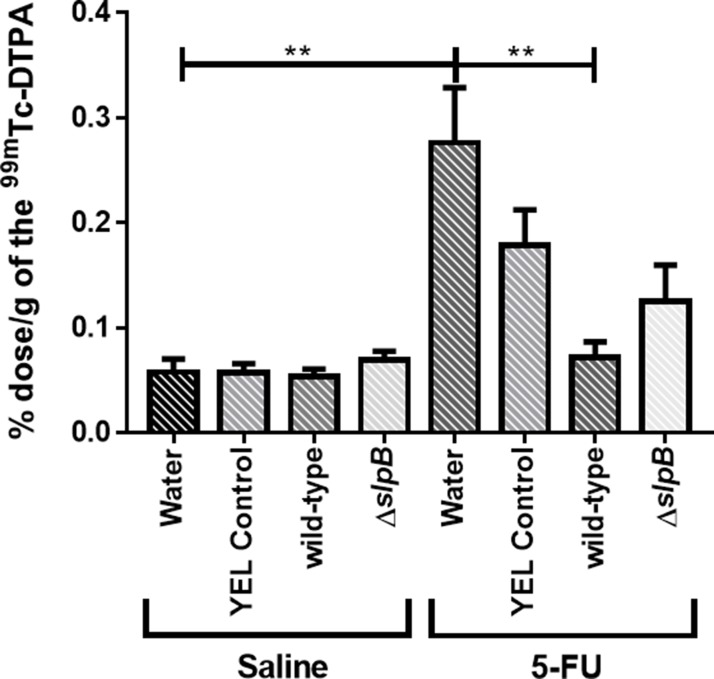
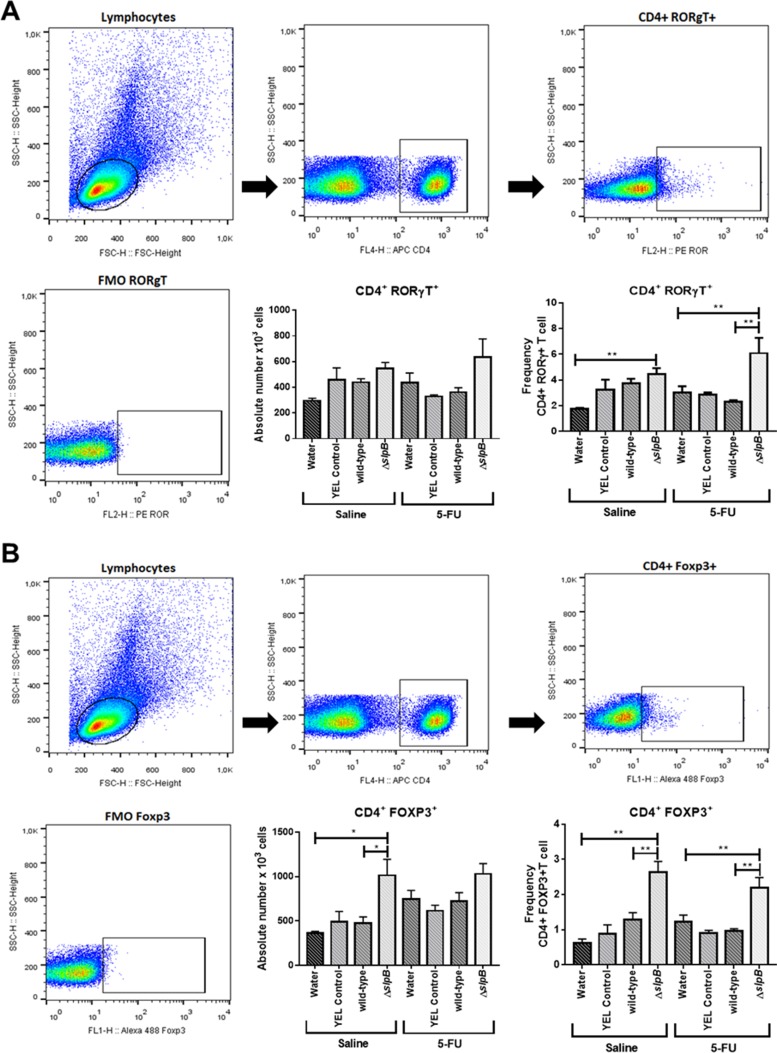
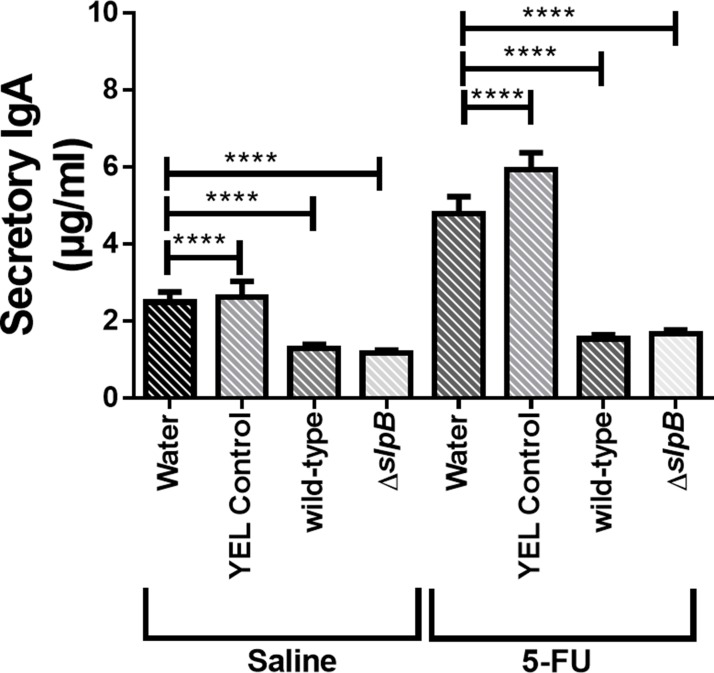
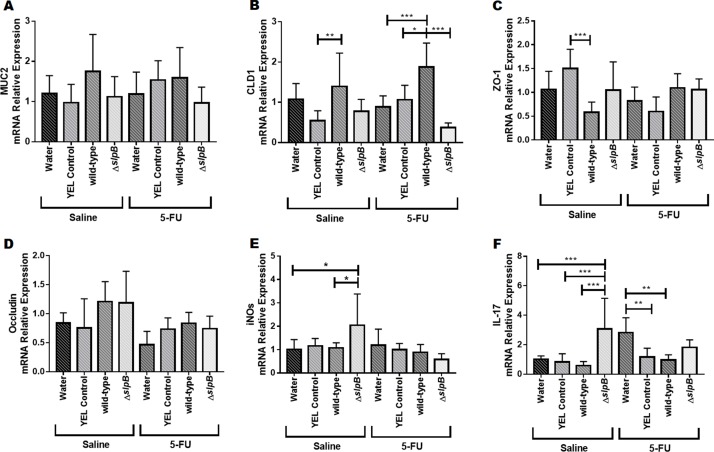
CIRM-BIA 129 ( wild type, WT) is a probiotic bacterium, which exerts immunomodulatory effects. This strain possesses extractable surface proteins, including SlpB, which are involved in anti-inflammatory effect and in adhesion to epithelial cells. We decided to investigate the impact of gene mutation on immunomodulation and . In an assay, WT reduced expression of IL-8 (p<0.0001) and TNF-α (p<0.0001) cytokines in LPS-stimulated HT-29 cells. Δ, lacking the SlpB protein, failed to do so. Subsequently, both strains were investigated in a 5-FU-induced mucositis mice model. Mucositis is a common side effect of cytotoxic chemotherapy with 5-FU, characterized by mucosal injury, inflammation, diarrhea, and weight loss. The WT strain prevented weight loss, reduced inflammation and consequently histopathological scores. Furthermore, it regulated key markers, including Claudin-1 , p<0.0005) and IL-17a (, p<0.0001) genes, as well as IL-12 (p<0.0001) and IL-1β (p<0.0429) cytokines levels. Mutant strain displayed opposite regulatory effect on expression and on IL-12 levels. This work emphasizes the importance of SlpB in ability to reduce mucositis inflammation. It opens perspectives for the development of probiotic products to decrease side effects of chemotherapy using GRAS bacteria with immunomodulatory surface protein properties.
CIRM - BIA 129(野生型,WT)是一种益生菌,具有免疫调节作用。该菌株拥有可提取的表面蛋白,包括SlpB,这些蛋白参与抗炎作用以及与上皮细胞的黏附。我们决定研究基因突变对免疫调节的影响。在一项实验中,野生型菌株降低了脂多糖刺激的HT - 29细胞中白细胞介素 - 8(IL - 8,p < 0.0001)和肿瘤坏死因子 - α(TNF - α,p < 0.0001)细胞因子的表达。缺乏SlpB蛋白的Δ菌株则无法做到这一点。随后,在5 - 氟尿嘧啶(5 - FU)诱导的黏膜炎小鼠模型中对这两种菌株进行了研究。黏膜炎是5 - FU细胞毒性化疗的常见副作用,其特征为黏膜损伤、炎症、腹泻和体重减轻。野生型菌株可防止体重减轻,减轻炎症并因此降低组织病理学评分。此外,它还调节关键标志物,包括闭合蛋白 - 1(Claudin - 1,p < 0.0005)和白细胞介素 - 17a(IL - 17a,p < 0.0001)基因,以及白细胞介素 - 12(IL - 12,p < 0.0001)和白细胞介素 - 1β(IL - 1β,p < 0.0429)细胞因子水平。突变菌株对这些表达和IL - 12水平表现出相反的调节作用。这项工作强调了SlpB在减轻黏膜炎炎症能力方面的重要性。它为开发益生菌产品以降低使用具有免疫调节表面蛋白特性的一般认为安全(GRAS)细菌进行化疗的副作用开辟了前景。