Silva Victor Menezes, Gomes Jessica Alves, Tenório Liliane Patrícia Gonçalves, de Omena Neta Genilda Castro, da Costa Paixão Karen, Duarte Ana Kelly Fernandes, da Silva Gabriel Cerqueira Braz, Ferreira Ricardo Jansen Santos, Koike Bruna Del Vechio, de Sales Marques Carolinne, da Silva Miguel Rafael Danyllo, de Queiroz Aline Cavalcanti, Pereira Luciana Xavier, de Carvalho Fraga Carlos Alberto
Department of Medicine, Federal University of Alagoas, Campus Arapiraca, Brazil.
Department of Medicine, Federal University of the São Francisco Valley, Petrolina, Brazil.
Oncotarget. 2019 Dec 31;10(68):7288-7307. doi: 10.18632/oncotarget.27204.
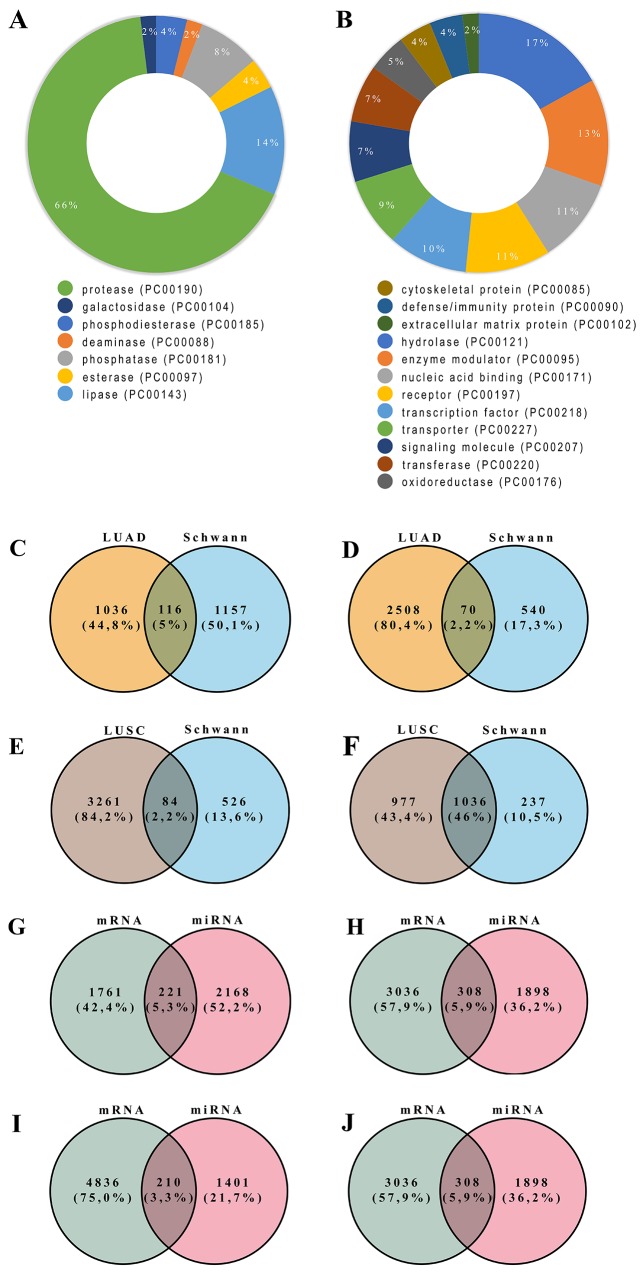
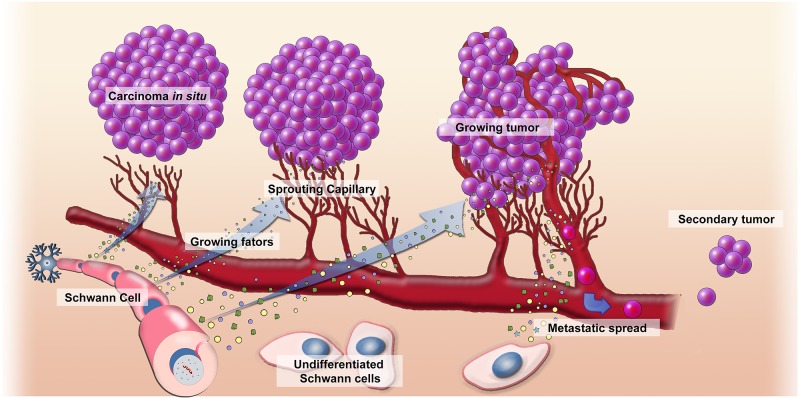
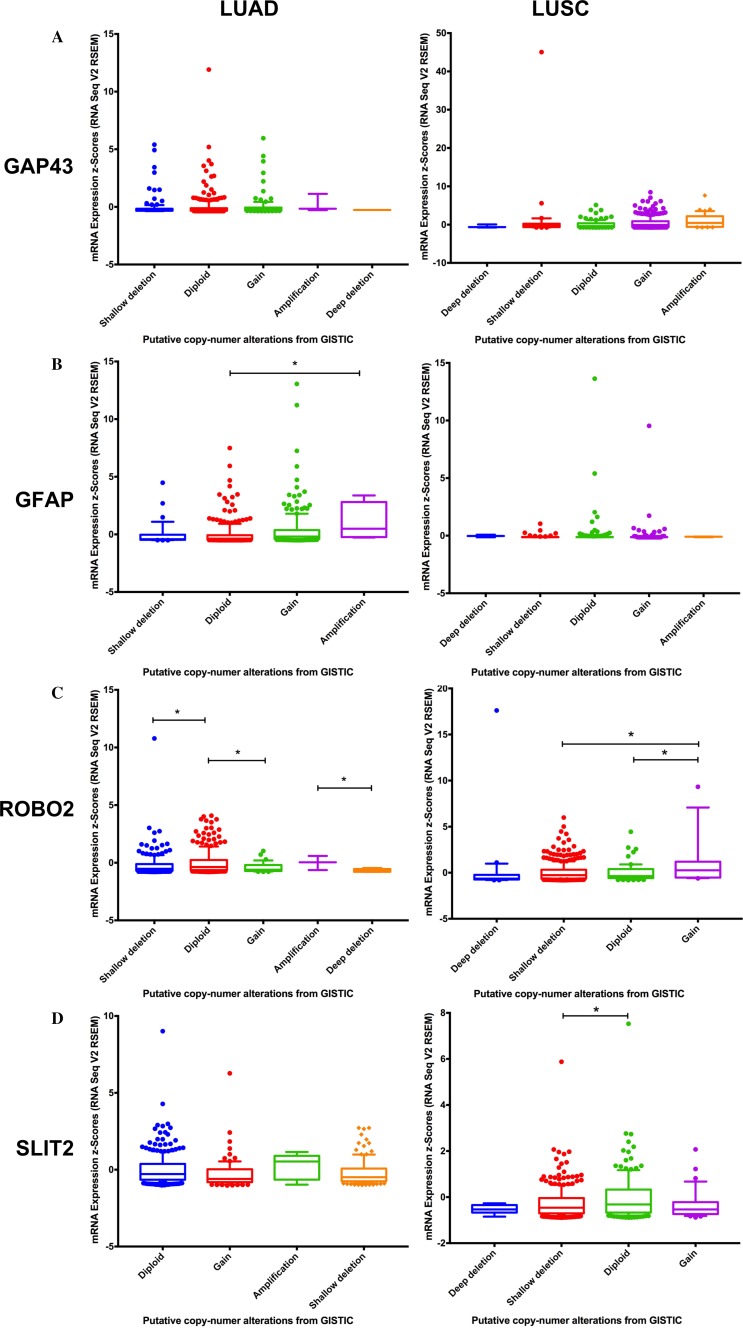
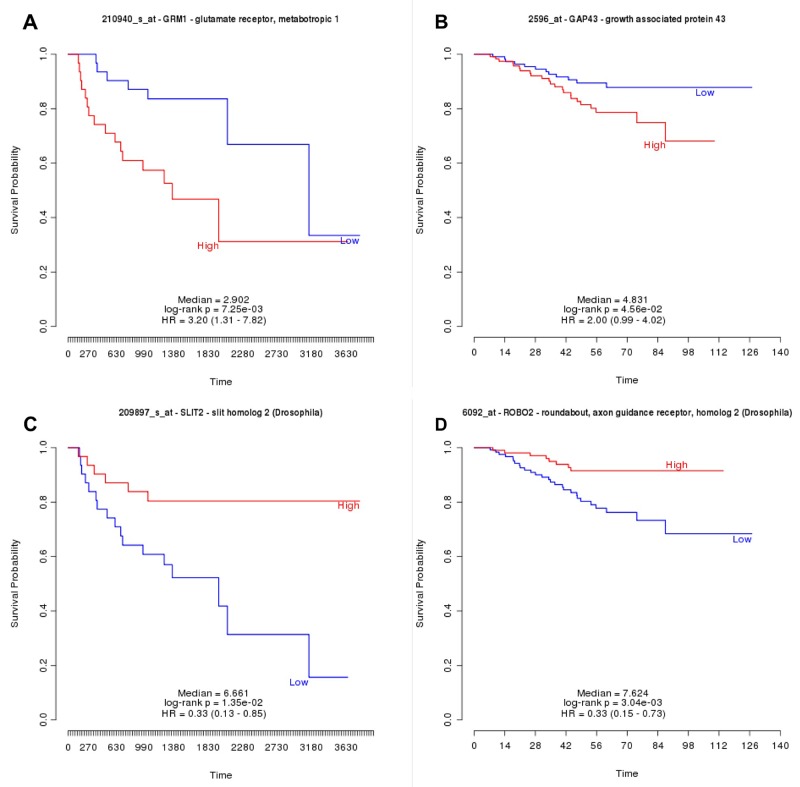
Schwann cells were identified in the tumor surrounding area prior to initiate the invasion process underlying connective tissue. These cells promote cancer invasion through direct contact, while paracrine signaling and matrix remodeling are not sufficient to proceed. Considering the intertwined structure of signaling, regulatory, and metabolic processes within a cell, we employed a genome-scale biomolecular network. Accordingly, a meta-analysis of Schwann cells associated transcriptomic datasets was performed, and the core information on differentially expressed genes (DEGs) was obtained by statistical analyses. Gene set over-representation analyses was performed on core DEGs to identify significantly functional and pathway enrichment analysis between Schwann cells and, lung adenocarcinoma (LUAD) and lung squamous cell carcinoma (LUSC). DEGs were further integrated with genome-scale human biomolecular networks. miRNAs were proposed by the reconstruction of a transcriptional and post-transcriptional regulatory network. Moreover, microarray-based transcriptome profiling was performed, and the prognostic power of selected dedifferentiated Schwann cell biomolecules was predicted. We observed that pathways associated with Schwann cells dedifferentiation was overexpressed in lung cancer samples. However, genes associated with Schwann cells migration inhibition system were downregulated. Besides, miRNA targeting those pathways were also deregulated. In this study, we report valuable data for further experimental and clinical analysis, because the proposed biomolecules have significant potential as systems biomarkers for screening or for therapeutic purposes in perineural invasion of lung cancer.
在结缔组织潜在侵袭过程开始之前,在肿瘤周边区域发现了施万细胞。这些细胞通过直接接触促进癌症侵袭,而旁分泌信号传导和基质重塑不足以促进这一过程。考虑到细胞内信号传导、调节和代谢过程的交织结构,我们采用了全基因组规模的生物分子网络。据此,对与施万细胞相关的转录组数据集进行了荟萃分析,并通过统计分析获得了差异表达基因(DEG)的核心信息。对核心DEG进行基因集过度表达分析,以确定施万细胞与肺腺癌(LUAD)和肺鳞状细胞癌(LUSC)之间显著的功能和通路富集分析。DEG进一步与全基因组规模的人类生物分子网络整合。通过转录和转录后调控网络的重建提出了miRNA。此外,进行了基于微阵列的转录组分析,并预测了所选去分化施万细胞生物分子的预后能力。我们观察到与施万细胞去分化相关的通路在肺癌样本中过表达。然而,与施万细胞迁移抑制系统相关的基因被下调。此外,靶向这些通路的miRNA也失调。在本研究中,我们报告了有价值的数据用于进一步的实验和临床分析,因为所提出的生物分子作为肺癌神经周围侵袭的筛查或治疗目的的系统生物标志物具有巨大潜力。