Molecular NanoFabrication group MESA+ Institute for Nanotechnology, University of Twente, Enschede, The Netherlands.
ChemistryOpen. 2020 Jan 8;9(1):53-66. doi: 10.1002/open.201900290. eCollection 2020 Jan.
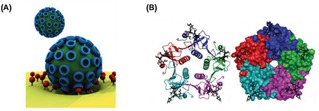
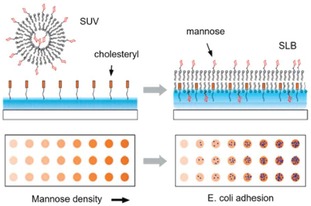
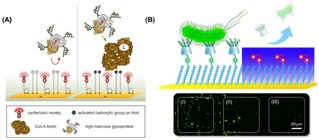
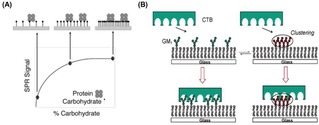
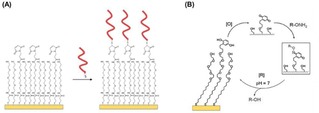
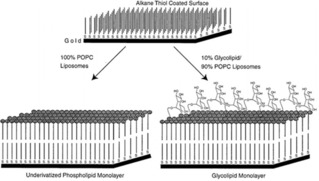
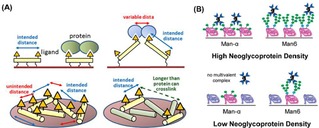
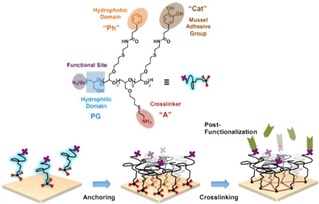
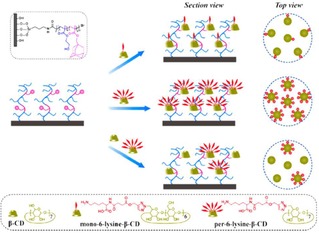
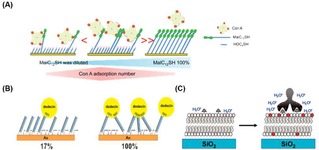
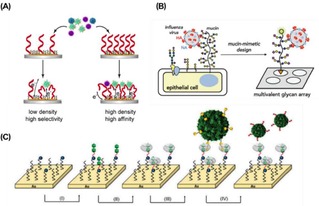
In the study of multivalent interactions at interfaces, as occur for example at cell membranes, the density of the ligands or receptors displayed at the interface plays a pivotal role, affecting both the overall binding affinities and the valencies involved in the interactions. In order to control the ligand density at the interface, several approaches have been developed, and they concern the functionalization of a wide range of materials. Here, different methods employed in the modification of surfaces with controlled densities of ligands are being reviewed. Examples of such methods encompass the formation of self-assembled monolayers (SAMs), supported lipid bilayers (SLBs) and polymeric layers on surfaces. Particular emphasis is given to the methods employed in the study of different types of multivalent biological interactions occurring at the functionalized surfaces and their working principles.
在界面多价相互作用的研究中,例如在细胞膜上发生的相互作用,配体或受体在界面上的密度起着关键作用,影响整体结合亲和力和相互作用中涉及的价数。为了控制界面上的配体密度,已经开发了几种方法,它们涉及到对各种材料的功能化。在这里,正在综述用控制密度的配体对表面进行修饰的不同方法。这些方法的例子包括自组装单层(SAM)、支撑脂质双层(SLB)和表面上的聚合层的形成。特别强调了在研究功能化表面上发生的不同类型的多价生物相互作用及其工作原理时所采用的方法。