Njei Basile, McCarty Thomas R, Muniraj Thiruvengadam, Sharma Prabin, Jamidar Priya A, Aslanian Harry R, Varadarajulu Shyam, Navaneethan Udayakumar
Section of Digestive Diseases, Yale University School of Medicine, New Haven, Connecticut, United States.
Department of Gastroenterology, Hepatology and Endoscopy, Brigham and Women's Hospital, Boston, Massachusetts, United States.
Endosc Int Open. 2020 Jan;8(1):E29-E40. doi: 10.1055/a-1005-6366. Epub 2020 Jan 8.
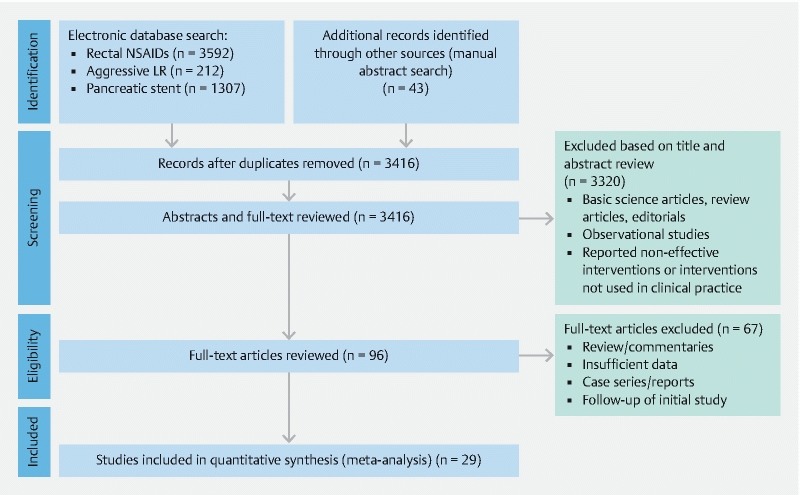
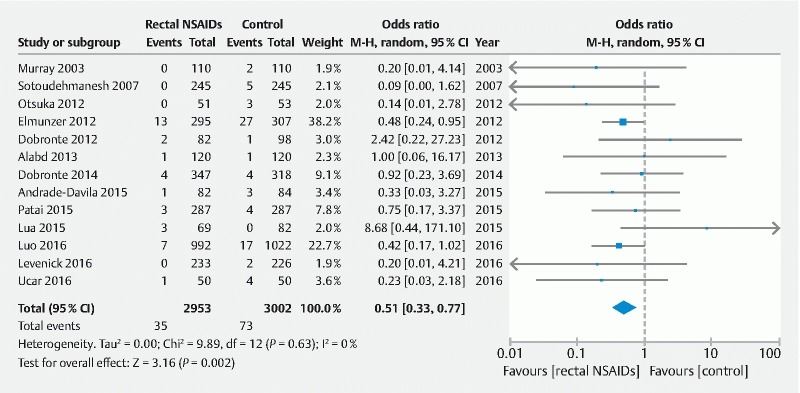
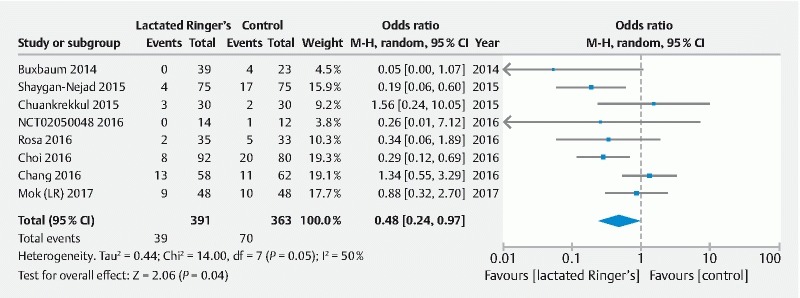
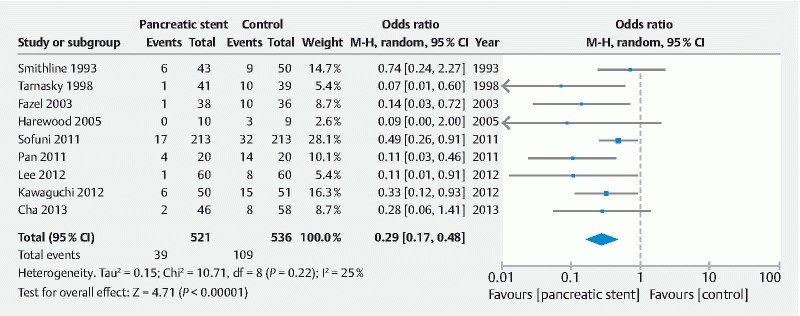
While several interventions may decrease risk of post-endoscopic retrograde cholangiopancreatography (ERCP) pancreatitis, it remains unclear whether one strategy is superior to others. The purpose of this study was to compare the effectiveness of pharmacologic and endoscopic interventions to prevent post-ERCP pancreatitis among high-risk patients. A systematic review was performed to identify randomized controlled trials from PubMed, Embase, Web of Science, and Cochrane database through May 2017. Interventions included: rectal non-steroidal anti-inflammatory drugs (NSAIDs), aggressive hydration with lactated ringer's (LR) solution, and pancreatic stent placement compared to placebo. Only studies with patients at high-risk for post-ERCP pancreatitis were included. Bayesian network meta-analysis was performed and relative ranking of treatments was assessed using surface under the cumulative ranking (SUCRA) probabilities. We identified 29 trials, comprising 7,862 participants comparing four preventive strategies. On network meta-analysis, compared with placebo, rectal NSAIDs (B = - 0.69, 95 % CI [-1.18; - 0.21]), pancreatic stent (B = - 1.25, 95 % CI [-1.81 to -0.69]), LR (B = - 0.67, 95 % CI [-1.20 to -0.13]), and combination of LR plus rectal NSAIDs (B = - 1.58; 95 % CI [-3.0 to -0.17]), were all associated with a reduced risk of post-ERCP pancreatitis. Pancreatic stent placement had the highest SUCRA probability (0.81, 95 % CI [0.83 to 0.80]) of being ranked the best prophylactic treatment. Based on this network meta-analysis, pancreatic stent placement appears to be the most effective preventive strategy for post-ERCP pancreatitis in high-risk patients.
虽然有几种干预措施可能会降低内镜逆行胰胆管造影术(ERCP)后胰腺炎的风险,但尚不清楚一种策略是否优于其他策略。本研究的目的是比较药物和内镜干预措施在高危患者中预防ERCP后胰腺炎的有效性。通过检索PubMed、Embase、科学网和Cochrane数据库,进行了一项系统评价,以识别截至2017年5月的随机对照试验。干预措施包括:直肠非甾体抗炎药(NSAIDs)、用乳酸林格氏液(LR)积极补液以及与安慰剂相比放置胰管支架。仅纳入了ERCP后胰腺炎高危患者的研究。进行了贝叶斯网络荟萃分析,并使用累积排序曲线下面积(SUCRA)概率评估治疗的相对排名。我们确定了29项试验,包括7862名参与者,比较了四种预防策略。在网络荟萃分析中,与安慰剂相比,直肠NSAIDs(B = -0.69,95%CI[-1.18;-0.21])、胰管支架(B = -1.25,95%CI[-1.81至-0.69])、LR(B = -0.67,95%CI[-1.20至-0.13])以及LR加直肠NSAIDs的联合使用(B = -1.58;95%CI[-3.0至-0.17])均与ERCP后胰腺炎风险降低相关。放置胰管支架具有最高的SUCRA概率(0.81,95%CI[0.83至0.80]),被评为最佳预防治疗方法。基于这项网络荟萃分析,放置胰管支架似乎是高危患者预防ERCP后胰腺炎最有效的策略。