Li Yansong, Ren Shuhong, Xia Jingwen, Wei Yong, Xi Yinhua
Department of Cardiovasology, Shanghai Songjiang District Center Hospital, Shanghai 201600, China.
Department of Cardiovasology, Xuzhou Central Hospital, Xuzhou, China.
Mol Ther Nucleic Acids. 2020 Mar 6;19:533-545. doi: 10.1016/j.omtn.2019.11.017. Epub 2019 Nov 26.
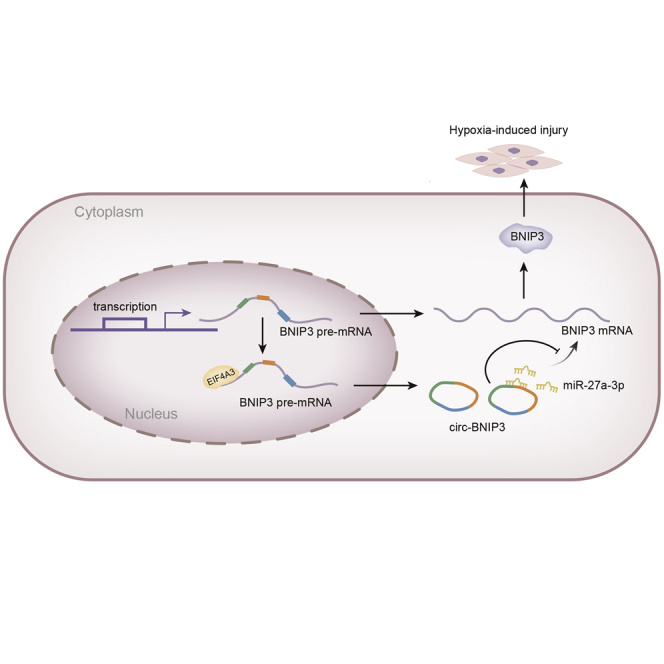
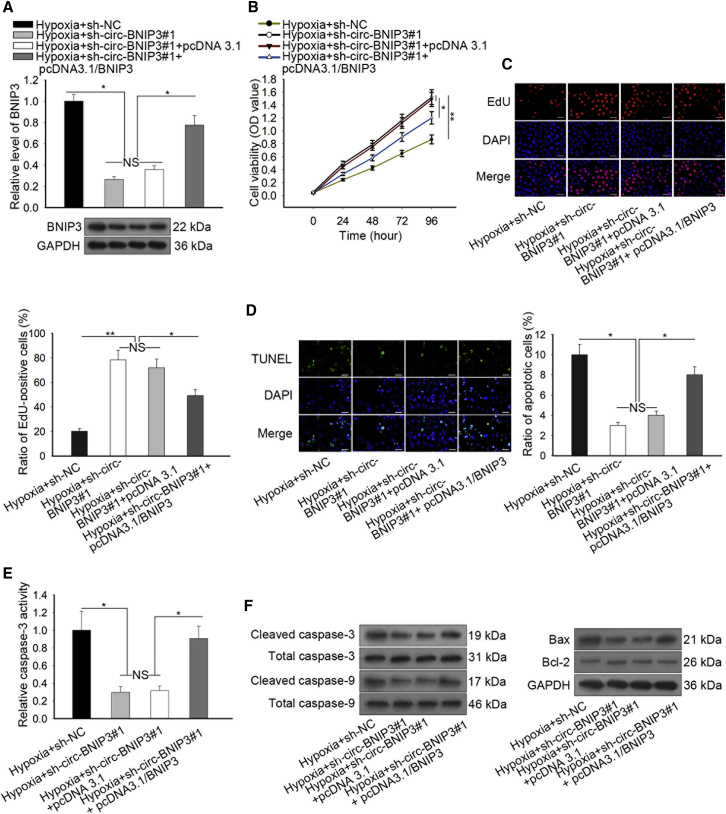
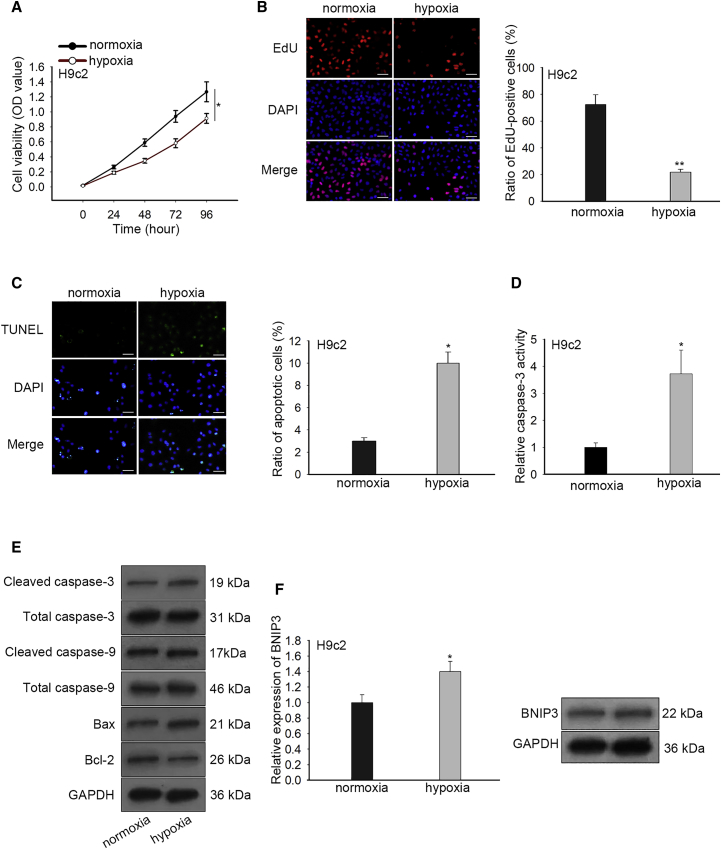
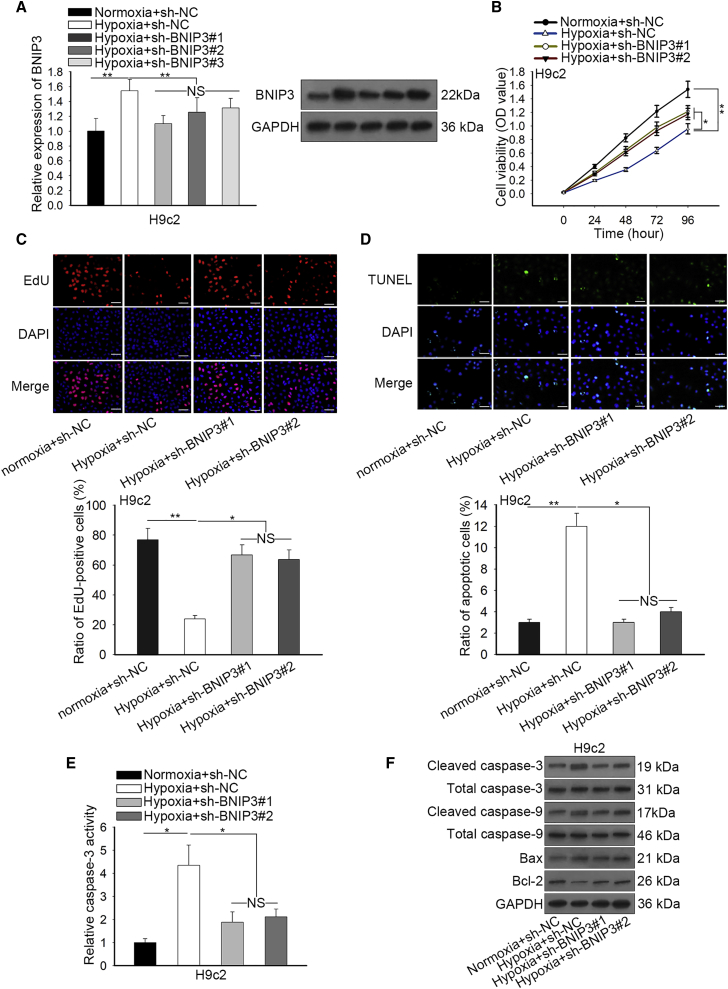
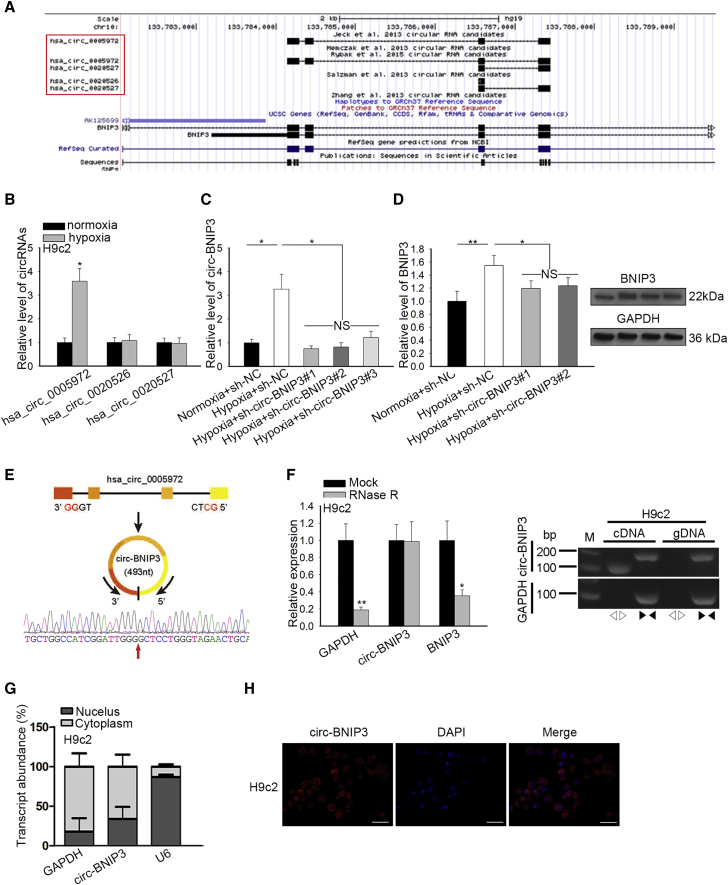
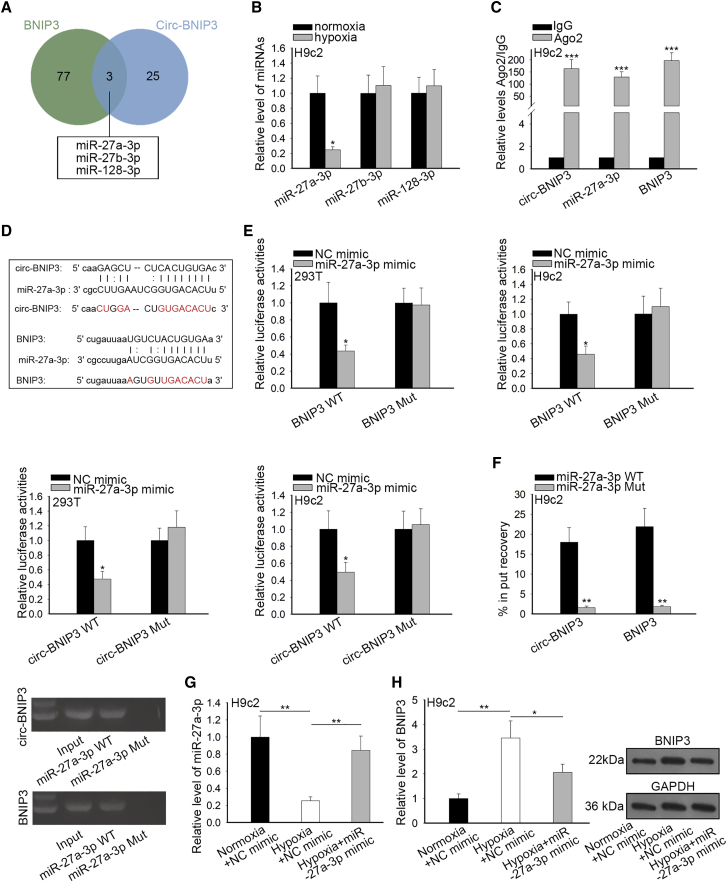
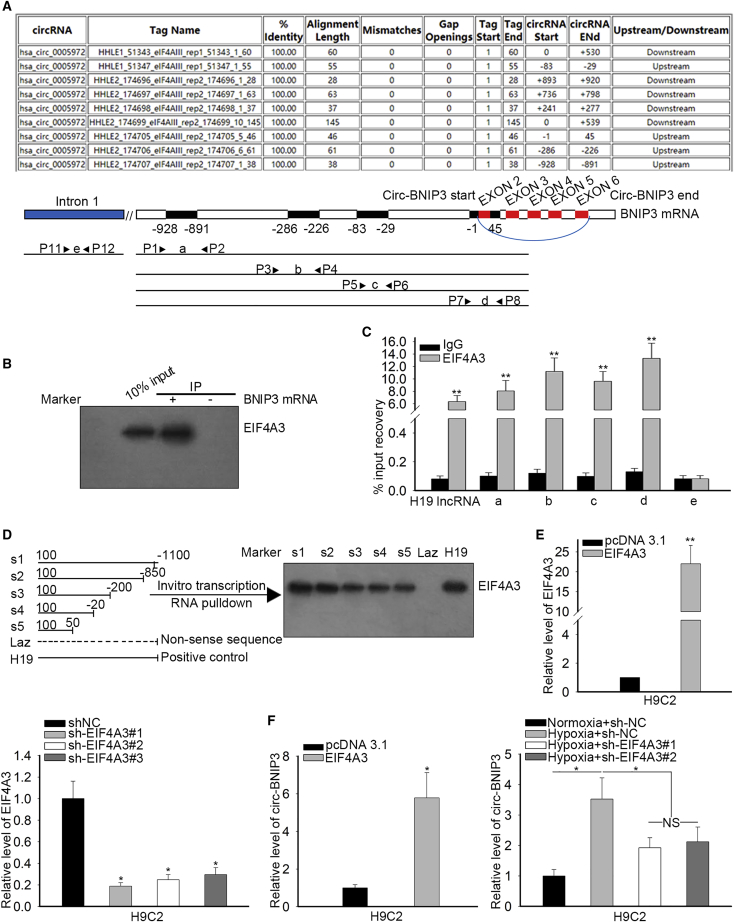
Acute myocardial infarction (AMI) results from long-term diminished blood supply diminishment (ischemia) to the heart, and the main reason for ischemia is hypoxia. BCL2 interaction protein 3 (BNIP3) can be upregulated by hypoxia and participates in the mediation of hypoxia-activated apoptosis in cardiac myocyte death. The purpose of this study was to interrogate the mechanism of BNIP3 in hypoxia-activated cardiac myocyte injury. Cell viability and apoptosis were evaluated by Cell counting kit 8 (CCK-8), 5-ethynyl-2'-deoxyuridine (EdU), TdT-mediated dUTP Nick-End Labeling (TUNEL), and caspase-3 activity assays. Molecular interactions were assessed by RNA immunoprecipitation (RIP) and pull-down assays. Gene levels were assessed via quantitative real-time PCR and western blot. BNIP3 expression was upregulated by hypoxia in H9c2 cells. We found that circ-BNIP3 (hsa_circ_0005972), whose annotated gene was BNIP3, was induced by hypoxia and positively regulated BNIP3 expression. Knockdown of BNIP3 or circ-BNIP3 reversed the effect of hypoxia in attenuating H9c2 cell viability and inducing apoptosis. circ-BNIP3 sponged miRNA-27a-3p (miR-27a-3p) to upregulate BNIP3 expression. Moreover, eukaryotic translation initiation factor 4A3 (EIF4A3) bound with the upstream region of the circ-BNIP3 mRNA transcript and induced circ-BNIP3 expression in H9c2 cells. EIF4A3-induced circ-BNIP3 aggravated hypoxia-caused injury of H9c2 cells through targeting miR-27a-3p/BNIP3 pathway, indicating circ-BNIP3 as a new target for relieving hypoxia-induced injury of cardiac myocytes.
急性心肌梗死(AMI)是由长期心脏血液供应减少(缺血)所致,而缺血的主要原因是缺氧。BCL2相互作用蛋白3(BNIP3)可被缺氧上调,并参与介导缺氧激活的心肌细胞死亡中的凋亡过程。本研究的目的是探究BNIP3在缺氧激活的心肌细胞损伤中的机制。通过细胞计数试剂盒8(CCK-8)、5-乙炔基-2'-脱氧尿苷(EdU)、末端脱氧核苷酸转移酶介导的dUTP缺口末端标记(TUNEL)和半胱天冬酶-3活性测定来评估细胞活力和凋亡情况。通过RNA免疫沉淀(RIP)和下拉试验评估分子相互作用。通过定量实时PCR和蛋白质印迹法评估基因水平。在H9c2细胞中,缺氧可上调BNIP3的表达。我们发现,注释基因是BNIP3的环状BNIP3(hsa_circ_0005972)可被缺氧诱导,并正向调节BNIP3的表达。敲低BNIP3或环状BNIP3可逆转缺氧对减弱H9c2细胞活力和诱导凋亡的作用。环状BNIP3通过吸附微小RNA-27a-3p(miR-27a-3p)来上调BNIP3的表达。此外,真核翻译起始因子4A3(EIF4A3)与环状BNIP3 mRNA转录本的上游区域结合,并在H9c2细胞中诱导环状BNIP3的表达。EIF4A3诱导的环状BNIP3通过靶向miR-27a-3p/BNIP3途径加重了缺氧导致的H9c2细胞损伤,表明环状BNIP3是缓解缺氧诱导的心肌细胞损伤的新靶点。