Tan Juan, Pan Weinan, Chen Huilin, Du Yafang, Jiang Peiyong, Zeng Dianmei, Wu Jie, Peng Kuang
Department of Cardiology, The First Affiliated Hospital of University of South China, Hengyang, China.
College of Pharmacy, Hunan Food and Drug Vocational College, Changsha, China.
Front Genet. 2021 Jun 25;12:667724. doi: 10.3389/fgene.2021.667724. eCollection 2021.
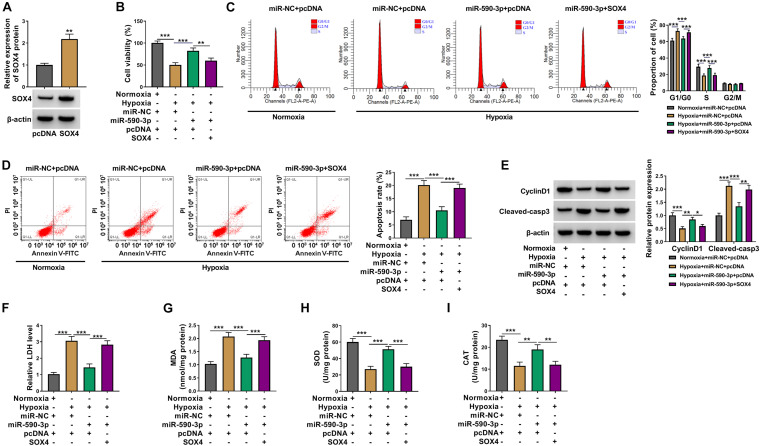
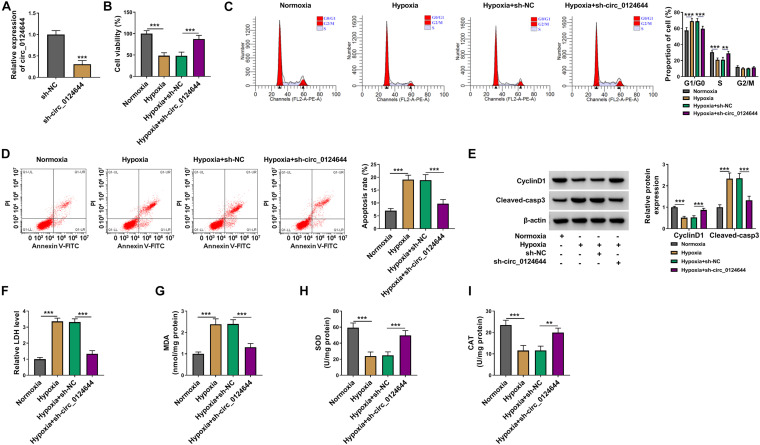
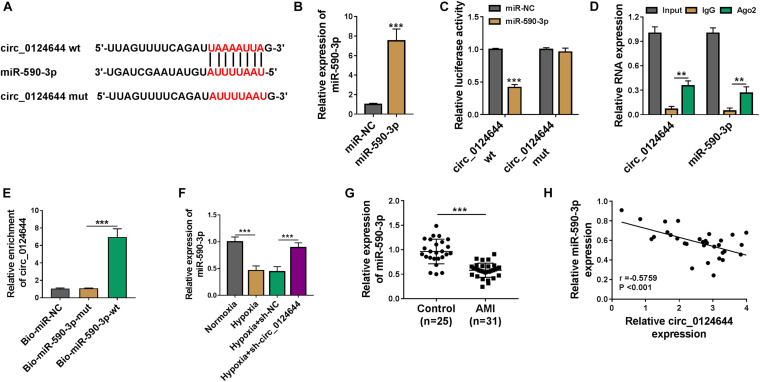
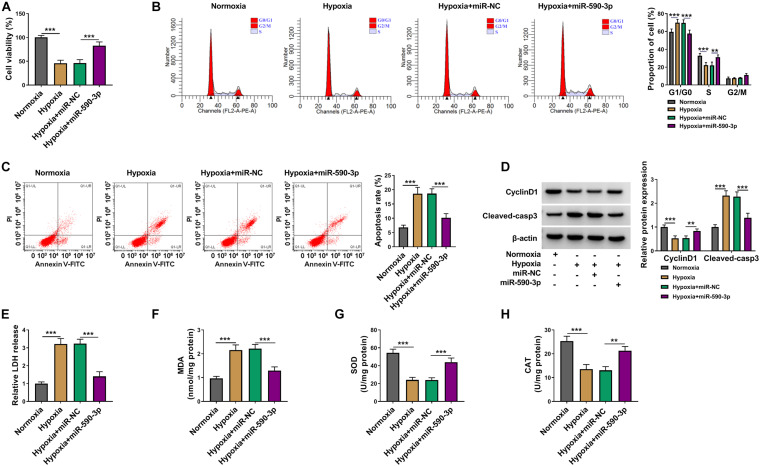
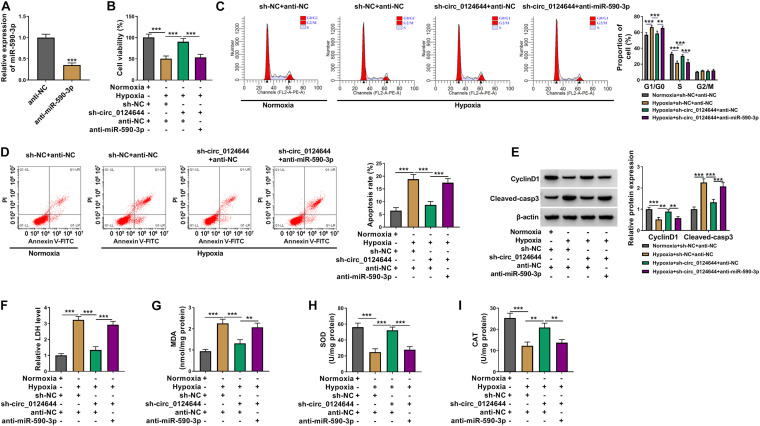
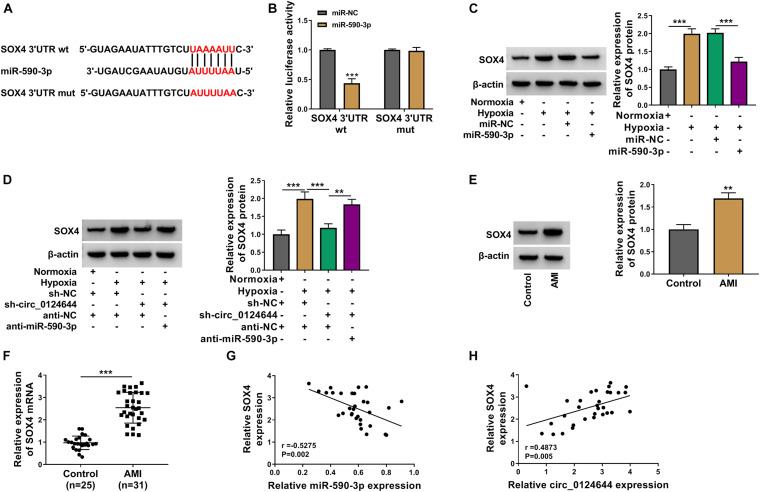
Circular RNA (circRNA) is an important factor for regulating the progression of many cardiovascular diseases, including acute myocardial infarction (AMI). However, the role of circ_0124644 in AMI progression remains unclear. Hypoxia was used to induce cardiomyocytes injury. The expression of circ_0124644, microRNA (miR)-590-3p, and SRY-box transcription factor 4 (SOX4) mRNA was measured by qRT-PCR. Cell counting kit 8 (CCK8) assay and flow cytometry were utilized to detect cell viability, cell cycle progression, and apoptosis. The protein levels of apoptosis markers and SOX4 were determined by western blot (WB) analysis, and the levels of oxidative stress markers were assessed using commercial Assay Kits. Dual-luciferase reporter assay, RIP assay, and RNA pull-down assay were employed to confirm the interaction between miR-590-3p and circ_0124644 or SOX4. Circ_0124644 was upregulated in AMI patients and hypoxia-induced cardiomyocytes. Hypoxia could inhibit cardiomyocytes viability, cell cycle process, and promote apoptosis and oxidative stress, while silencing circ_0124644 could alleviate hypoxia-induced cardiomyocytes injury. In terms of mechanism, circ_0124644 could target miR-590-3p. MiR-590-3p overexpression could relieve hypoxia-induced cardiomyocytes injury. Also, the suppressive effect of circ_0124644 knockdown on hypoxia-induced cardiomyocytes injury could be reversed by miR-590-3p inhibitor. Moreover, SOX4 was found to be a target of miR-590-3p, and its overexpression also could reverse the regulation of miR-590-3p on hypoxia-induced cardiomyocytes injury. Circ_0124644 silencing could alleviate hypoxia-induced cardiomyocytes injury by regulating the miR-590-3p/SOX4 axis, suggesting that it might be a target for alleviating AMI.
环状RNA(circRNA)是调节包括急性心肌梗死(AMI)在内的多种心血管疾病进展的重要因素。然而,circ_0124644在AMI进展中的作用仍不清楚。采用缺氧诱导心肌细胞损伤。通过qRT-PCR检测circ_0124644、微小RNA(miR)-590-3p和SRY盒转录因子4(SOX4)mRNA的表达。利用细胞计数试剂盒8(CCK8)检测法和流式细胞术检测细胞活力、细胞周期进程和细胞凋亡。通过蛋白质免疫印迹(WB)分析确定凋亡标志物和SOX4的蛋白水平,并使用商业检测试剂盒评估氧化应激标志物的水平。采用双荧光素酶报告基因检测、RNA免疫沉淀(RIP)检测和RNA下拉检测来确认miR-590-3p与circ_0124644或SOX4之间的相互作用。Circ_0124644在AMI患者和缺氧诱导的心肌细胞中上调。缺氧可抑制心肌细胞活力、细胞周期进程,并促进细胞凋亡和氧化应激,而沉默circ_0124644可减轻缺氧诱导的心肌细胞损伤。在机制方面,circ_0124644可靶向miR-590-3p。miR-590-3p过表达可减轻缺氧诱导的心肌细胞损伤。此外,circ_0124644敲低对缺氧诱导的心肌细胞损伤的抑制作用可被miR-590-3p抑制剂逆转。此外,发现SOX4是miR-590-3p的靶标,其过表达也可逆转miR-590-3p对缺氧诱导的心肌细胞损伤的调节作用。Circ_0124644沉默可通过调节miR-590-3p/SOX4轴减轻缺氧诱导的心肌细胞损伤,提示其可能是缓解AMI的一个靶点。