Xu Zhen, Utton Claire, Tsakiropoulos Panos
Department of Materials Science and Engineering, Sir Robert Hadfield Building, The University of Sheffield, Mappin Street, Sheffield S1 3JD, UK.
Materials (Basel). 2020 Jan 6;13(1):245. doi: 10.3390/ma13010245.
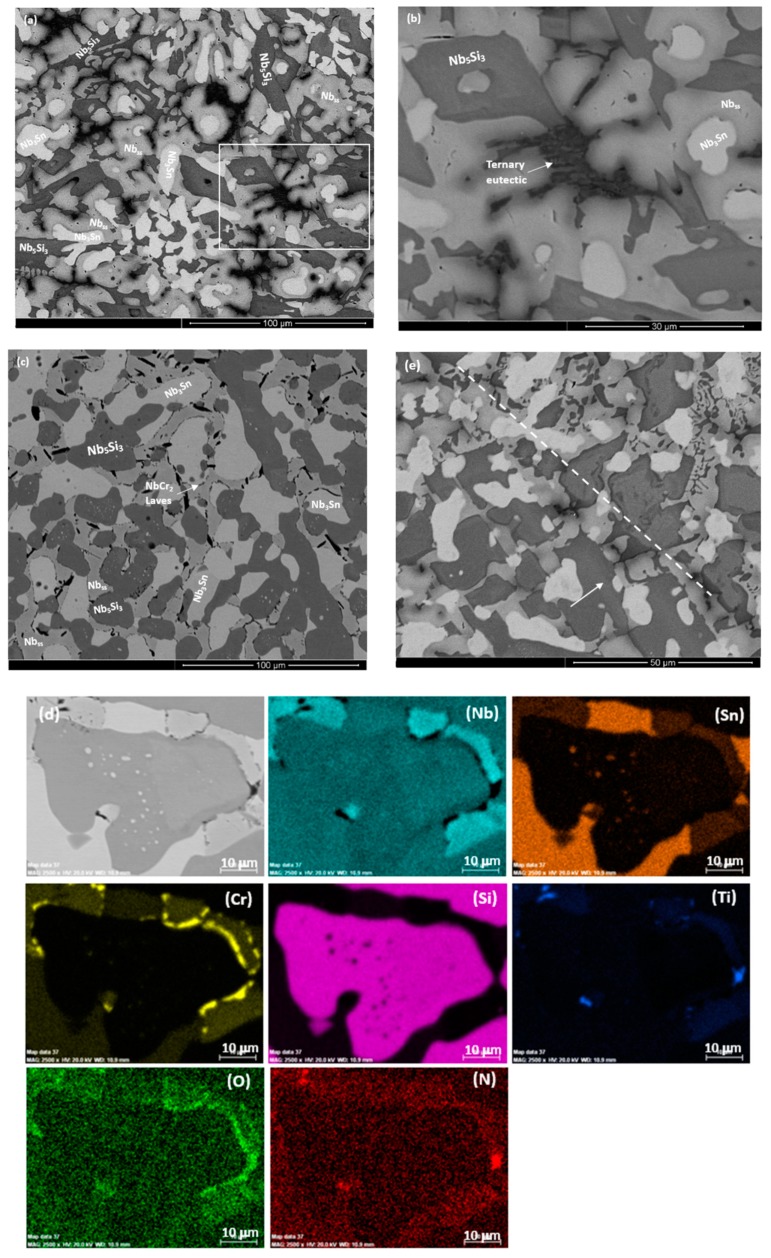
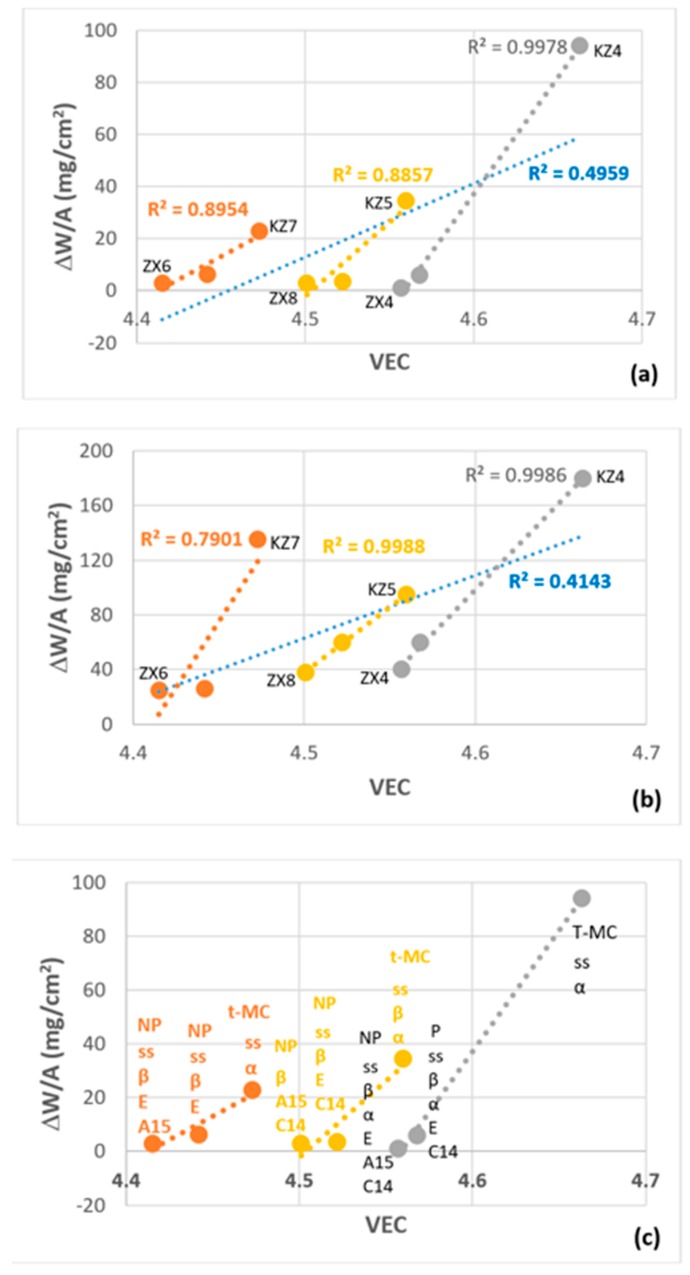
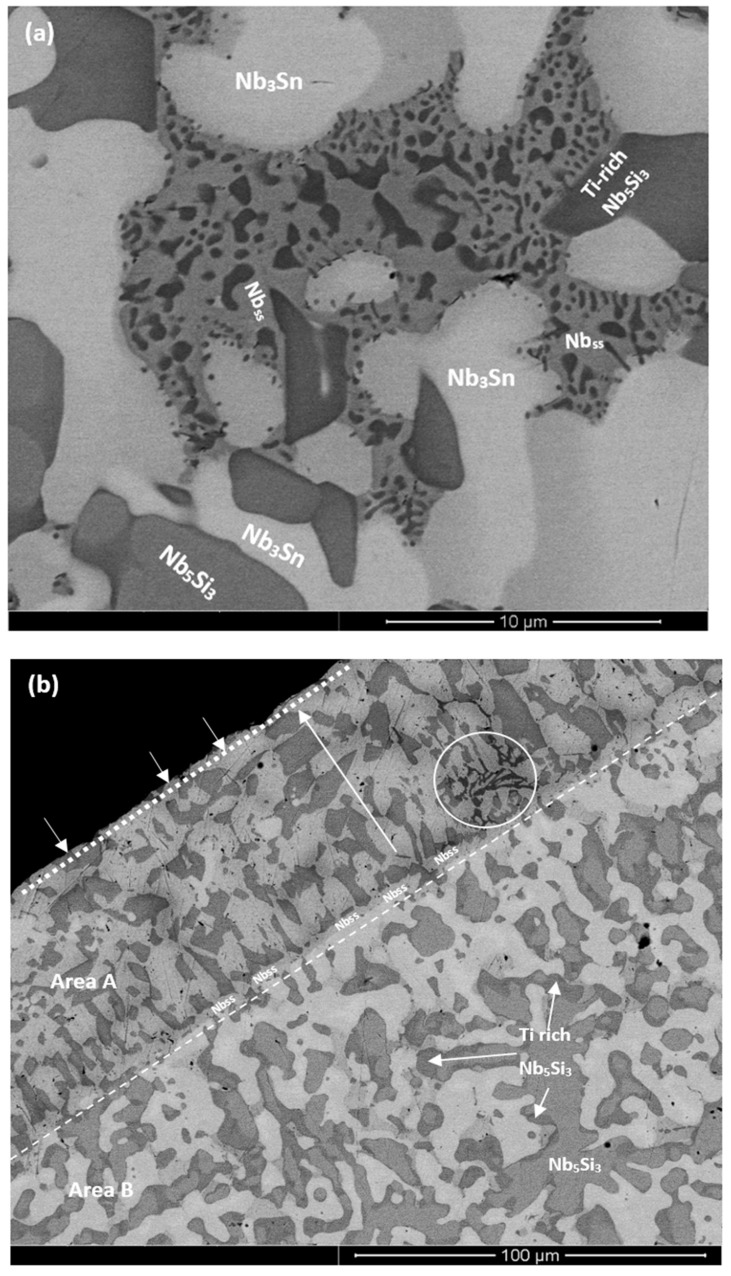
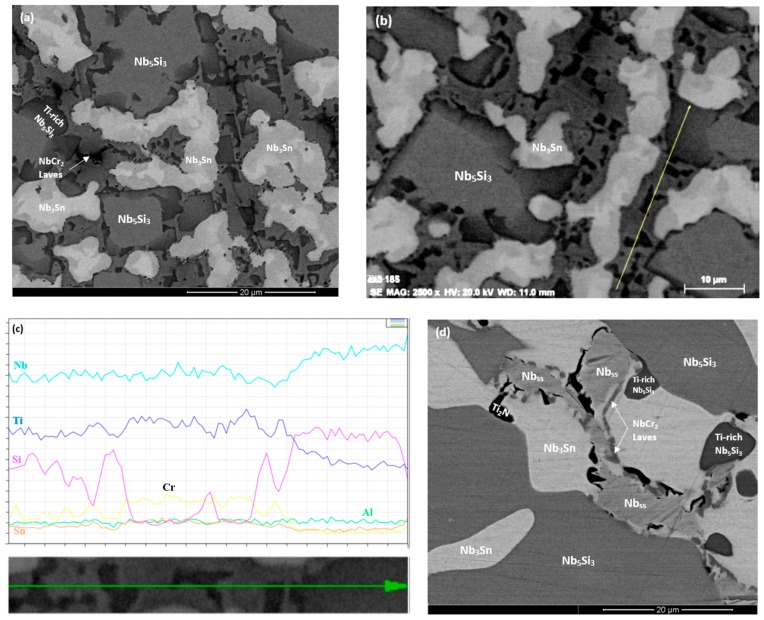
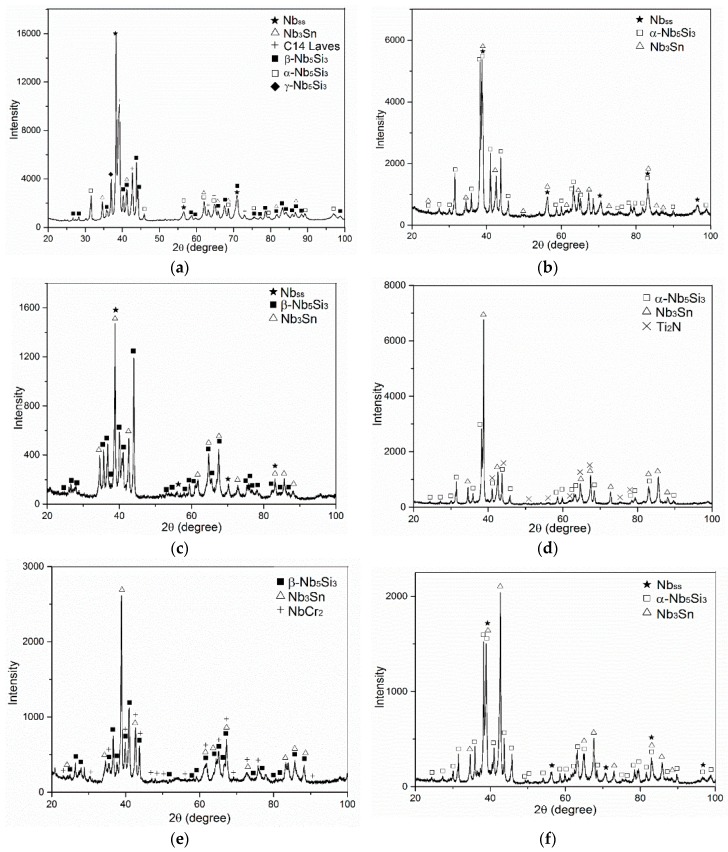
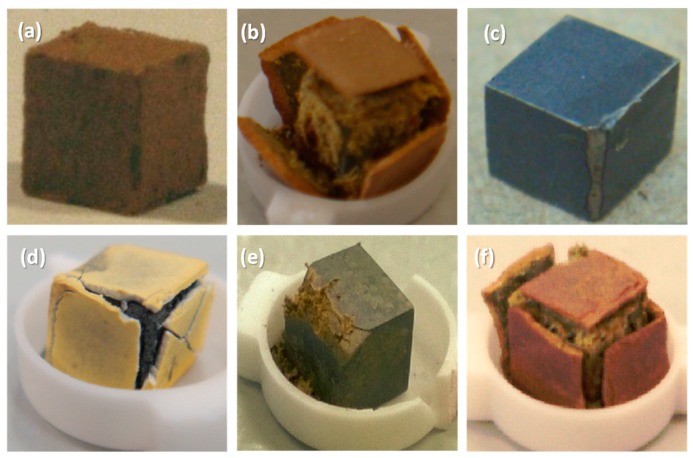
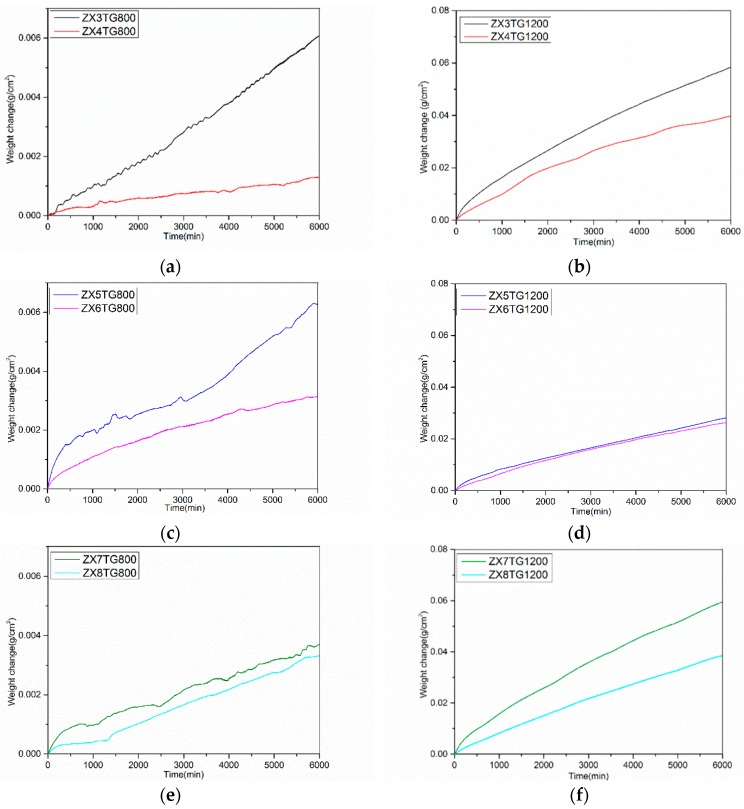
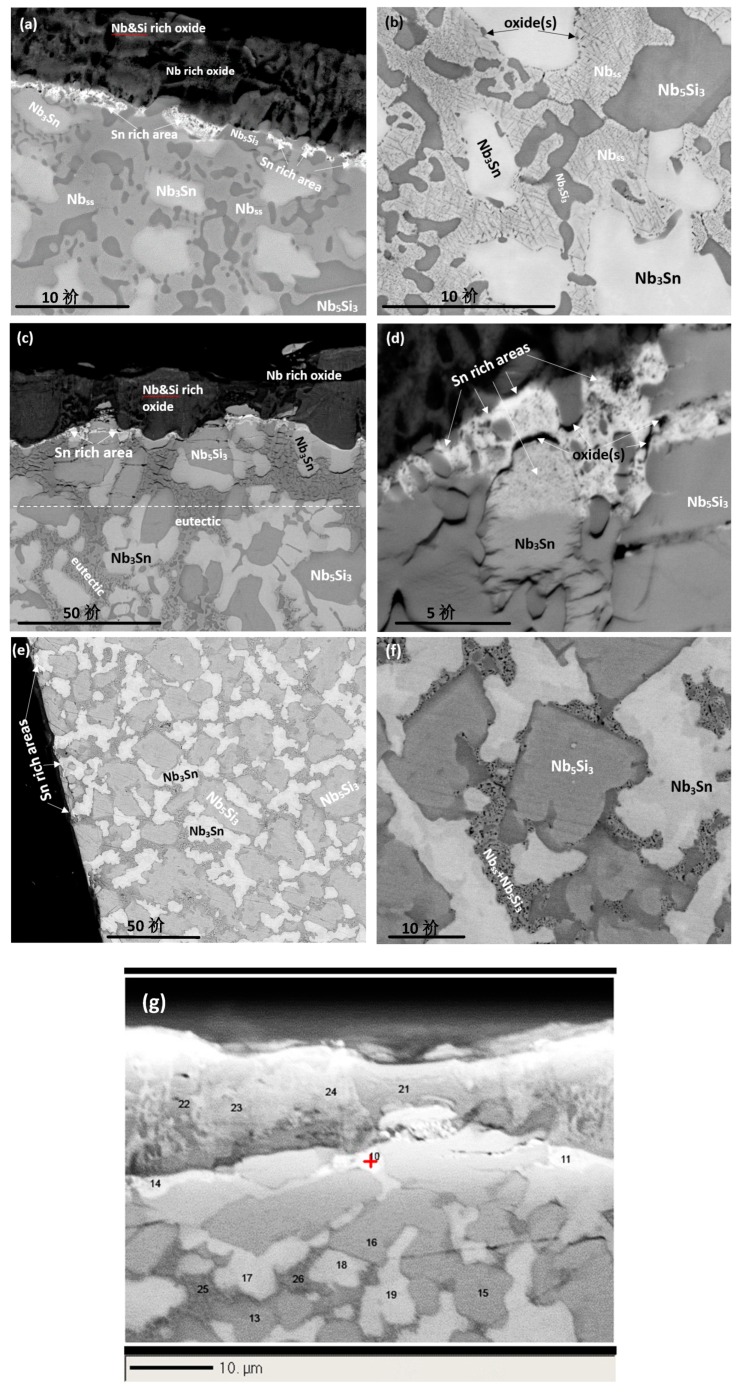
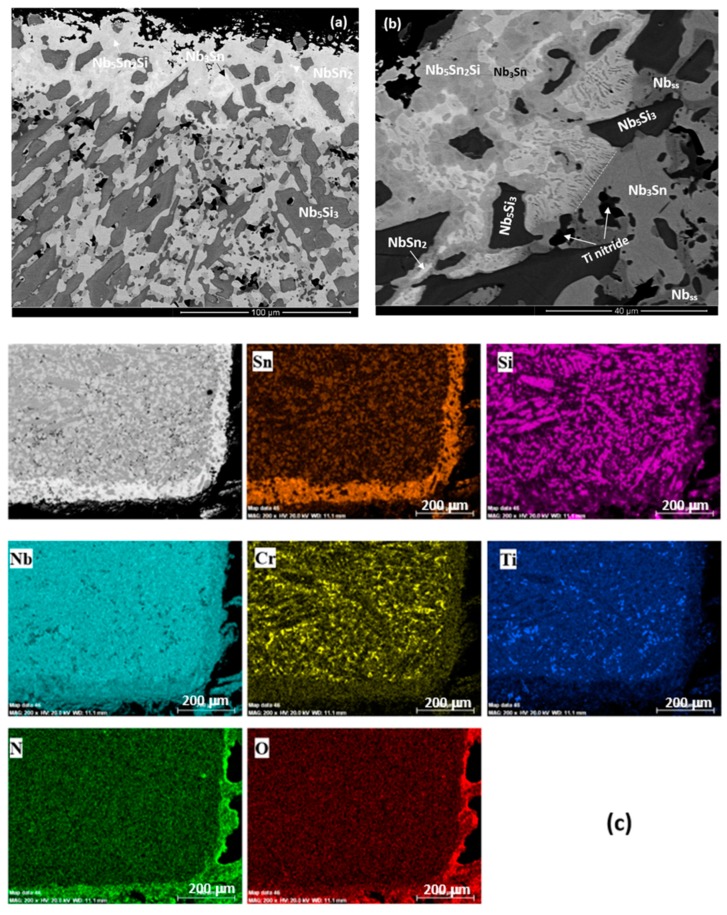
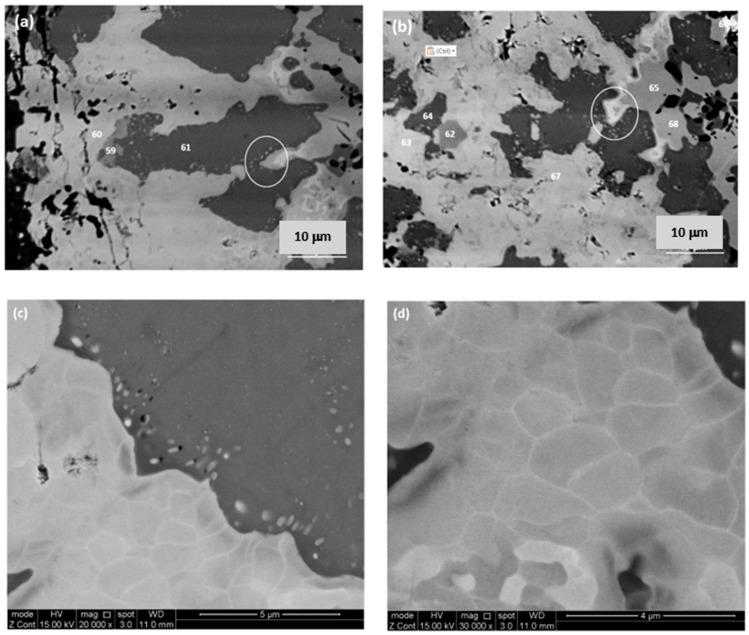
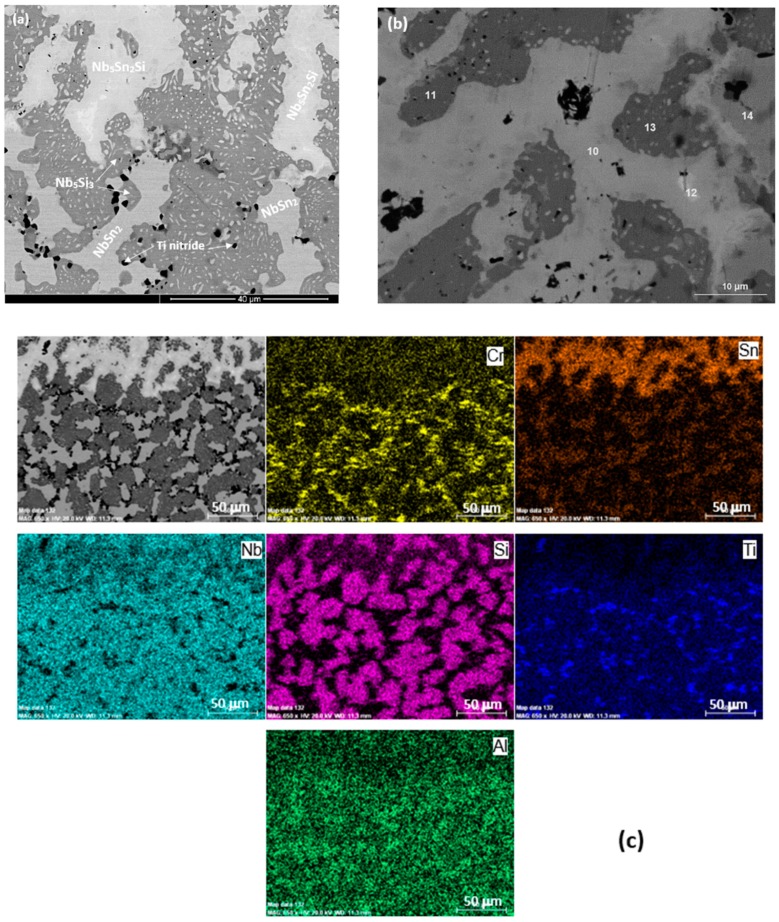
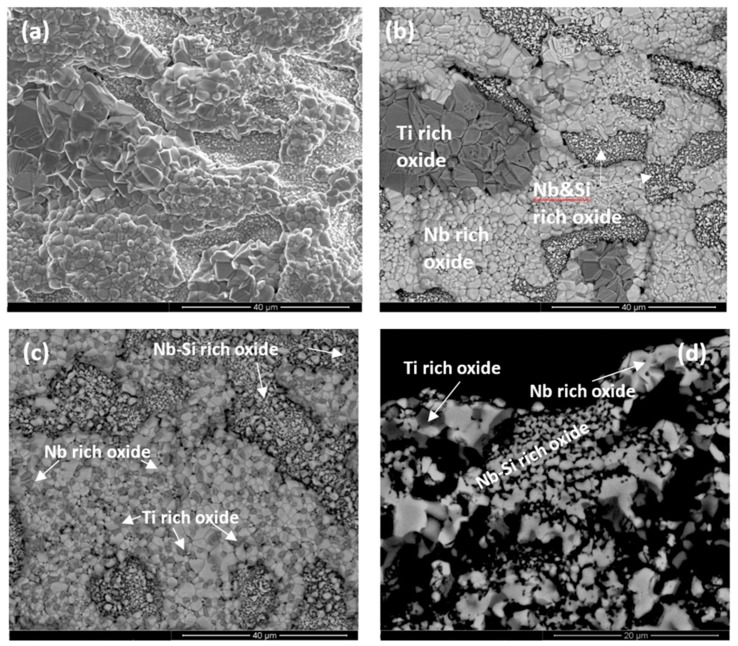
This paper presents the results of a systematic study of Nb-24Ti-18Si based alloys with 5 at.% Sn addition. Three alloys of nominal compositions (at.%), namely Nb-24Ti-18Si-5Cr-5Sn (ZX4), Nb-24Ti-18Si-5Al-5Sn (ZX6), and Nb-24Ti-18Si-5Al-5Cr-5Sn (ZX8), were studied to understand how the increased Sn concentration improved oxidation resistance. In all three alloys there was macrosegregation, which was most severe in ZX8 and the primary βNbSi transformed completely to αNbSi after heat treatment. The Nb was not stable in ZX6, the NbSn was stable in all three alloys, and the Nb and C14-NbCr Laves phase were stable in ZX4 and ZX8. The 5 at.% Sn addition suppressed pest oxidation at 800 °C but not scale spallation at 1200 °C. At both temperatures, a Sn-rich area with NbSn, NbSnSi, and NbSn compounds developed below the scale. This area was thicker and continuous after oxidation at 1200 °C and was contaminated by oxygen at both temperatures. The contamination of the Nb by oxygen was most severe in the bulk of all three alloys. Nb-rich, Ti-rich and Nb and Si-rich oxides formed in the scales. The adhesion of the latter on ZX6 at 1200 °C was better, compared with the alloys ZX4 and ZX8. At both temperatures, the improved oxidation was accompanied by a decrease and increase respectively of the alloy parameters VEC (Valence Electron Concentration) and δ, in agreement with the alloy design methodology NICE (Niobium Intermetallic Composite Elaboration). Comparison with similar alloys with 2 at.% Sn addition showed (a) that a higher Sn concentration is essential for the suppression of pest oxidation of Nb-24Ti-18Si based alloys with Cr and no Al additions, but not for alloys where Al and Cr are in synergy with Sn, (b) that the stability of NbSn in the alloy is "assured" with 5 at.% Sn addition, which improves oxidation with/out the presence of the Laves phase and (c) that the synergy of Sn with Al presents the "best" oxidation behaviour with improved scale adhesion at high temperature.
本文介绍了对添加5原子%锡的Nb-24Ti-18Si基合金进行系统研究的结果。研究了三种标称成分(原子%)的合金,即Nb-24Ti-18Si-5Cr-5Sn(ZX4)、Nb-24Ti-18Si-5Al-5Sn(ZX6)和Nb-24Ti-18Si-5Al-5Cr-5Sn(ZX8),以了解锡浓度增加如何提高抗氧化性。在所有三种合金中均存在宏观偏析,在ZX8中最为严重,且在热处理后初生βNbSi完全转变为αNbSi。Nb在ZX6中不稳定,NbSn在所有三种合金中均稳定,Nb和C14-NbCr Laves相在ZX4和ZX8中稳定。添加5原子%的锡可抑制800℃下的有害氧化,但不能抑制1200℃下的氧化皮剥落。在这两个温度下,在氧化皮下方均形成了富含NbSn、NbSnSi和NbSn化合物的富锡区域。该区域在1200℃氧化后更厚且连续,并且在两个温度下均被氧污染。在所有三种合金的基体中,Nb被氧污染最为严重。在氧化皮中形成了富Nb、富Ti以及富Nb和Si的氧化物。与合金ZX4和ZX8相比,后者在1200℃下在ZX6上的附着力更好。在这两个温度下,氧化性能的改善分别伴随着合金参数VEC(价电子浓度)的降低和δ的增加,这与合金设计方法NICE(铌金属间化合物复合细化)一致。与添加2原子%锡的类似合金相比表明:(a)对于不含Al的含Cr的Nb-24Ti-18Si基合金,较高的锡浓度对于抑制有害氧化至关重要,但对于Al和Cr与Sn协同作用的合金则不然;(b)添加5原子%的锡可“确保”合金中NbSn的稳定性,这在有无Laves相的情况下均可改善氧化;(c)Sn与Al的协同作用表现出“最佳”的氧化行为,在高温下氧化皮附着力得到改善。