Hernández-Negrete Ofelia, Tsakiropoulos Panos
Department of Materials Science and Engineering, Sir Robert Hadfield Building, The University of Sheffield, Mappin Street, Sheffield S1 3JD, UK.
Materials (Basel). 2020 Feb 5;13(3):722. doi: 10.3390/ma13030722.
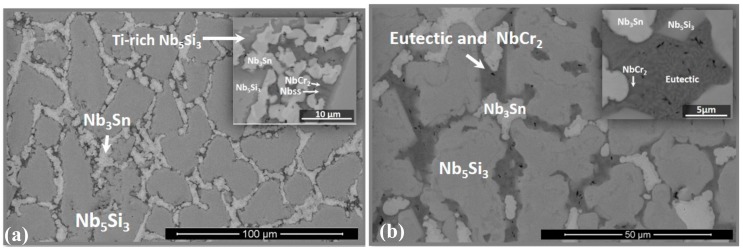
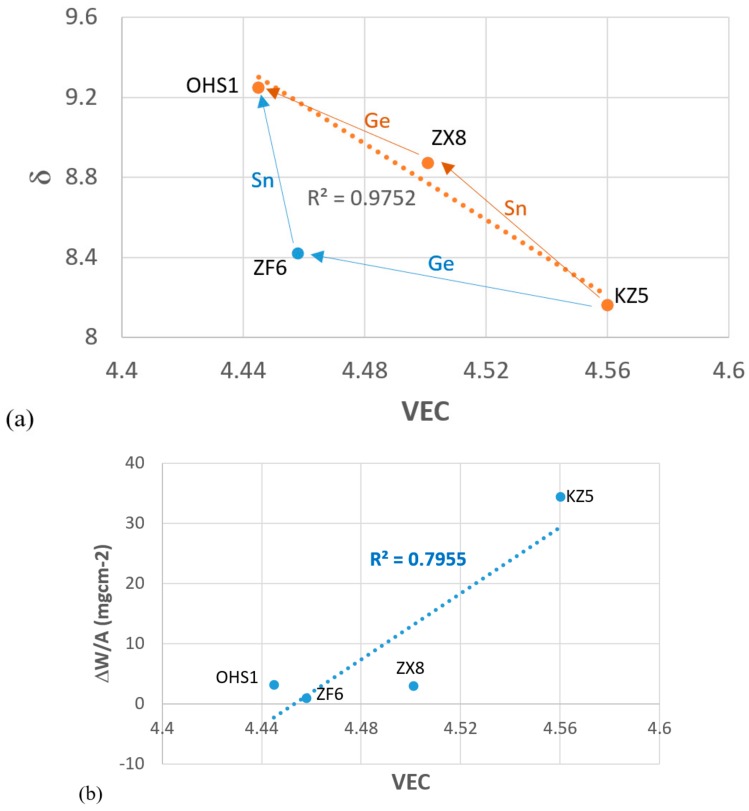
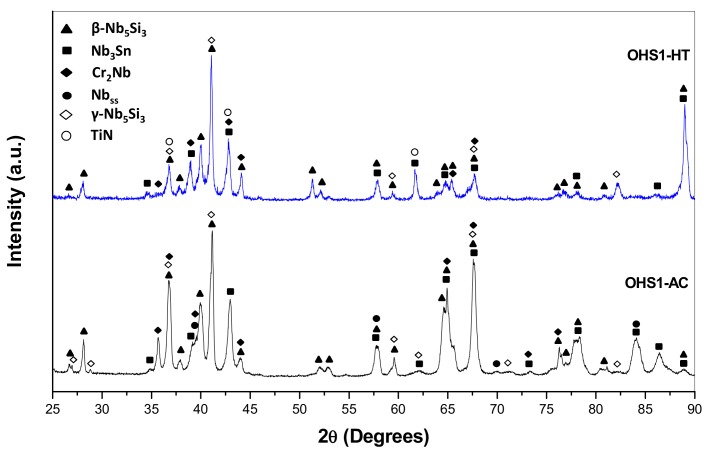
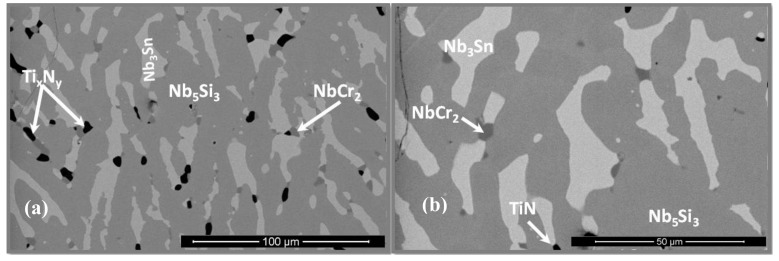
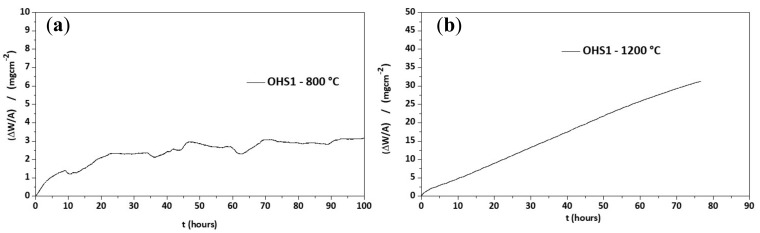
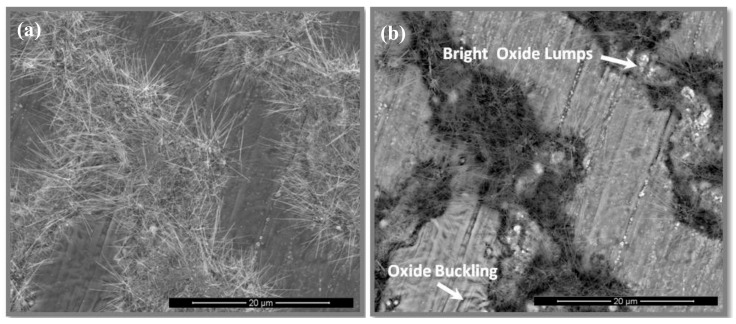
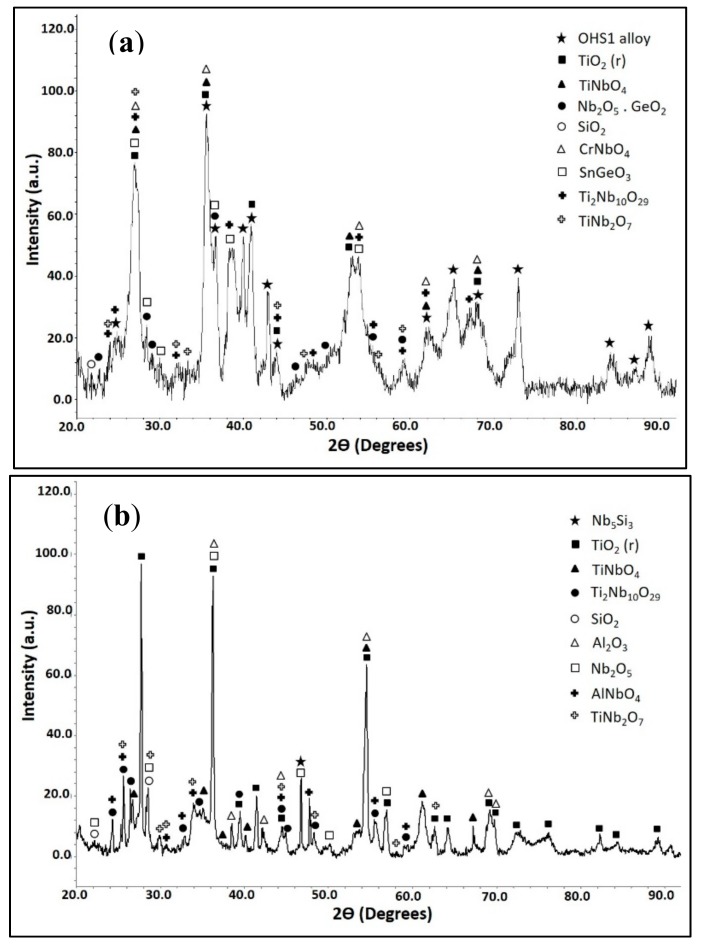
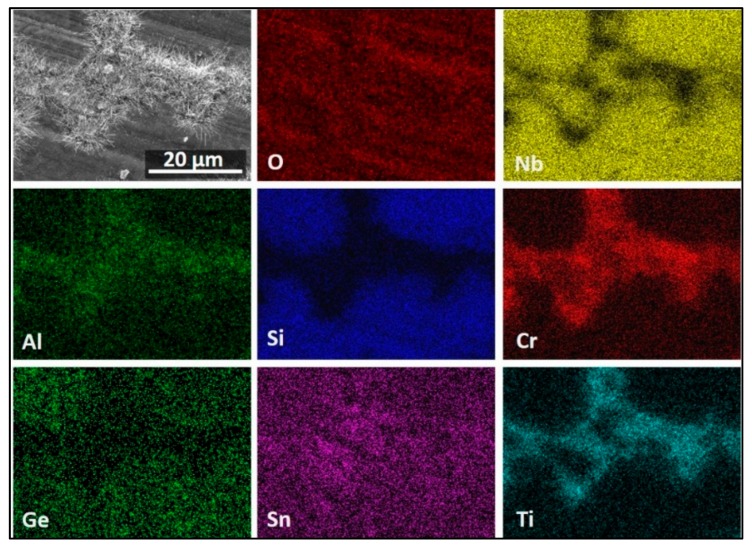
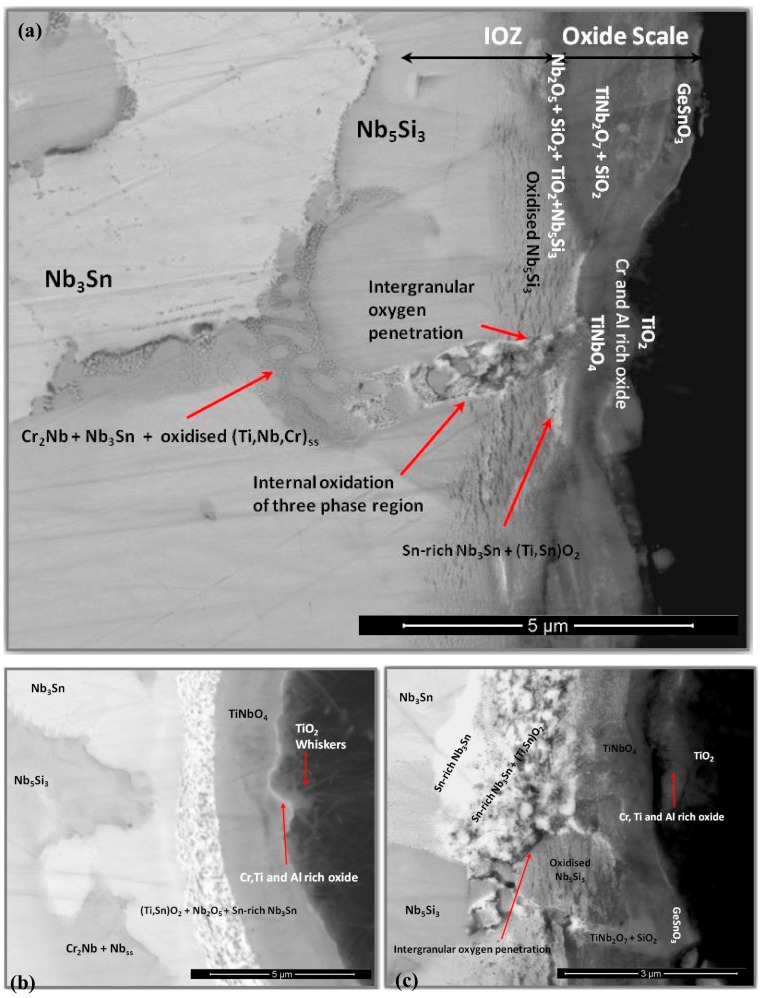
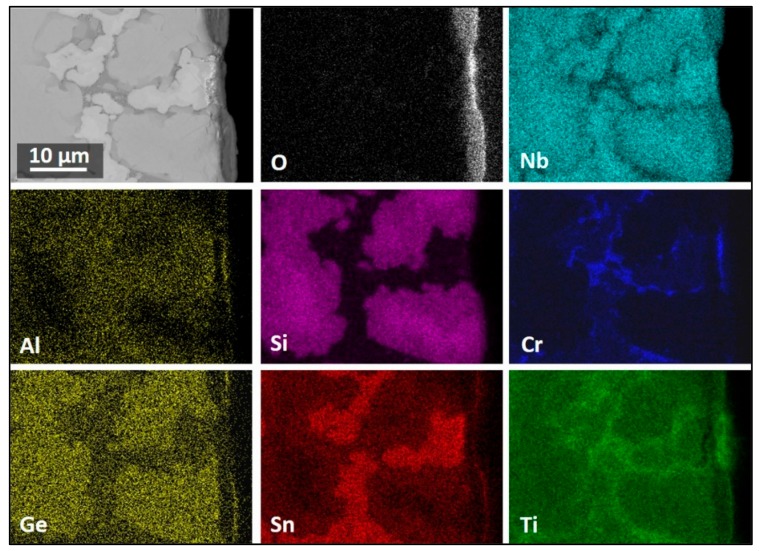
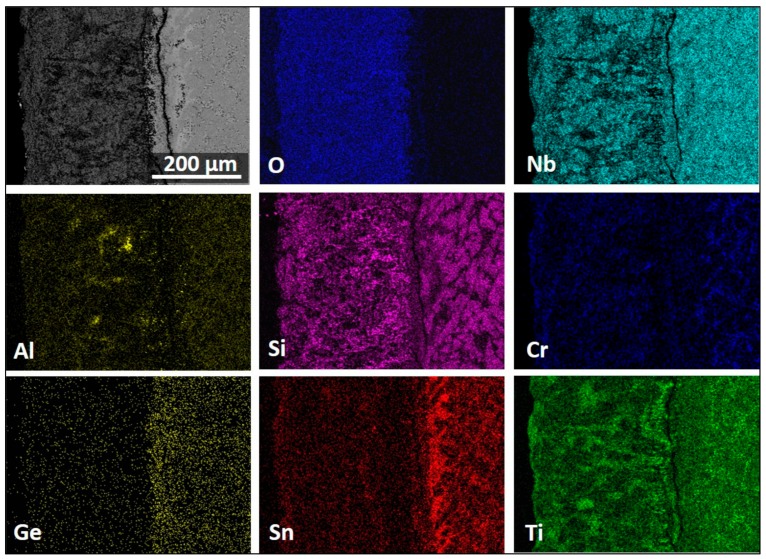
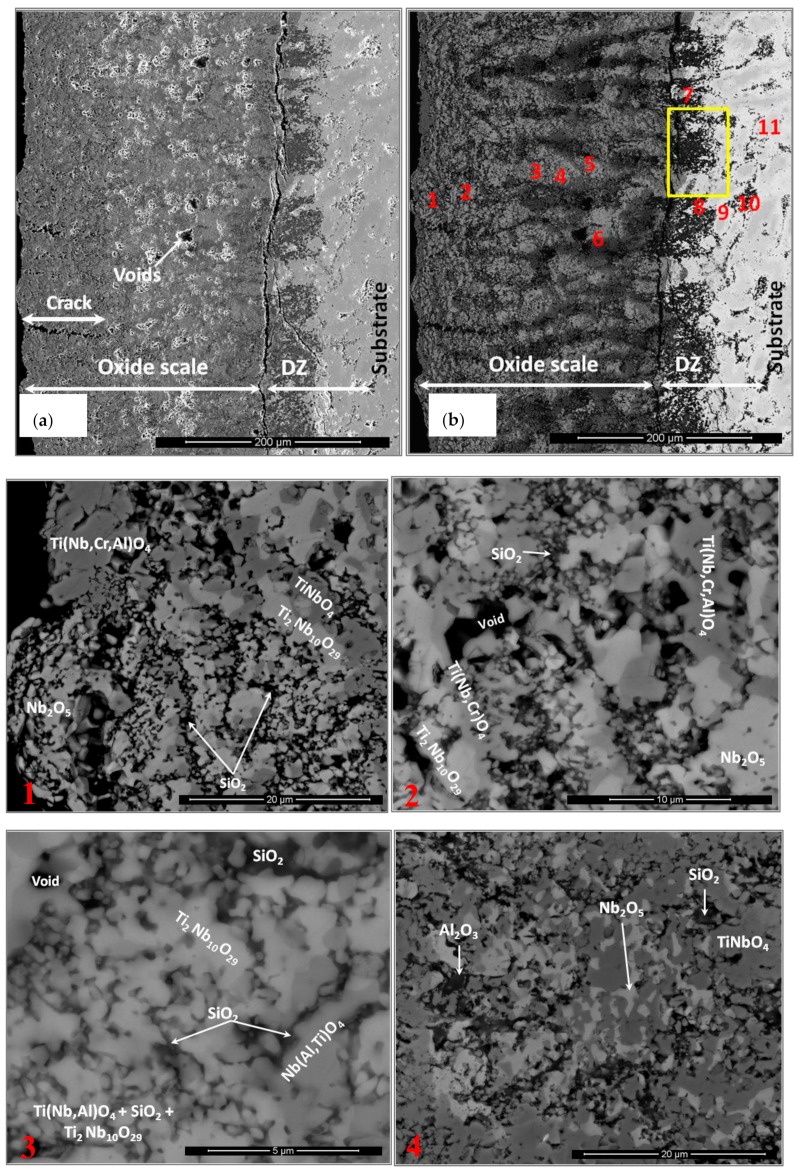
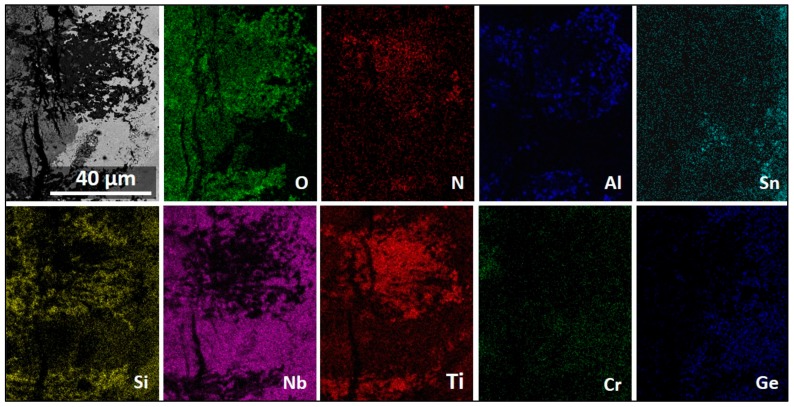
The research presented in this paper aspired to understand how the simultaneous addition of Ge and Sn in an Hf-free Nb-silicide-based alloy affected its oxidation resistance. Results are presented for the Nb-24Ti-18Si-5Al-5Cr-5Ge-5Sn alloy (at.%) which was studied in the as-cast and heat-treated (1400 °C/100 h) conditions and after isothermal oxidation in air at 800 and 1200 °C. There was macrosegregation in the cast alloy, in which the Nb formed at a low volume fraction and was not stable after heat treatment at 1400 °C. The βNbSi, A15-NbSn, and C14-NbCr were stable phases. The alloy did not undergo pest oxidation at 800 °C, and there was no spallation of its scale at 1200 °C. There was enrichment in Ge and Sn in the substrate below the scale/substrate interface, where the compounds NbSn, NbSnSi, (Ti,Nb)Sn, and NbGe were formed. After the oxidation at 1200 °C, the solid solution in the bulk of the alloy was very Ti-rich (Ti,Nb). Improvement of oxidation resistance at both temperatures was accompanied by a decrease and increase, respectively, of the alloy parameters VEC (valence electron concentration) and , in agreement with the alloy design methodology NICE (Niobium Intermetallic Composite Elaboration). The elimination of scale spallation at 1200 °C was attributed (a) to the formation of Ti-rich (Ti,Nb) solid solution and (Ti,Nb)Sn, respectively, in the bulk and below the scale, (b) to the low concentration of Cr in the scale, (c) to the absence of GeO in the scale, (d) to the formation of αAlO in the scale, and (e) to the presence (i) of NbGe below the scale/substrate interface and (ii) of oxides in the scale, namely, SiO, AlO, TiO, and SnO, and TiNbO,TiNbO, and AlNbO, respectively, with a range of intrinsic thermal shock resistances and coefficient of thermal expansion (CTE) values that reduced stresses in the scale and the substrate below it.
本文所展示的研究旨在了解在不含铪的铌硅化物基合金中同时添加锗和锡如何影响其抗氧化性能。给出了对Nb-24Ti-18Si-5Al-5Cr-5Ge-5Sn合金(原子百分比)的研究结果,该合金在铸态和热处理(1400℃/100小时)条件下以及在800℃和1200℃空气中等温氧化后进行了研究。铸态合金中存在宏观偏析,其中铌以低体积分数形成,在1400℃热处理后不稳定。β-NbSi、A15-NbSn和C14-NbCr是稳定相。该合金在800℃未发生有害氧化,在1200℃其氧化皮也未剥落。在氧化皮/基体界面以下的基体中锗和锡发生了富集,在那里形成了化合物NbSn、NbSnSi、(Ti,Nb)Sn和NbGe。在1200℃氧化后,合金基体中的固溶体富含钛(Ti,Nb)。在这两个温度下抗氧化性能的提高分别伴随着合金参数VEC(价电子浓度)的降低和 的增加,这与合金设计方法NICE(铌金属间化合物复合材料制备)一致。在1200℃氧化皮未剥落归因于:(a) 在基体中和氧化皮以下分别形成了富含钛的(Ti,Nb)固溶体和(Ti,Nb)Sn;(b) 氧化皮中铬的浓度较低;(c) 氧化皮中不存在GeO;(d) 氧化皮中形成了α-Al2O3;(e) (i) 在氧化皮/基体界面以下存在NbGe,(ii) 氧化皮中存在氧化物,即SiO2、Al2O3、TiO2和SnO2,以及TiNb2O7、Ti2Nb2O7和AlNb2O6,它们具有一系列固有热震抗性和热膨胀系数(CTE)值,降低了氧化皮及其下方基体中的应力。