Haustein Stefanie, Vellino André, D'Angiulli Amedeo
School of Information Studies, University of Ottawa, Ottawa, ON K1N 6N5, Canada.
Centre Interuniversitaire de Recherche sur la Science et la Technologie (CIRST), Université du Québec à Montréal, Montreal, QC H3C 3P8, Canada.
Brain Sci. 2020 Jan 10;10(1):41. doi: 10.3390/brainsci10010041.
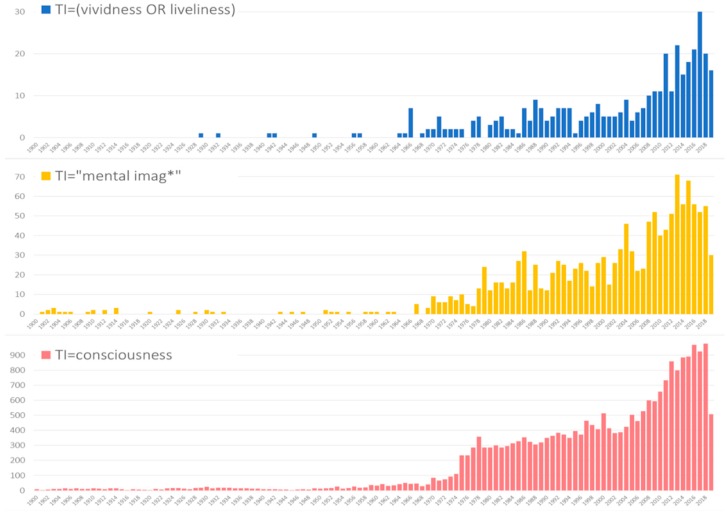
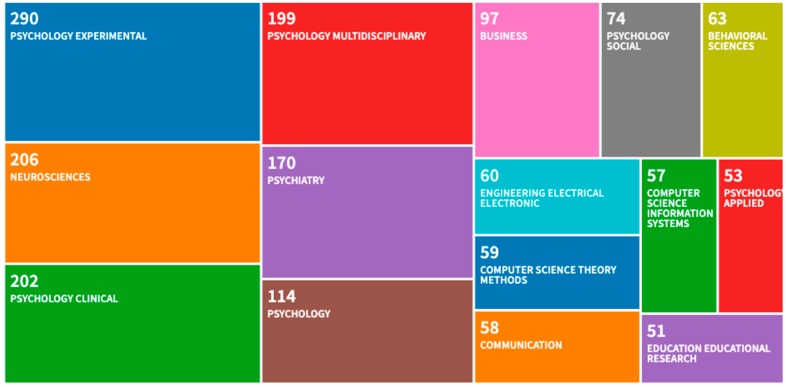
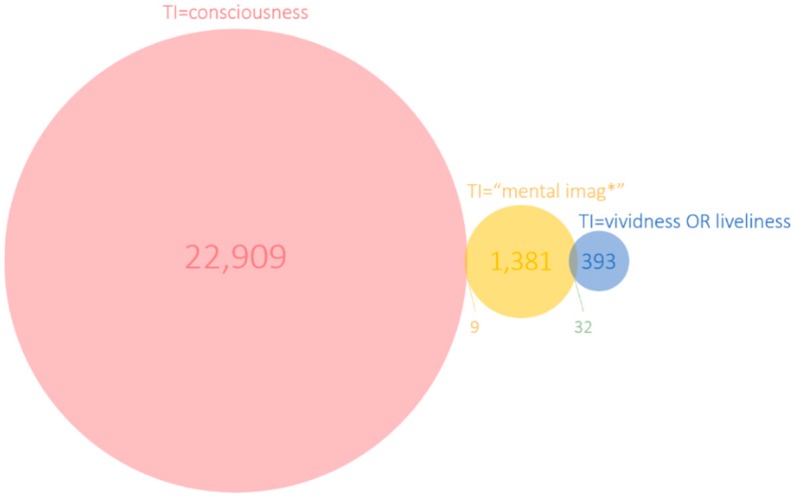
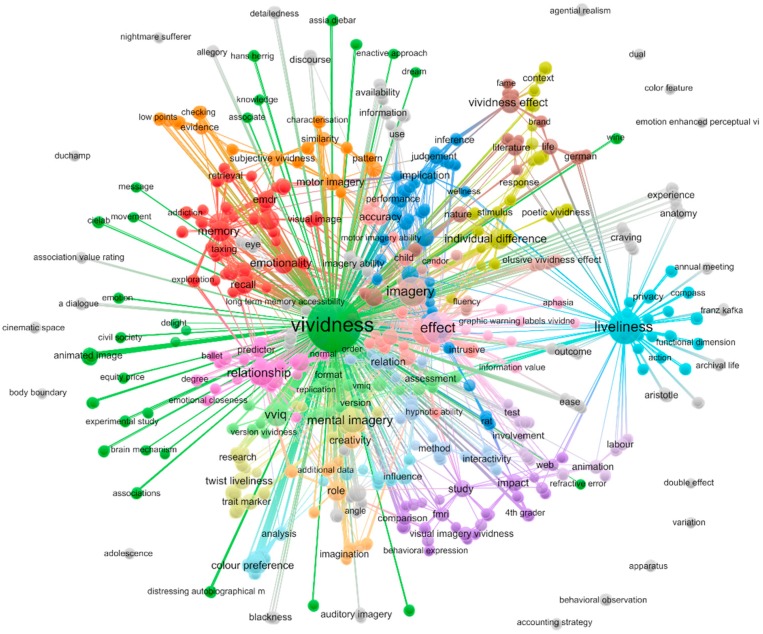
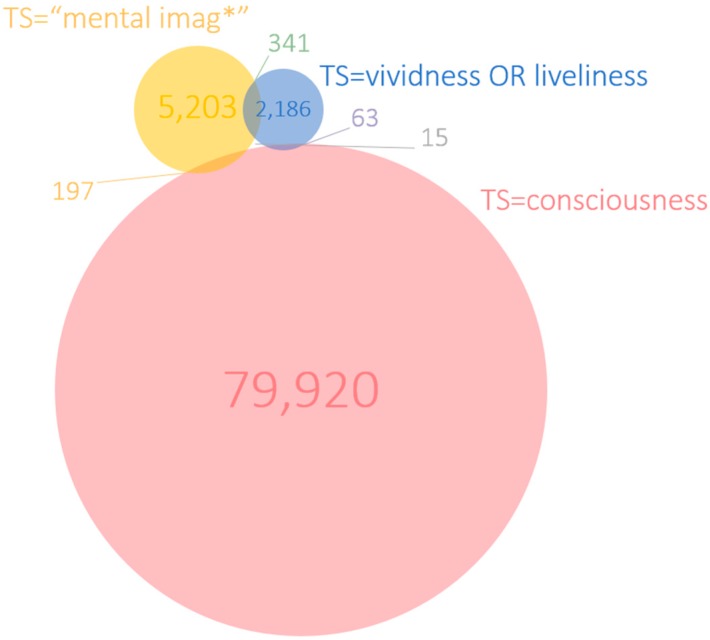
We performed a bibliometric analysis of the peer-reviewed literature on vividness between 1900 and 2019 indexed by the Web of Science and compared it with the same analysis of publications on consciousness and mental imagery. While we observed a similarity between the citation growth rates for publications about each of these three subjects, our analysis shows that these concepts rarely overlap (co-occur) in the literature, revealing a surprising paucity of research about these concepts taken together. A disciplinary analysis shows that the field of Psychology dominates the topic of vividness, even though the total number of publications containing that term is small and the concept occurs in several other disciplines such as Computer Science and Artificial Intelligence. The present findings suggest that without a coherent unitary framework for the use of vividness in research, important opportunities for advancing the field might be missed. In contrast, we suggest that an evidence-based framework (such as the bibliometric analytic methods as exemplified here) will help to guide research from all disciplines that are concerned with vividness and help to resolve the challenge of epistemic incommensurability amongst published research in multidisciplinary fields.
我们对1900年至2019年间被科学引文索引收录的关于生动性的同行评审文献进行了文献计量分析,并将其与关于意识和心理意象的出版物的相同分析进行了比较。虽然我们观察到这三个主题中每个主题的出版物的引文增长率之间存在相似性,但我们的分析表明,这些概念在文献中很少重叠(同时出现),这表明对这些概念综合起来的研究惊人地匮乏。学科分析表明,心理学领域在生动性主题方面占主导地位,尽管包含该术语的出版物总数较少,且该概念出现在计算机科学和人工智能等其他几个学科中。目前的研究结果表明,如果在研究中没有一个连贯统一的生动性使用框架,该领域取得进展的重要机会可能会错失。相比之下,我们建议一个基于证据的框架(如此处举例的文献计量分析方法)将有助于指导所有关注生动性的学科的研究,并有助于解决多学科领域已发表研究之间的认知不可通约性挑战。