Ribeiro Nicolas, Gounden Yannick, Quaglino Véronique
CRP-CPO, EA 7273, Université de Picardie Jules Verne, Amiens France.
Front Psychol. 2016 Aug 30;7:1306. doi: 10.3389/fpsyg.2016.01306. eCollection 2016.
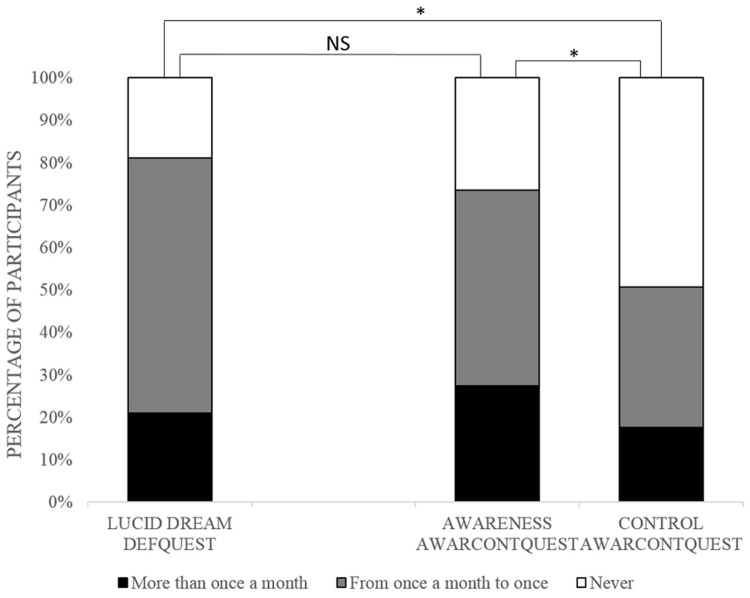
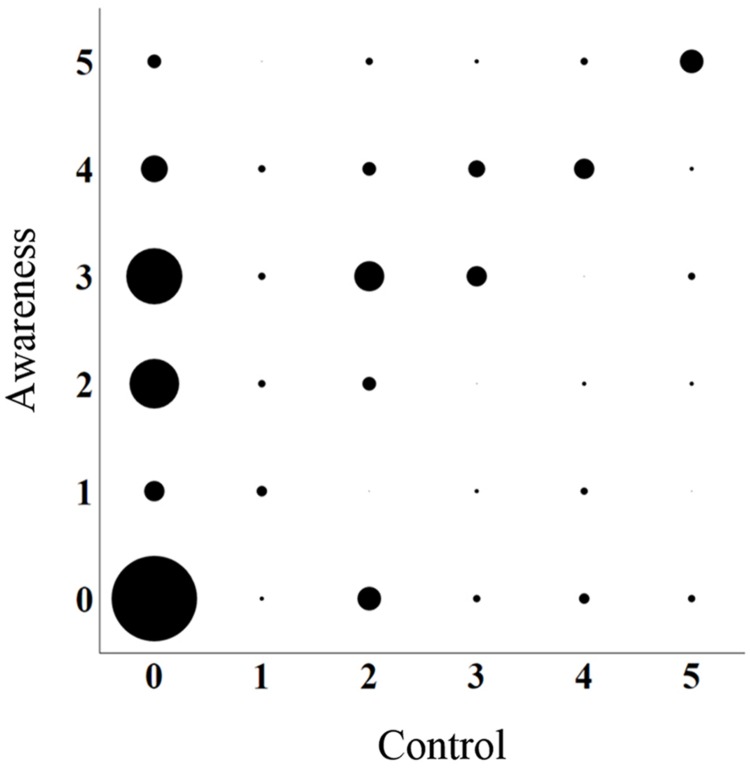
Lucid dreaming (LD) is a state of consciousness in which the dreamer is aware that he or she is dreaming and can possibly control the content of his or her dream. To investigate the LD prevalence among different samples, researchers have used different types of methodologies. With regard to retrospective self-report questionnaire, two ways of proceeding seem to emerge. In one case, a definition of LD is given to participants ("During LD, one is-while dreaming-aware of the fact that one is dreaming. It is possible to deliberately wake up, to control the dream action, or to observe passively the course of the dream with this awareness"), while in the other instances, participants are presented separate questions targeting specific LD indicators (dream awareness and dream control). In the present study, we measured LD frequency in a sample of French student in order to investigate for possible disparities in LD frequency depending on the type of questionnaire as outlined above. Moreover, we also study links between the prevalence of LD as assessed, respectively, by each questionnaire with various factors such as Vividness of Mental Imagery and Parasomnia. Results revealed no significant difference between LD frequencies across questionnaires. For the questionnaire with definition (DefQuest), 81.05% of participants reported experience of LD once or more. Concerning the questionnaire based on LD indicators (AwarContQuest), 73.38% of participants reported having experienced LD once or more. However, with regard to the correlations analysis, links between LD prevalence and factors such as Vividness of Mental Imagery and Parasomnia, varied across questionnaires. This result is an argument suggesting that researchers should be careful when investigating links between LD and other factors. The type of methodology may influence findings on LD research. Further studies are needed to investigate on the methodology effect in LD research namely on the respective weight of awareness and control.
清醒梦(LD)是一种意识状态,在这种状态下,做梦者意识到自己正在做梦,并且有可能控制自己梦境的内容。为了调查不同样本中的清醒梦发生率,研究人员使用了不同类型的方法。关于回顾性自我报告问卷,似乎出现了两种进行方式。一种情况是,给参与者一个清醒梦的定义(“在清醒梦期间,一个人在做梦时意识到自己正在做梦。有可能故意醒来、控制梦境行动或带着这种意识被动观察梦境的进程”),而在其他情况下,向参与者提出针对特定清醒梦指标(梦境意识和梦境控制)的单独问题。在本研究中,我们测量了一组法国学生样本中的清醒梦频率,以便根据上述问卷类型调查清醒梦频率可能存在的差异。此外,我们还研究了分别由每份问卷评估的清醒梦发生率与各种因素(如意象生动性和异态睡眠)之间的联系。结果显示,不同问卷的清醒梦频率之间没有显著差异。对于有定义的问卷(定义问卷),81.05%的参与者报告有过一次或多次清醒梦经历。关于基于清醒梦指标的问卷(意识控制问卷),73.38%的参与者报告有过一次或多次清醒梦经历。然而,关于相关性分析,清醒梦发生率与意象生动性和异态睡眠等因素之间的联系因问卷而异。这一结果表明,研究人员在调查清醒梦与其他因素之间的联系时应谨慎。方法类型可能会影响清醒梦研究的结果。需要进一步的研究来调查清醒梦研究中的方法效应,即意识和控制各自的权重。