International Headache Center, Department of Neurology, the First Medical Center, Chinese PLA General Hospital, Fuxing Road 28, Haidian District, Beijing, 100853, China.
Department of Laboratory Medicine, the First Medical Center, Chinese PLA General Hospital, Fuxing Road 28, Haidian District, Beijing, 100853, China.
J Headache Pain. 2020 Jan 14;21(1):5. doi: 10.1186/s10194-020-1075-z.
A previous study by our team reported the prevalence of primary headache disorders and factors associated with headache among nurses in three hospitals in North China. The aim of this cross-sectional survey was to learn more about how medical nurses in South China were affected by headache. Additionally, we determined the prevalence of headache and measured the impact of headache among doctors in mainland China for the first time.
Stratified random cluster sampling was used to select 280 physicians and 365 nurses from various departments in four hospitals in Sanya, which is one of southernmost cities in China. Information was collected on demographic data, occupational factors and headache characteristics by using a structured questionnaire.
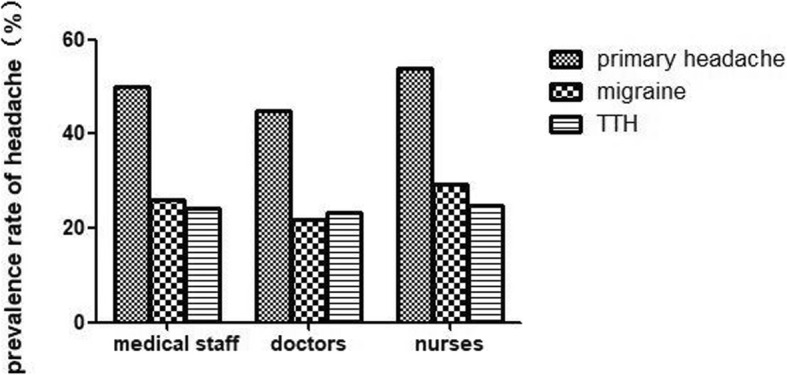
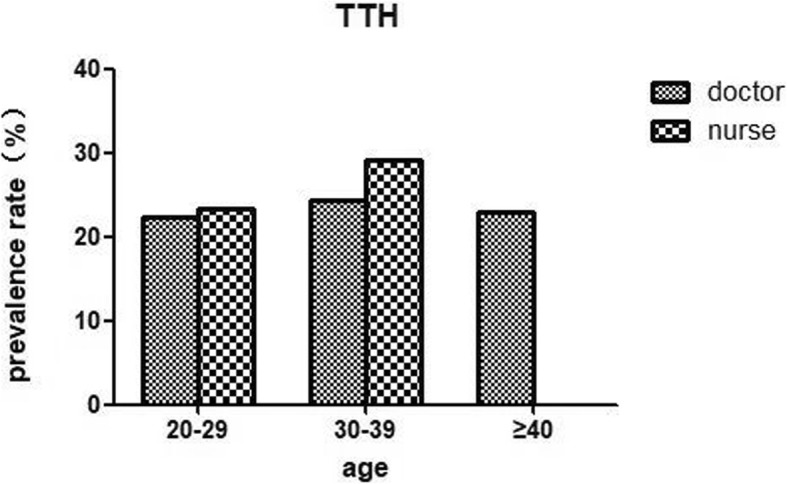
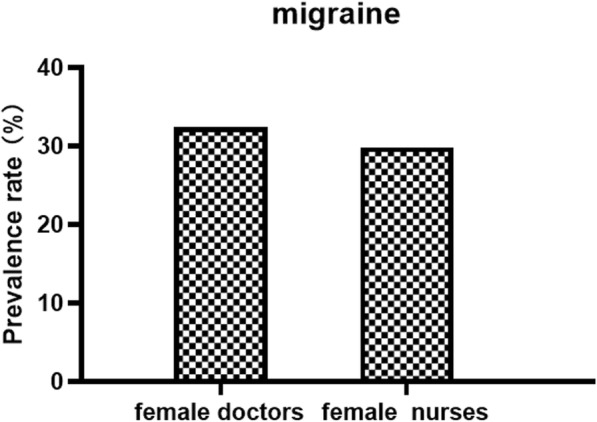
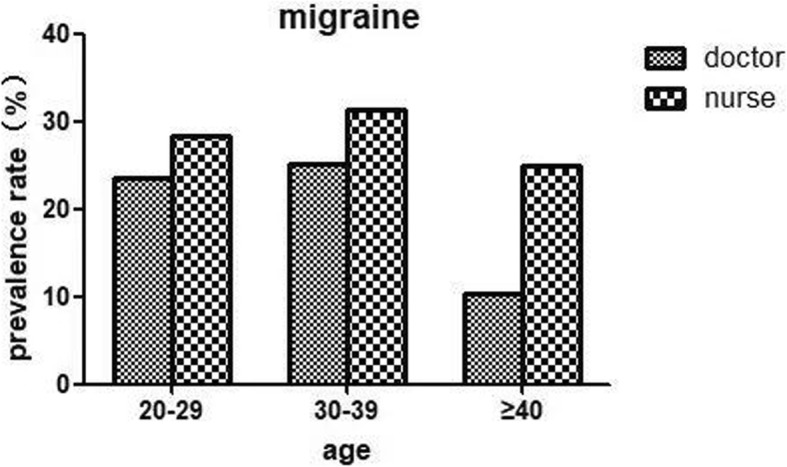
Among 645 medical staff, 548 (85%) responded (doctors = 240, nurses = 308). Among the medical staff, the 1-year prevalence of primary headache disorders was 50%, with 25.9% experiencing migraine and 24.1% experiencing tension-type headache (TTH). The prevalence of migraine in female doctors was higher than that in female nurses, although this difference was not significant (32.4% vs. 29.8%, P = 0.628). Multivariate analysis showed that being female and working in other specialties (Emergency Department & Radiology Department) remained independent risk factors for migraine in doctors (OR 2.314 and 3.223). In nurses, being married was a risk factor for migraine (OR 3.728), and job titles remained an independent risk factor for migraine and TTH (OR 2.294 and 4.695). Working more than 6 night-shifts per month was associated with an increased prevalence of migraine and TTH in doctors; the same was true in nurses for migraine, but not for TTH.
The prevalence of primary headache disorders in both nurses and doctors is higher than that in the general population in South China. Our study shows that occupation, geography and sex may play an important role. Further, female doctors are more susceptible than female nurses to migraine. The risk factors relevant to headache that were found in this study should provide an important reference for promoting occupational health in medical staff, especially female doctors in China.
本团队之前的研究报告了华北地区三家医院护士原发性头痛障碍的患病率及与头痛相关的因素。本次横断面调查旨在进一步了解华南地区医疗护士的头痛情况。此外,我们首次在中国内地确定了头痛的患病率,并测量了头痛对医生的影响。
采用分层随机整群抽样的方法,从中国最南端城市三亚的四家医院各科室中选取 280 名医生和 365 名护士。采用结构问卷收集人口统计学数据、职业因素和头痛特征信息。
在 645 名医务人员中,有 548 名(85%)做出回应(医生 240 名,护士 308 名)。在医务人员中,原发性头痛障碍的 1 年患病率为 50%,其中偏头痛占 25.9%,紧张型头痛(TTH)占 24.1%。女性医生中偏头痛的患病率高于女性护士,但差异无统计学意义(32.4%比 29.8%,P=0.628)。多变量分析显示,女性和从事其他科室(急诊科和放射科)工作是医生偏头痛的独立危险因素(OR 2.314 和 3.223)。在护士中,已婚是偏头痛的危险因素(OR 3.728),职称仍然是偏头痛和 TTH 的独立危险因素(OR 2.294 和 4.695)。每月夜班超过 6 次与医生偏头痛和 TTH 的患病率增加相关;护士中也存在同样的情况,但与 TTH 无关。
华南地区护士和医生原发性头痛障碍的患病率均高于一般人群。我们的研究表明,职业、地理位置和性别可能起着重要作用。此外,女性医生比女性护士更容易患偏头痛。本研究发现的与头痛相关的危险因素,为促进中国医疗人员,特别是女性医生的职业健康提供了重要参考。