Department of Pharmacological & Pharmaceutical Sciences, College of Pharmacy, University of Houston, Houston, TX 77204, United States.
Curr Pharm Des. 2020;26(4):492-500. doi: 10.2174/1381612826666200115092015.
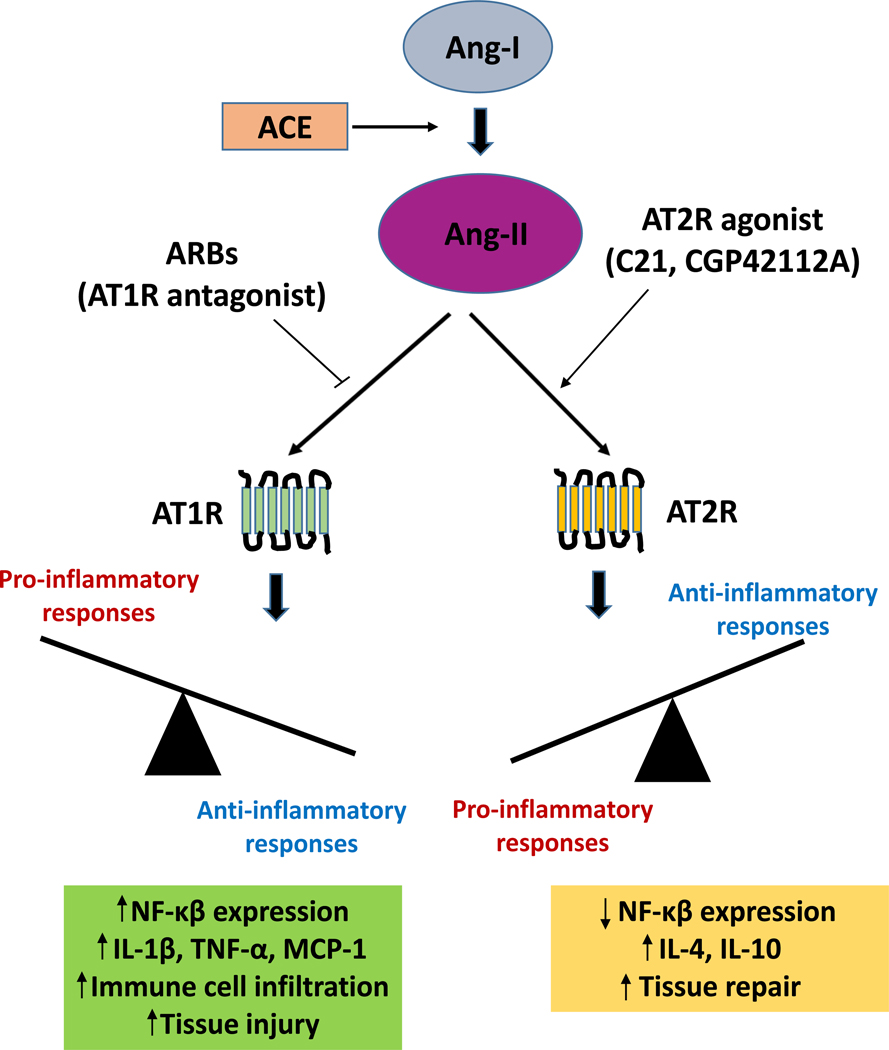
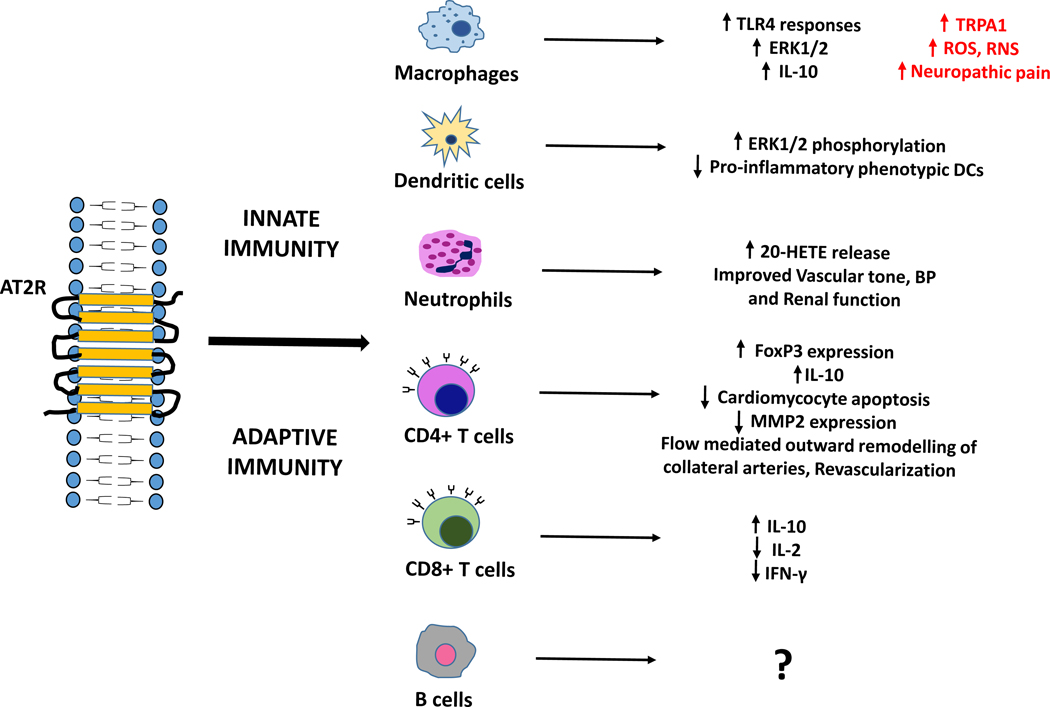
The hyperactive RAS and inflammation are closely associated. The angiotensin-II/AT1R axis of the RAS has been explored extensively for its role in inflammation and a plethora of pathological conditions. Understanding the role of AT2R in inflammation is an emerging area of research. The AT2R is expressed on a variety of immune and non-immune cells, which upon activation triggers the release of a host of cytokines and has multiple effects that coalesce to anti-inflammation and prevents maladaptive repair. The anti-inflammatory outcomes of AT2R activation are linked to its well-established signaling pathways involving formation of nitric oxide and activation of phosphatases. Collectively, these effects promote cell survival and tissue function. The consideration of AT2R as a therapeutic target requires further investigations.
过度活跃的 RAS 和炎症密切相关。RAS 的血管紧张素-II/AT1R 轴在炎症和许多病理条件中的作用已被广泛研究。了解 AT2R 在炎症中的作用是一个新兴的研究领域。AT2R 表达于多种免疫细胞和非免疫细胞上,激活后会触发多种细胞因子的释放,并具有多种协同作用的效应,从而具有抗炎作用并防止适应性修复。AT2R 激活的抗炎作用与其已确立的信号通路有关,包括一氧化氮的形成和磷酸酶的激活。总的来说,这些作用促进了细胞存活和组织功能。将 AT2R 视为治疗靶点需要进一步的研究。