Lee Seok Hee, Kim Jin Wook, Lee Byeong Chun, Oh Hyun Ju
Department of Theriogenology and Biotechnology, College of Veterinary Medicine, Seoul National University, Seoul 08826, Korea.
J Vet Sci. 2020 Jan;21(1):e7. doi: 10.4142/jvs.2020.21.e7.
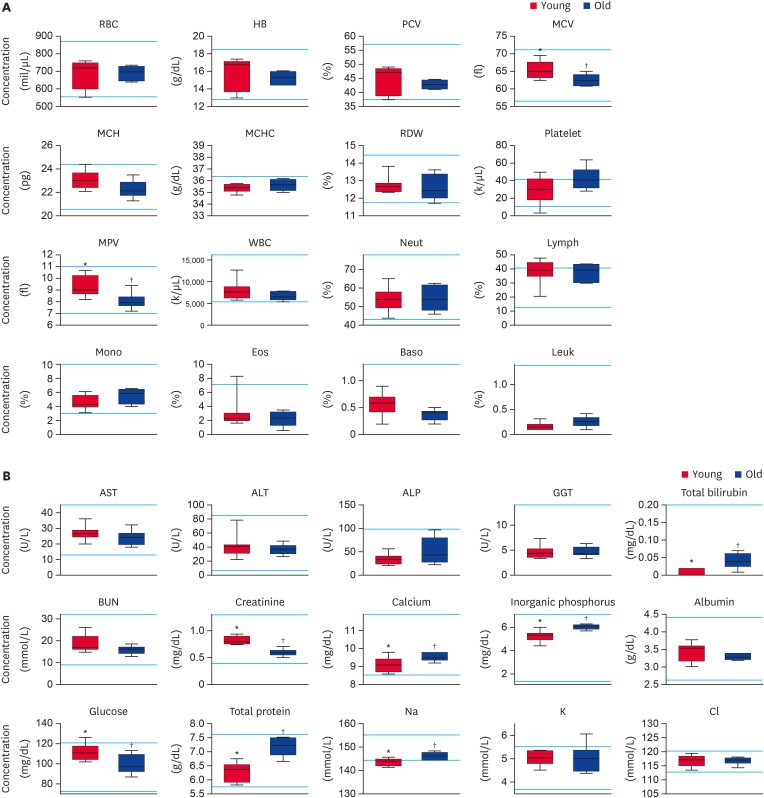
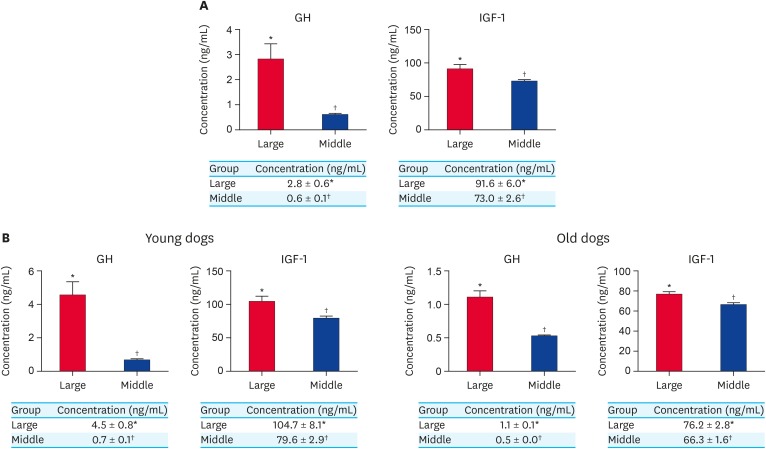
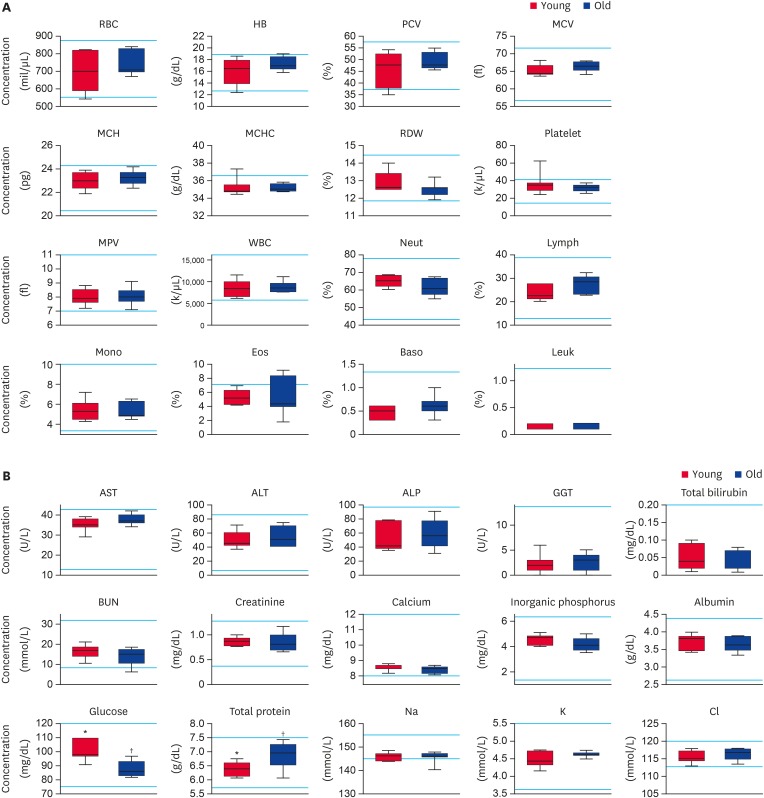
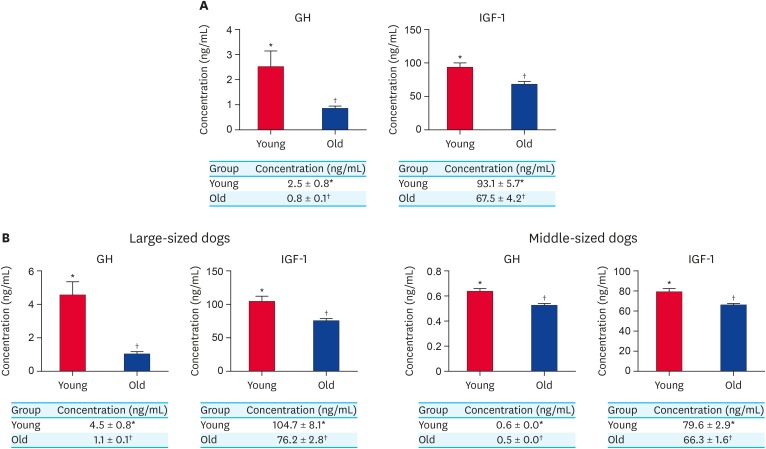
Aging triggers cellular and molecular alterations, including genomic instability and organ dysfunction, which increases the risk of disease in mammals. Recently, due to the markedly growing number of aging dogs in the world, as much as 49% in total number of pet dogs, it is necessary to improve and maintain their quality of life by understanding of the biological effects of aging. Therefore, the aim of this study was to determine specific biomarkers in aging dogs as a means of defining a set of hematological/biochemical biomarkers that influence the aging process. Blood samples were collected from younger (1-3 years) and older (7-10 years) dogs of middle/large size. The hematological/biochemistry analysis was performed to evaluate parameters significantly associated with age. Enzyme-linked immunosorbent assay was used to target growth hormone (GH)/insulin growth factor-1 (IGF-1), one of the main regulators of the aging process. Declining levels of total protein and increased levels of glucose in young dogs was observed regardless of their body size. Notably, a significantly high concentration of GH and IGF-1 in the younger dogs compared to the older dogs was found in middle/large-sized dogs. GH and IGF-1 were also found at significantly high levels in large-sized dogs compared to middle-sized dogs, suggesting a similar trend to that of elderly humans. Consequently, glucose, total protein, GH, and IGF-1 were identified as potential biomarkers for regulating the aging process in large/middle-sized dogs. These findings provide an invaluable insight into the mechanism of aging for the field of aging research.
衰老会引发细胞和分子层面的改变,包括基因组不稳定和器官功能障碍,这会增加哺乳动物患病的风险。近来,由于全球老龄犬数量显著增加,在宠物犬总数中占比高达49%,因此有必要通过了解衰老的生物学效应来改善和维持它们的生活质量。所以,本研究的目的是确定老龄犬的特定生物标志物,以此来定义一组影响衰老过程的血液学/生物化学标志物。从年龄较小(1 - 3岁)和年龄较大(7 - 10岁)的中大型犬采集血样。进行血液学/生物化学分析以评估与年龄显著相关的参数。采用酶联免疫吸附测定法检测生长激素(GH)/胰岛素样生长因子-1(IGF-1),这是衰老过程的主要调节因子之一。无论犬只体型大小,均观察到幼龄犬总蛋白水平下降、葡萄糖水平升高。值得注意的是,在中大型犬中,幼龄犬的GH和IGF-1浓度显著高于老龄犬。与中型犬相比,大型犬的GH和IGF-1水平也显著较高,这表明与老年人类有相似趋势。因此,葡萄糖、总蛋白、GH和IGF-1被确定为调节中大型犬衰老过程的潜在生物标志物。这些发现为衰老研究领域对衰老机制的理解提供了宝贵的见解。