Park Bum Chul, Cho Jiung, Kim Myeong Soo, Ko Min Jun, Pan Lijun, Na Jin Yeong, Kim Young Keun
Department of Materials Science and Engineering, Korea University, Seoul, 02481, Korea.
Research Institute of Engineering and Technology, Korea University, Seoul, 02481, Korea.
Nat Commun. 2020 Jan 15;11(1):298. doi: 10.1038/s41467-019-14168-0.
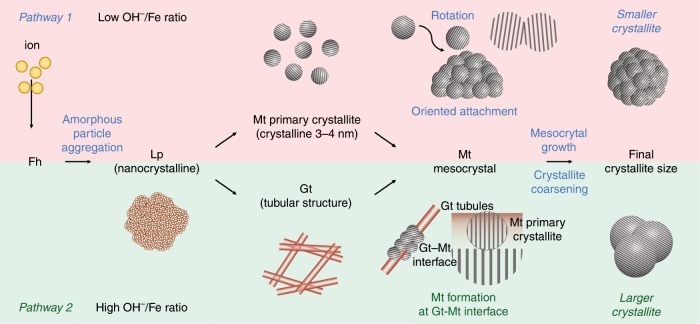
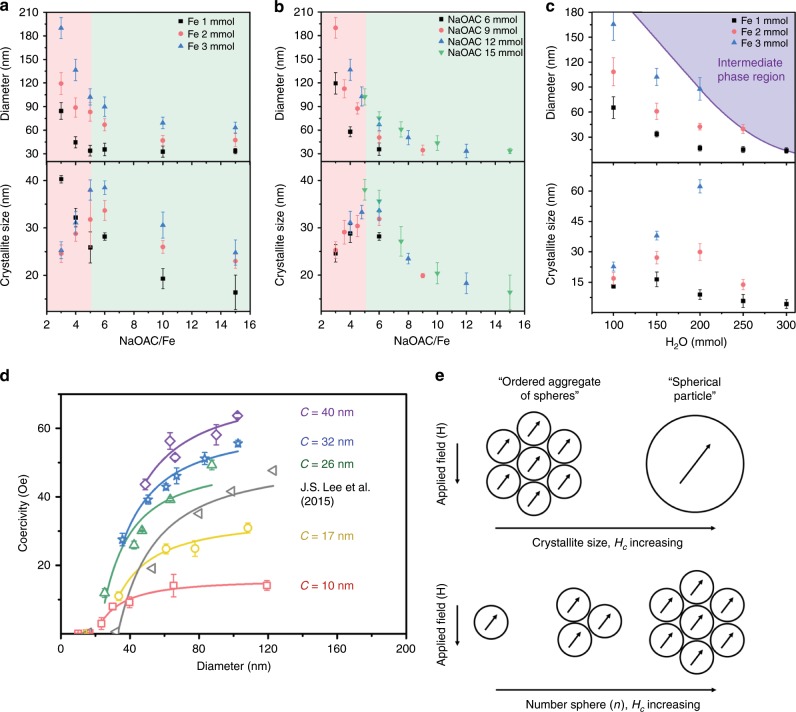
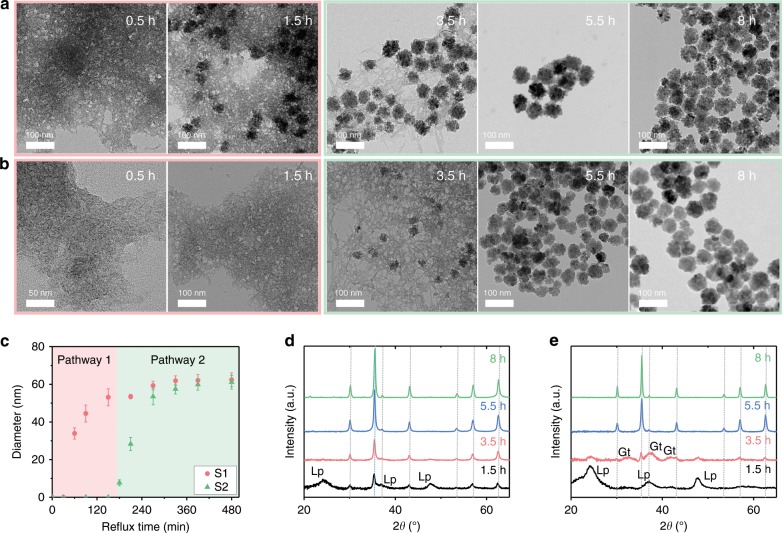
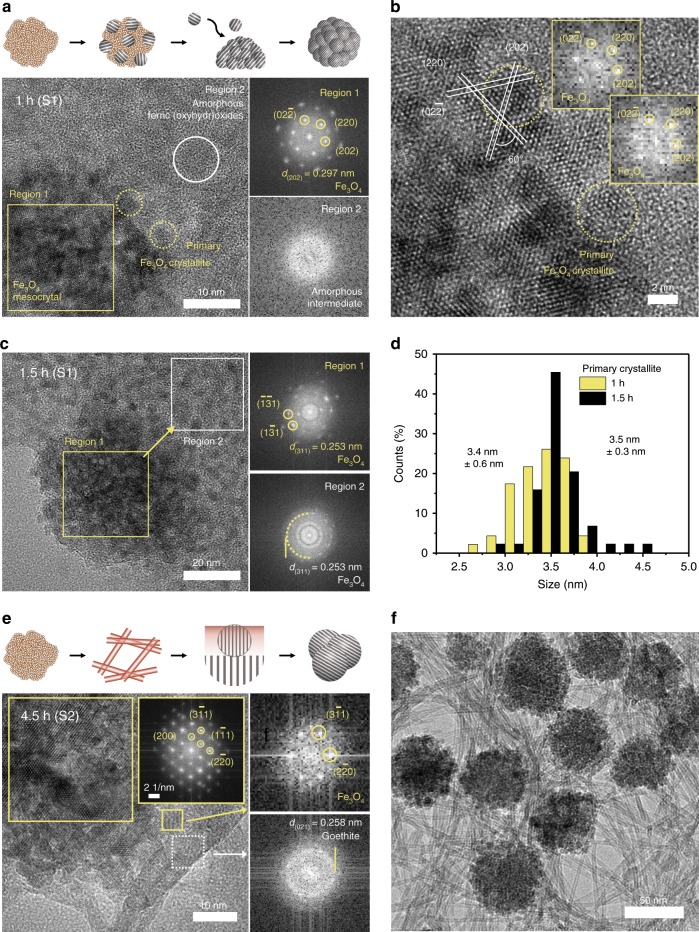
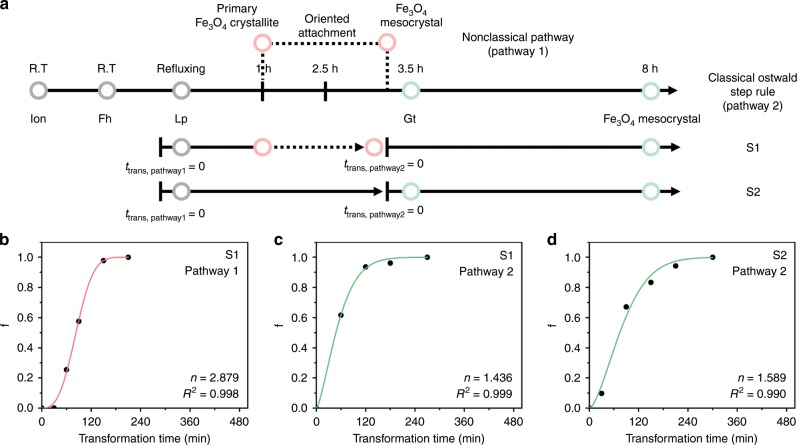
Mesocrystals are assemblies of smaller crystallites and have attracted attention because of their nonclassical crystallization pathway and emerging collective functionalities. Understanding the mesocrystal crystallization mechanism in chemical routes is essential for precise control of size and microstructure, which influence the function of mesocrystals. However, microstructure evolution from the nucleus stage through various crystallization pathways remains unclear. We propose a unified model on the basis of the observation of two crystallization pathways, with different ferric (oxyhydr)oxide polymorphs appearing as intermediates, producing microstructures of magnetite mesocrystal via different mechanisms. An understanding of the crystallization mechanism enables independent chemical control of the mesocrystal diameter and crystallite size, as manifested by a series of magnetic coercivity measurements. We successfully implement an experimental model system that exhibits a universal crystallite size effect on the magnetic coercivity of mesocrystals. These findings provide a general approach to controlling the microstructure through crystallization pathway selection, thus providing a strategy for controlling magnetic coercivity in magnetite systems.
介晶是由较小微晶组成的聚集体,因其非经典的结晶途径和新出现的集体功能而受到关注。了解化学途径中的介晶结晶机制对于精确控制尺寸和微观结构至关重要,因为这些因素会影响介晶的功能。然而,从核阶段通过各种结晶途径的微观结构演变仍不清楚。我们基于对两种结晶途径的观察提出了一个统一模型,不同的铁(氢氧)氧化物多晶型物作为中间体出现,通过不同机制产生磁铁矿介晶的微观结构。对结晶机制的理解能够对介晶直径和微晶尺寸进行独立的化学控制,一系列磁矫顽力测量结果证明了这一点。我们成功实现了一个实验模型系统,该系统展示了微晶尺寸对介晶磁矫顽力的普遍影响。这些发现提供了一种通过选择结晶途径来控制微观结构的通用方法,从而为控制磁铁矿系统中的磁矫顽力提供了一种策略。