Kwanhian Wiyada, Jiranantasak Treenate, Kessler Aleeza T, Tolchinsky Bryn E, Parker Sarah, Songsri Jirarat, Wisessombat Suebtrakool, Pukanha Kawinsaya, Testamenti Vincentius A, Khrongsee Pacharapong, Sretrirutchai Somporn, Kaewrakmuk Jedsada, Tangpong Jitbanjong, Tuanyok Apichai
Center of Excellence in Research for Melioidosis, Department of Medical Technology, School of Allied Health Sciences, Walailak University, Nakhon Si Thammarat 80161, Thailand.
Department of Infectious Diseases and Immunology, College of Veterinary Medicine, and the Emerging Pathogens Institute, University of Florida, Gainesville, FL 32608, USA.
Vet Sci. 2020 Jan 14;7(1):9. doi: 10.3390/vetsci7010009.
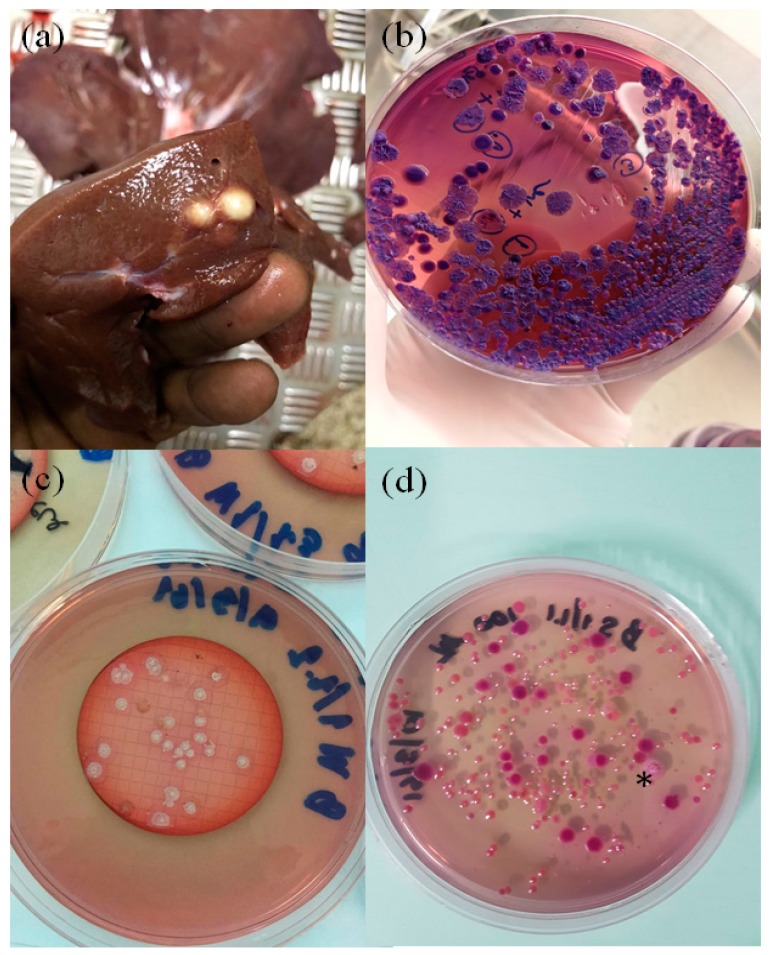
Melioidosis, caused by the Gram-negative bacterium , is a potentially life-threatening infection that can affect humans and a wide variety of animals in the tropics. In December 2017, a swine melioidosis case was discovered during a meat inspection at a privately-owned slaughterhouse in Nakhon Si Thammarat Province in southern Thailand. The infection, which continued for several months, caused a dispute about where the disease began. An environmental investigation into two farms-both involved in raising the first infected pig-ensued. Through genetic analysis, the investigation revealed that a contaminated water supply at one farm was the probable source of infection. The three local sequence types identified in the investigation were types 51, 298 and 392.
类鼻疽是由革兰氏阴性菌引起的一种潜在威胁生命的感染病,可感染热带地区的人类和多种动物。2017年12月,在泰国南部那空是贪玛叻府一家私营屠宰场的肉类检查过程中发现了一例猪类鼻疽病例。该感染持续了数月,引发了关于疾病起源地的争议。随后对两个农场(均涉及饲养首例感染猪)展开了环境调查。通过基因分析,调查发现其中一个农场受污染的供水可能是感染源。调查中确定的三种本地序列类型为51型、298型和392型。