Faculty of Medical Technology, Prince of Songkla University, Songkhla, Thailand.
Faculty of Medicine, Chiang Mai University, Chiang Mai, Thailand.
PLoS Negl Trop Dis. 2024 Aug 22;18(8):e0012444. doi: 10.1371/journal.pntd.0012444. eCollection 2024 Aug.
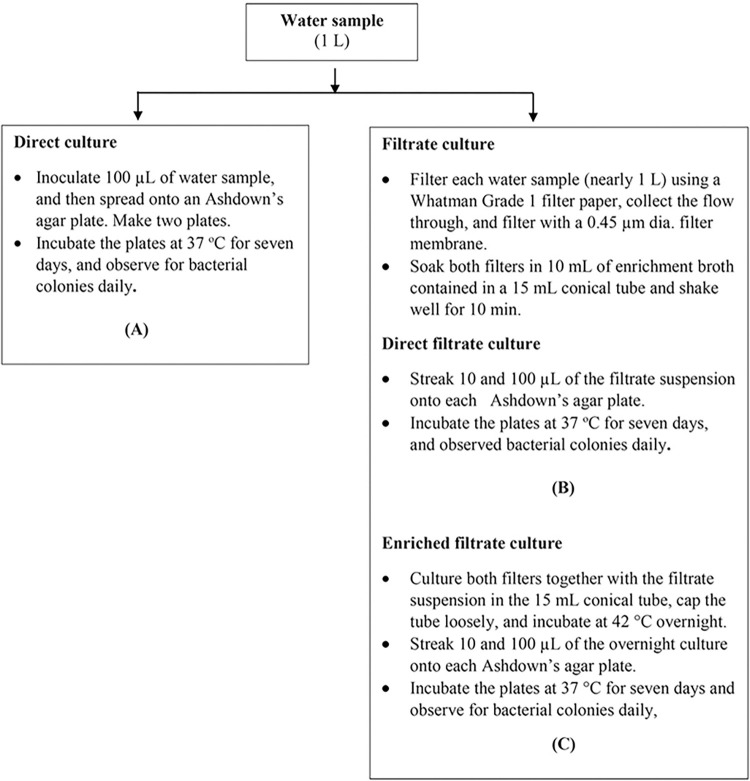
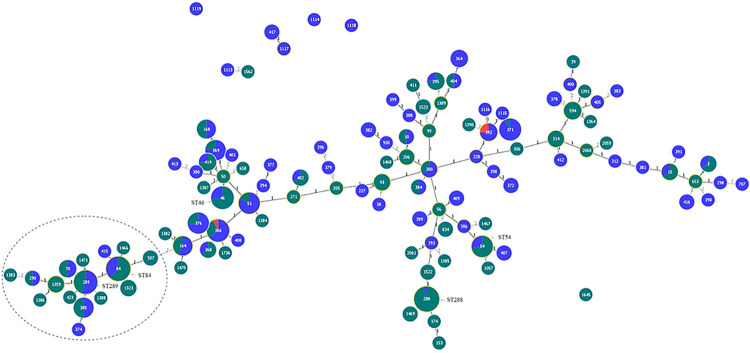
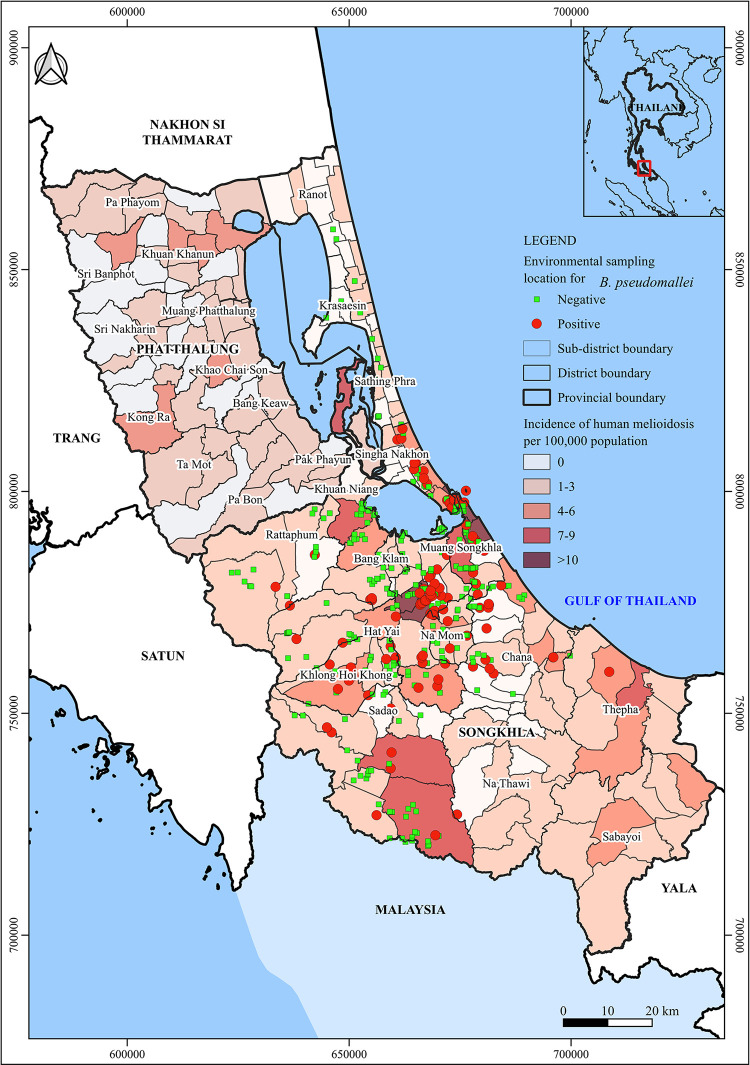
Melioidosis, a severe bacterial illness caused by Burkholderia pseudomallei, is prevalent in most parts of Thailand, including its southern region situated within the Malay Peninsula. Despite a lower reported incidence rate of melioidosis in the South compared to the Northeast, the mortality rate remains persistently high. This study aimed to better understand the epidemiology and investigate the presence of B. pseudomallei in the natural environment of southern Thailand. Using multi-locus sequence typing (MLST), we characterized B. pseudomallei isolates derived from human cases and compared them with previously reported sequence types (STs) from the same region. A total of 263 clinical isolates retrieved from 156 melioidosis patients between 2014 and 2020 were analyzed, revealing 72 distinct STs, with 25 (35%) matching STs from Finkelstein's environmental isolates collected in southern Thailand during 1964-1967. Notably, strains bearing STs 288, 84, 54, 289, and 46 were frequently found among patients. Additionally, we observed strain diversity with multiple STs in 13 of 59 patients, indicating exposure to various B. pseudomallei genotypes in the environmental sources of the infection. Environmental surveys were conducted in Songkhla Province to detect B. pseudomallei in soil and water samples where local patients lived. Of the 2737 soil samples from 208 locations and 244 water samples from diverse sources, 52 (25%) soil sampling locations and 63 (26%) water sources were cultured positive for B. pseudomallei. Positive soil samples were predominantly found in animal farming area and non-agricultural zones like mountains and grasslands, while water samples were frequently positive in waterfalls, streams, and surface runoffs, with only 9% of rice paddies testing positive. Collectively, a significant proportion of recent melioidosis cases in Songkhla Province can be attributed to known B. pseudomallei STs persisting in the environment for at least the past six decades. Further characterization of B. pseudomallei isolates from recent environment surveys is warranted. These findings illuminate the contemporary landscape of B. pseudomallei infections and their environmental prevalence in southern Thailand, contributing to the regional threat assessment in Thailand and Southeast Asia.
类鼻疽病是一种由伯克霍尔德氏菌引起的严重细菌性疾病,在泰国大部分地区流行,包括其位于马来半岛的南部地区。尽管与东北部相比,南部报告的类鼻疽病发病率较低,但死亡率仍然居高不下。本研究旨在更好地了解该疾病的流行病学,并调查泰国南部自然环境中伯克霍尔德氏菌的存在情况。我们使用多位点序列分型(MLST)方法,对来自人类病例的伯克霍尔德氏菌分离株进行了特征描述,并将其与来自同一地区的先前报道的序列型(ST)进行了比较。对 2014 年至 2020 年间从 156 名类鼻疽病患者中采集的 263 株临床分离株进行了分析,结果显示存在 72 种不同的 ST,其中 25 种(35%)与 1964-1967 年间在泰国南部采集的芬克尔斯坦氏环境分离株的 ST 相匹配。值得注意的是,携带 ST288、84、54、289 和 46 的菌株在患者中频繁出现。此外,我们观察到 59 名患者中有 13 名存在多种 ST,表明患者感染的细菌基因型来自环境来源的不同菌株。在宋卡府进行了环境调查,以检测土壤和水样中的伯克霍尔德氏菌。在来自 208 个地点的 2737 份土壤样本和来自不同来源的 244 份水样中,有 52 个(25%)土壤采样点和 63 个(26%)水源的伯克霍尔德氏菌培养呈阳性。阳性土壤样本主要来自动物养殖场和非农业区,如山区和草原,而水样本则经常在瀑布、溪流和地表径流中呈阳性,只有 9%的稻田呈阳性。总的来说,宋卡府最近发生的类鼻疽病病例中,有很大一部分可归因于至少过去 60 年来环境中持续存在的已知伯克霍尔德氏菌 ST。有必要对最近的环境调查中分离的伯克霍尔德氏菌进行进一步的特征描述。这些发现阐明了泰国南部地区当代伯克霍尔德氏菌感染及其环境流行情况,为泰国和东南亚的区域威胁评估提供了依据。