Department of Critical Care Medicine, Renmin Hospital of Wuhan University, Wuhan 430060, China.
Department of Pharmacology and Systems Physiology, University of Cincinnati College of Medicine, Cincinnati, OH 45267, USA.
Cells. 2020 Jan 3;9(1):120. doi: 10.3390/cells9010120.
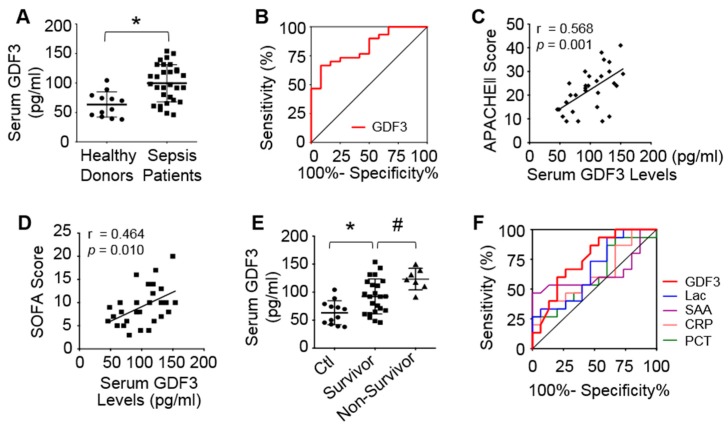
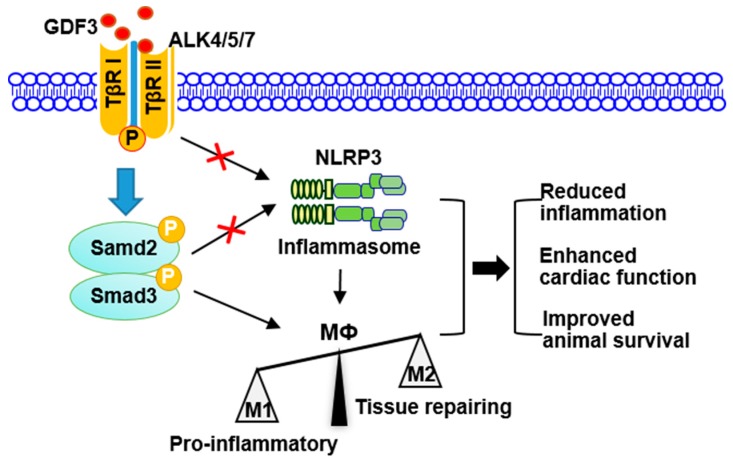
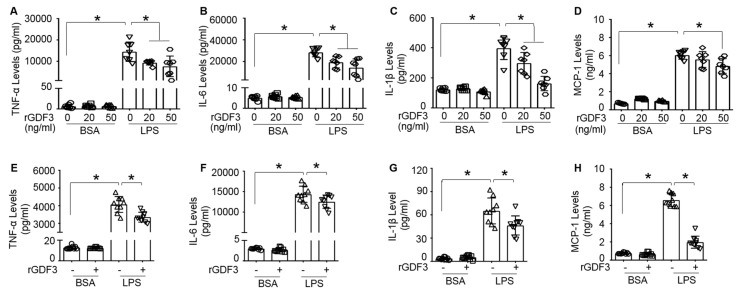
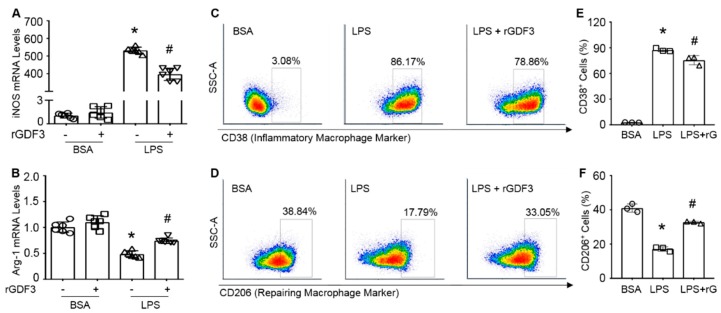
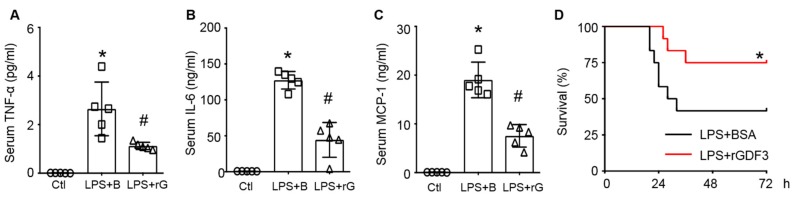
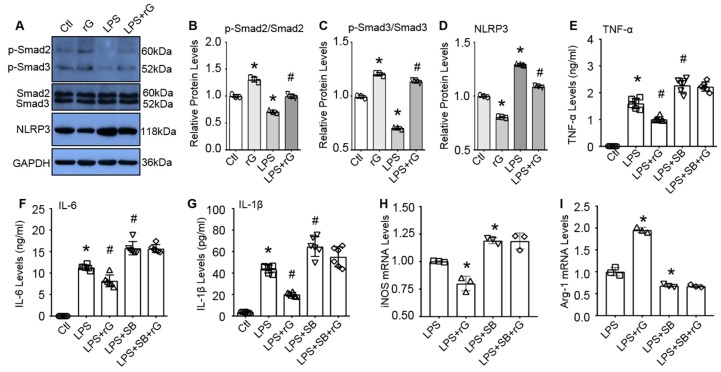
Macrophages are critical for regulation of inflammatory response during endotoxemia and septic shock. However, the mediators underlying their regulatory function remain obscure. Growth differentiation factor 3 (GDF3), a member of transforming growth factor beta (TGF-β) superfamily, has been implicated in inflammatory response. Nonetheless, the role of GDF3 in macrophage-regulated endotoxemia/sepsis is unknown. Here, we show that serum GDF3 levels in septic patients are elevated and strongly correlate with severity of sepsis and 28-day mortality. Interestingly, macrophages treated with recombinant GDF3 protein (rGDF3) exhibit greatly reduced production of pro-inflammatory cytokines, comparing to controls upon endotoxin challenge. Moreover, acute administration of rGDF3 to endotoxin-treated mice suppresses macrophage infiltration to the heart, attenuates systemic and cardiac inflammation with less pro-inflammatory macrophages (M1) and more anti-inflammatory macrophages (M2), as well as prolongs mouse survival. Mechanistically, GDF3 is able to activate Smad2/Smad3 phosphorylation, and consequently inhibits the expression of nod-like receptor protein-3 (NLRP3) in macrophages. Accordingly, blockade of Smad2/Smad3 phosphorylation with SB431542 significantly offsets rGDF3-mediated anti-inflammatory effects. Taken together, this study uncovers that GDF3, as a novel sepsis-associated factor, may have a dual role in the pathophysiology of sepsis. Acute administration of rGDF3 into endotoxic shock mice could increase survival outcome and improve cardiac function through anti-inflammatory response by suppression of M1 macrophage phenotype. However, constitutive high levels of GDF3 in human sepsis patients are associated with lethality, suggesting that GDF3 may promote macrophage polarization toward M2 phenotype which could lead to immunosuppression.
巨噬细胞在脓毒症和感染性休克时的内毒素血症中炎症反应的调节中起着关键作用。然而,其调节功能的介质仍不清楚。生长分化因子 3(GDF3),转化生长因子β(TGF-β)超家族的一员,已被牵连到炎症反应中。尽管如此,GDF3 在巨噬细胞调节内毒素血症/败血症中的作用尚不清楚。在这里,我们表明,败血症患者的血清 GDF3 水平升高,并与败血症的严重程度和 28 天死亡率强烈相关。有趣的是,与对照组相比,用重组 GDF3 蛋白(rGDF3)处理的巨噬细胞在受到内毒素刺激时,促炎细胞因子的产生大大减少。此外,急性给予 rGDF3 到内毒素处理的小鼠抑制巨噬细胞浸润到心脏,减轻全身和心脏炎症与较少的促炎巨噬细胞(M1)和更多的抗炎巨噬细胞(M2),以及延长小鼠的生存。在机制上,GDF3 能够激活 Smad2/Smad3 磷酸化,从而抑制巨噬细胞中核苷酸结合寡聚结构域样受体蛋白 3(NLRP3)的表达。因此,用 SB431542 阻断 Smad2/Smad3 磷酸化显著抵消了 rGDF3 介导的抗炎作用。总之,这项研究揭示了 GDF3 作为一种新的败血症相关因子,可能在败血症的病理生理学中具有双重作用。急性给予 rGDF3 到内毒素休克小鼠中可以通过抑制 M1 巨噬细胞表型的抗炎反应来增加生存结果和改善心脏功能。然而,人类败血症患者中 GDF3 的固有高水平与死亡率相关,这表明 GDF3 可能促进巨噬细胞向 M2 表型极化,这可能导致免疫抑制。