Department of Anesthesiology, Zhongda Hospital, School of Medicine, Southeast University, No. 87 Dingjiaqiao Road, Nanjing, 210009, China.
Department of Anesthesiology, Second Affiliated Hospital, School of Medicine, Zhejiang University, Hangzhou, China.
J Neuroinflammation. 2020 Jan 16;17(1):23. doi: 10.1186/s12974-019-1695-x.
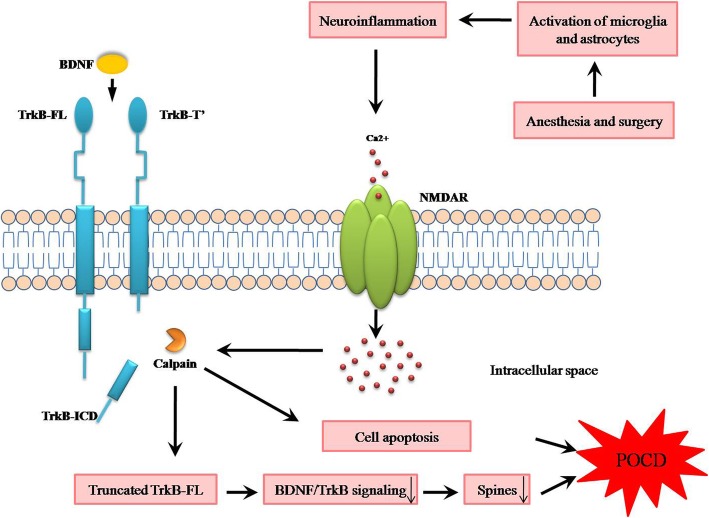
Postoperative cognitive decline (POCD) is a recognized clinical phenomenon characterized by cognitive impairments in patients following anesthesia and surgery, yet its underlying mechanism remains unclear. Brain-derived neurotrophic factor (BDNF) plays an important role in neuronal plasticity, learning, and memory via activation of TrkB-full length (TrkB-FL) receptors. It has been reported that an abnormal truncation of TrkB mediated by calpain results in dysregulation of BDNF/TrkB signaling and is associated with cognitive impairments in several neurodegenerative disorders. Calpains are Ca-dependent proteases, and overactivation of calpain is linked to neuronal death. Since one source of intracellular Ca is N-methyl-d-aspartate receptors (NMDARs) related and the function of NMDARs can be regulated by neuroinflammation, we therefore hypothesized that dysregulation of BDNF/TrkB signaling mediated by NMDAR/Ca/calpain might be involved in the pathogenesis of POCD.
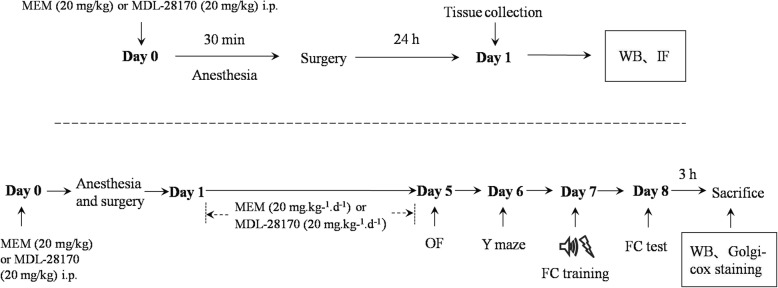
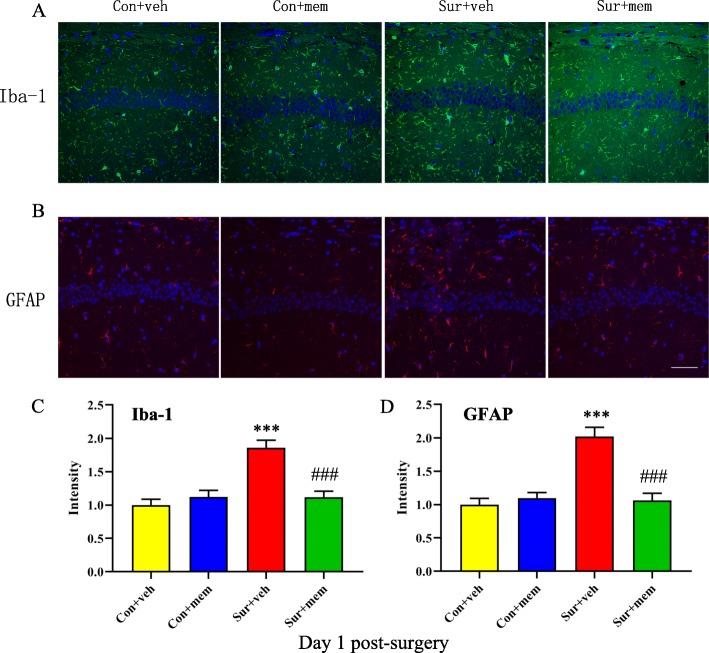
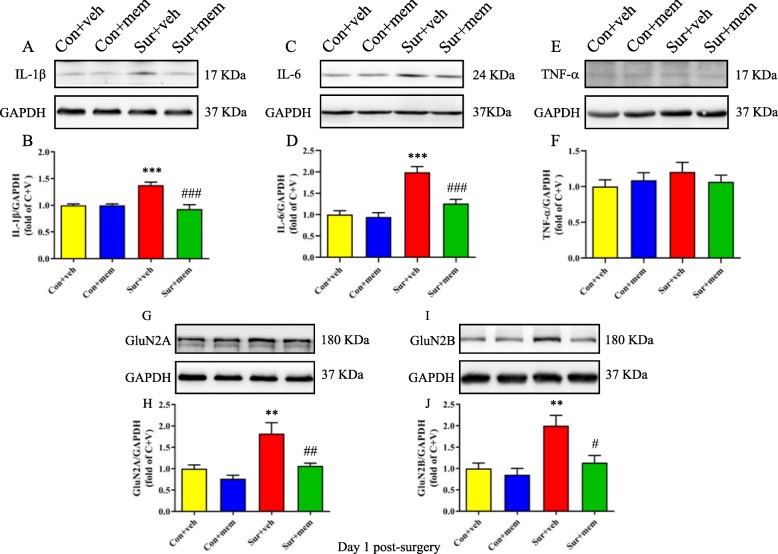
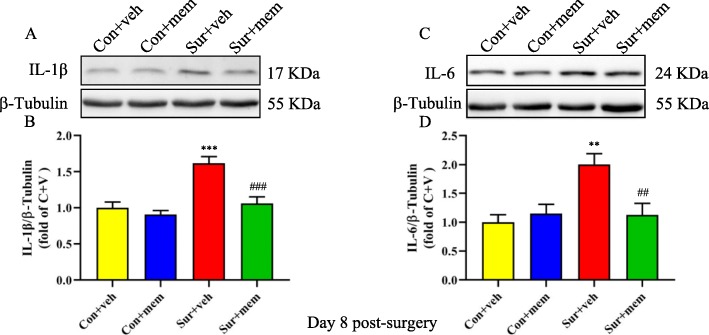
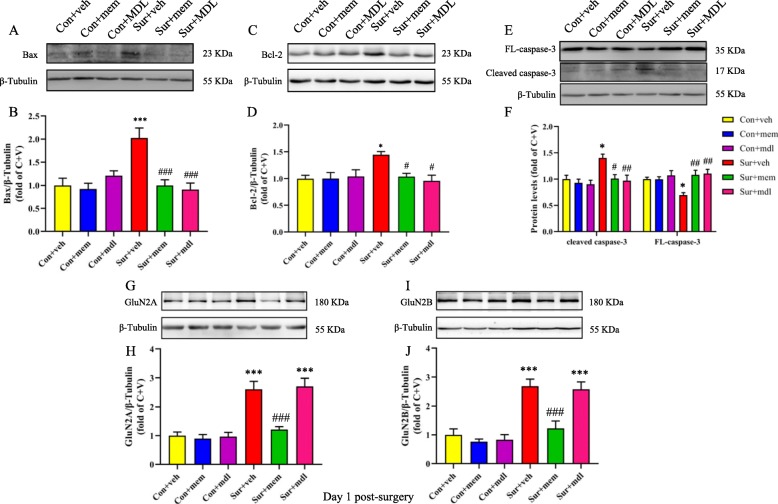
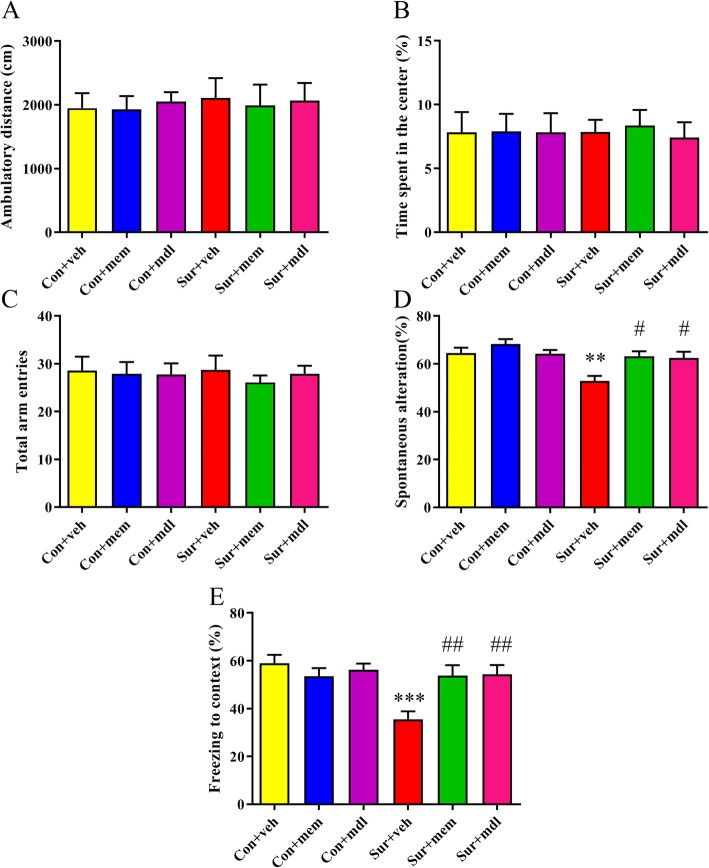
In the present study, 16-month-old C57BL/6 mice were subjected to exploratory laparotomy with isoflurane anesthesia to establish the POCD animal model. For the interventional study, mice were treated with either NMDAR antagonist memantine or calpain inhibitor MDL-28170. Behavioral tests were performed by open field, Y maze, and fear conditioning tests from 5 to 8 days post-surgery. The levels of Iba-1, GFAP, interleukin-1β (IL-1β), IL-6, tumor necrosis factor-α (TNF-α), NMDARs, calpain, BDNF, TrkB, bax, bcl-2, caspase-3, and dendritic spine density were determined in the hippocampus.
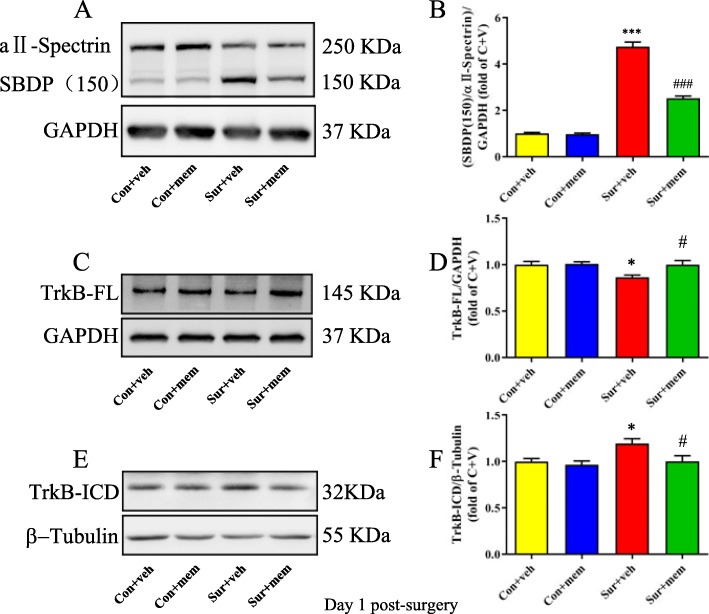
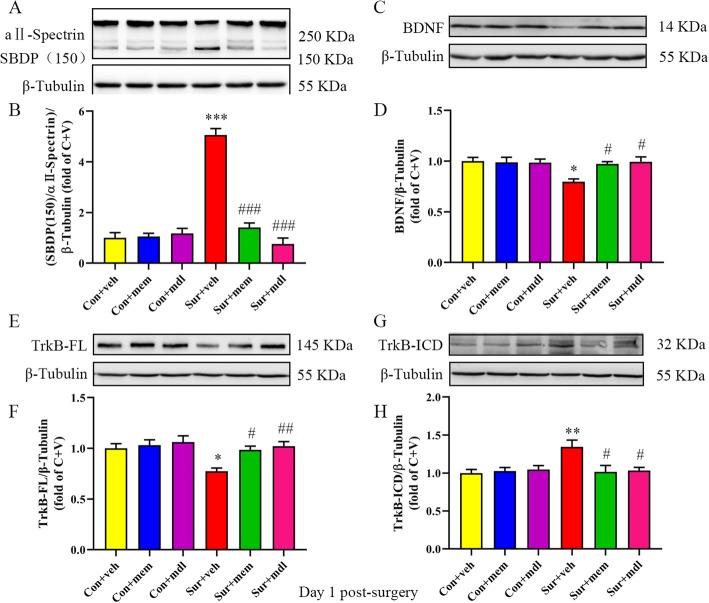
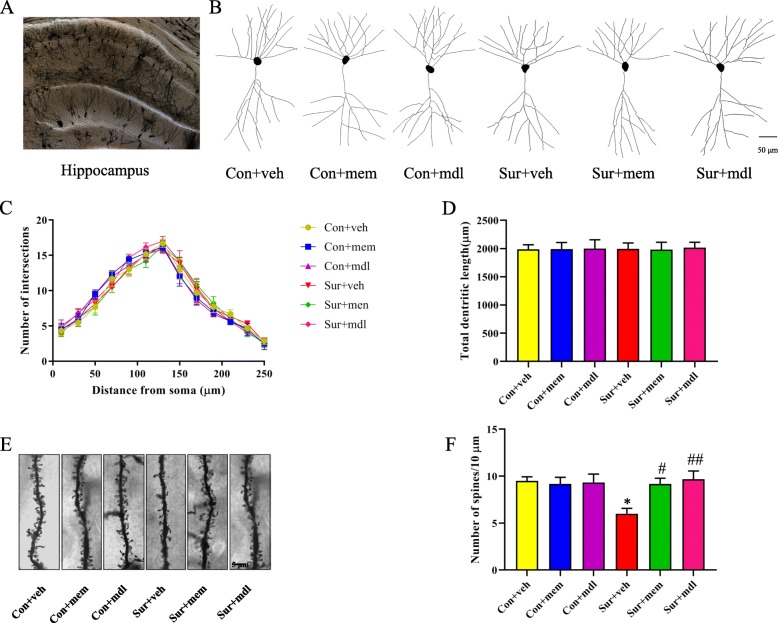
Anesthesia and surgery-induced neuroinflammation overactivated NMDARs and then triggered overactivation of calpain, which subsequently led to the truncation of TrkB-FL, BDNF/TrkB signaling dysregulation, dendritic spine loss, and cell apoptosis, contributing to cognitive impairments in aging mice. These abnormities were prevented by memantine or MDL-28170 treatment.
Collectively, our study supports the notion that NMDAR/Ca2+/calpain is mechanistically involved in anesthesia and surgery-induced BDNF/TrkB signaling disruption and cognitive impairments in aging mice, which provides one possible therapeutic target for POCD.
术后认知功能障碍(POCD)是一种公认的临床现象,其特征是患者在接受麻醉和手术后出现认知障碍,但其潜在机制尚不清楚。脑源性神经营养因子(BDNF)通过激活 TrkB 全长(TrkB-FL)受体,在神经元可塑性、学习和记忆中发挥重要作用。据报道,钙蛋白酶介导的 TrkB 异常截断导致 BDNF/TrkB 信号转导失调,与几种神经退行性疾病的认知障碍有关。钙蛋白酶是 Ca 依赖性蛋白酶,钙蛋白酶过度激活与神经元死亡有关。由于细胞内 Ca 的一个来源是 N-甲基-D-天冬氨酸受体(NMDAR)相关的,并且 NMDAR 的功能可以通过神经炎症来调节,因此我们假设 NMDAR/Ca/钙蛋白酶介导的 BDNF/TrkB 信号转导失调可能参与 POCD 的发病机制。
在本研究中,16 月龄的 C57BL/6 小鼠接受异氟醚麻醉下的剖腹探查术,建立 POCD 动物模型。在干预研究中,小鼠用 NMDAR 拮抗剂美金刚或钙蛋白酶抑制剂 MDL-28170 治疗。术后 5-8 天,通过旷场、Y 迷宫和恐惧条件反射试验进行行为测试。在海马中测定 Iba-1、GFAP、白细胞介素-1β(IL-1β)、白细胞介素-6(IL-6)、肿瘤坏死因子-α(TNF-α)、NMDAR、钙蛋白酶、BDNF、TrkB、bax、bcl-2、caspase-3 和树突棘密度。
麻醉和手术引起的神经炎症过度激活 NMDAR,进而触发钙蛋白酶过度激活,随后导致 TrkB-FL 截断、BDNF/TrkB 信号转导失调、树突棘丢失和细胞凋亡,导致老年小鼠认知障碍。这些异常通过美金刚或 MDL-28170 治疗得到预防。
综上所述,我们的研究支持这样一种观点,即 NMDAR/Ca2+/钙蛋白酶在机制上参与了麻醉和手术引起的 BDNF/TrkB 信号转导中断和老年小鼠的认知障碍,为 POCD 提供了一个可能的治疗靶点。