Pharmacy department, Imperial College Healthcare NHS Trust, London, UK
Patient Safety Translational Research Centre, Imperial College London, London, UK.
BMJ Qual Saf. 2020 Sep;29(9):764-773. doi: 10.1136/bmjqs-2019-010194. Epub 2020 Jan 16.
Patients often carry medication lists to mitigate information loss across healthcare settings. We aimed to identify mechanisms by which these lists could be used to support safety, key supporting features, and barriers and facilitators to their use.
We used a mixed-methods design comprising two focus groups with patients and carers, 16 semistructured interviews with healthcare professionals, 60 semistructured interviews with people carrying medication lists, a quantitative features analysis of tools available for patients to record their medicines and usability testing of four tools. Findings were triangulated using thematic analysis. Distributed cognition for teamwork models were used as sensitising concepts.
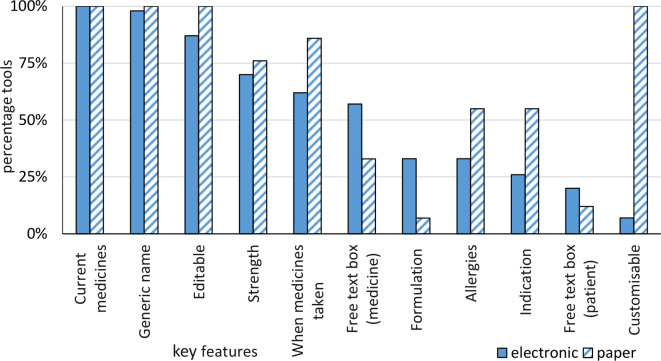
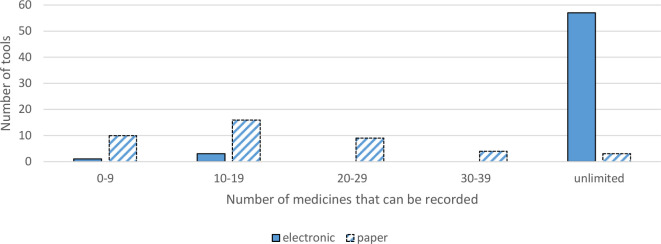
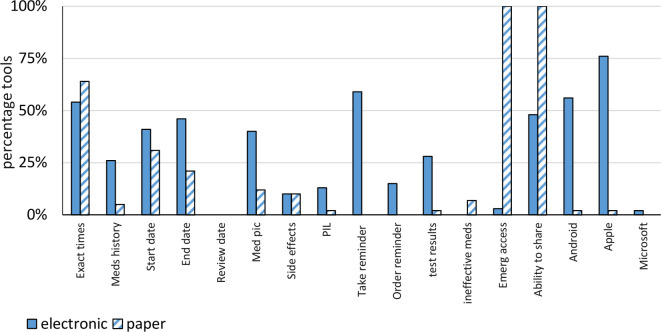
We identified a wide range of mechanisms through which carrying medication lists can improve medication safety. These included improving the accuracy of medicines reconciliation, allowing identification of potential drug interactions, facilitating communication about medicines, acting as an aide-mémoire to patients during appointments, allowing patients to check their medicines for errors and reminding patients to take and reorder their medicines. Different tools for recording medicines met different needs. Of 103 tools examined, none met the core needs of all users. A key barrier to use was lack of awareness by patients and carers that healthcare information systems can be fragmented, a key facilitator was encouragement from healthcare professionals.
Our findings suggest that patients and healthcare professionals perceive patient-held medication lists to have a wide variety of benefits. Interventions are needed to raise awareness of the potential role of these lists in enhancing patient safety. Such interventions should empower patients and carers to identify a method that suits them best from a range of options and avoid a 'one size fits all' approach.
患者经常携带用药清单,以减轻医疗环境中的信息丢失。我们旨在确定这些清单可用于支持安全性的机制、主要支持功能以及使用的障碍和促进因素。
我们使用混合方法设计,包括与患者和照顾者进行的两个焦点小组、与医疗保健专业人员进行的 16 次半结构化访谈、与携带用药清单的人进行的 60 次半结构化访谈、对患者记录药物的工具进行的定量特征分析以及对四种工具进行的可用性测试。使用主题分析对发现结果进行三角验证。团队协作的分布式认知模型被用作敏感概念。
我们确定了携带用药清单可以改善用药安全性的多种机制。这些机制包括提高药物重整的准确性、识别潜在药物相互作用、促进药物沟通、在就诊期间作为患者的辅助记忆、允许患者检查药物错误并提醒患者服药和重新配药。不同的记录药物工具满足不同的需求。在检查的 103 种工具中,没有一种工具满足所有用户的核心需求。使用的一个主要障碍是患者和照顾者缺乏对医疗保健信息系统可能碎片化的认识,一个主要的促进因素是医疗保健专业人员的鼓励。
我们的研究结果表明,患者和医疗保健专业人员认为患者持有的用药清单具有广泛的益处。需要采取干预措施来提高人们对这些清单在增强患者安全性方面的潜在作用的认识。这些干预措施应该赋予患者和照顾者权力,让他们从多种选择中确定最适合他们的方法,避免“一刀切”的方法。