Laboratory of Aging Research and Nanotoxicology, State Key Laboratory of Biotherapy and Cancer Center, National Clinical Research Center for Geriatrics, West China Hospital, Sichuan University, Chengdu, Sichuan, China.
State Key Laboratory of Oral Disease, West China Hospital of Stomatology, Sichuan University, Chengdu, Sichuan, China.
Cell Prolif. 2020 Feb;53(2):e12747. doi: 10.1111/cpr.12747. Epub 2020 Jan 21.
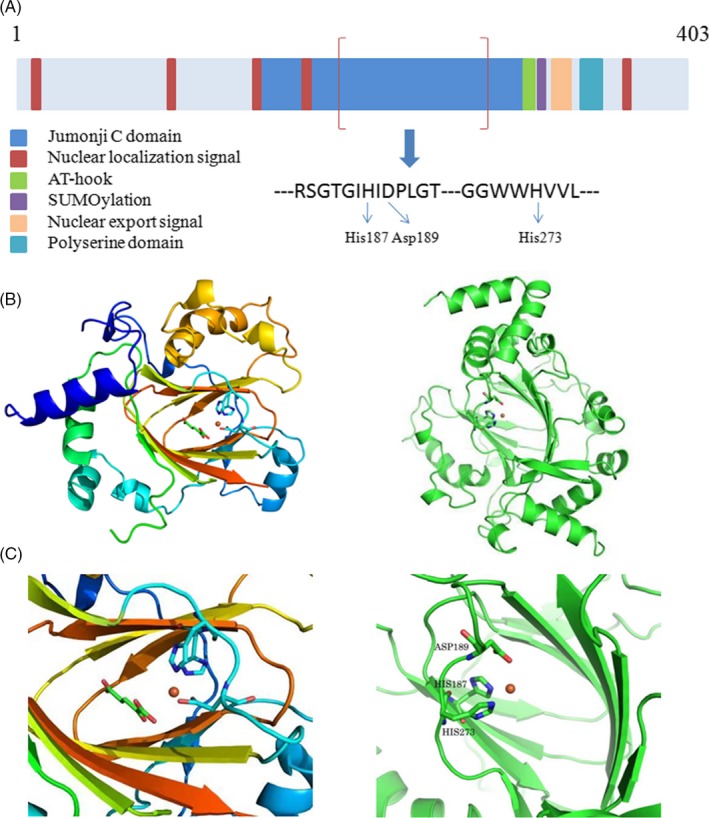
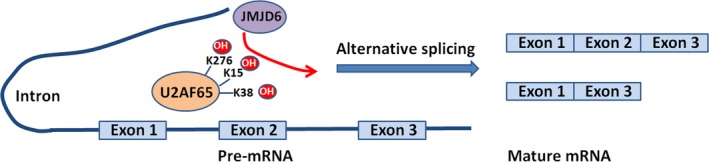
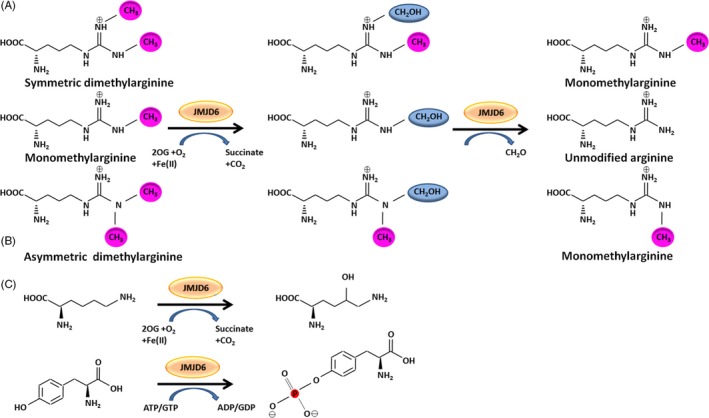
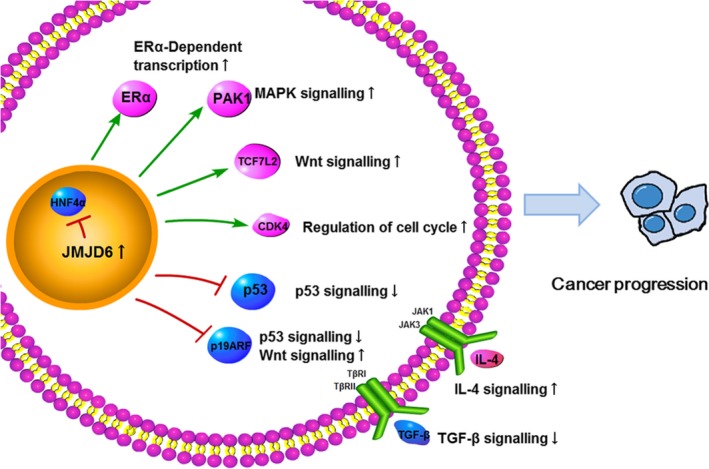
The jumonji domain-containing protein 6 (JMJD6) is a Fe(II)- and 2-oxoglutarate (2OG)-dependent oxygenase that catalyses lysine hydroxylation and arginine demethylation of histone and non-histone peptides. Recently, the intrinsic tyrosine kinase activity of JMJD6 has also been reported. The JMJD6 has been implicated in embryonic development, cellular proliferation and migration, self-tolerance induction in the thymus, and adipocyte differentiation. Not surprisingly, abnormal expression of JMJD6 may contribute to the development of many diseases, such as neuropathic pain, foot-and-mouth disease, gestational diabetes mellitus, hepatitis C and various types of cancer. In the present review, we summarized the structure and functions of JMJD6, with particular emphasis on the role of JMJD6 in cancer progression.
组蛋白赖氨酸特异性去甲基化酶 6(JMJD6)是一个依赖于 Fe(II)和 2-氧戊二酸(2OG)的氧合酶,可催化组蛋白和非组蛋白肽的赖氨酸羟化和精氨酸去甲基化。最近,JMJD6 的内在酪氨酸激酶活性也已被报道。JMJD6 参与胚胎发育、细胞增殖和迁移、胸腺中的自身耐受诱导以及脂肪细胞分化。毫不奇怪,JMJD6 的异常表达可能导致许多疾病的发生,如神经病理性疼痛、口蹄疫、妊娠期糖尿病、丙型肝炎和各种类型的癌症。在本综述中,我们总结了 JMJD6 的结构和功能,特别强调了 JMJD6 在癌症进展中的作用。