Laboratory of Aging Research and Cancer Drug Target, State Key Laboratory of Biotherapy and Cancer Center, National Clinical Research Center for Geriatrics, West China Hospital, Sichuan University, No.17, Block3, Southern Renmin Road, Chengdu, Sichuan, 610041, People's Republic of China.
Oncogene. 2023 Sep;42(37):2737-2750. doi: 10.1038/s41388-023-02781-9. Epub 2023 Aug 11.
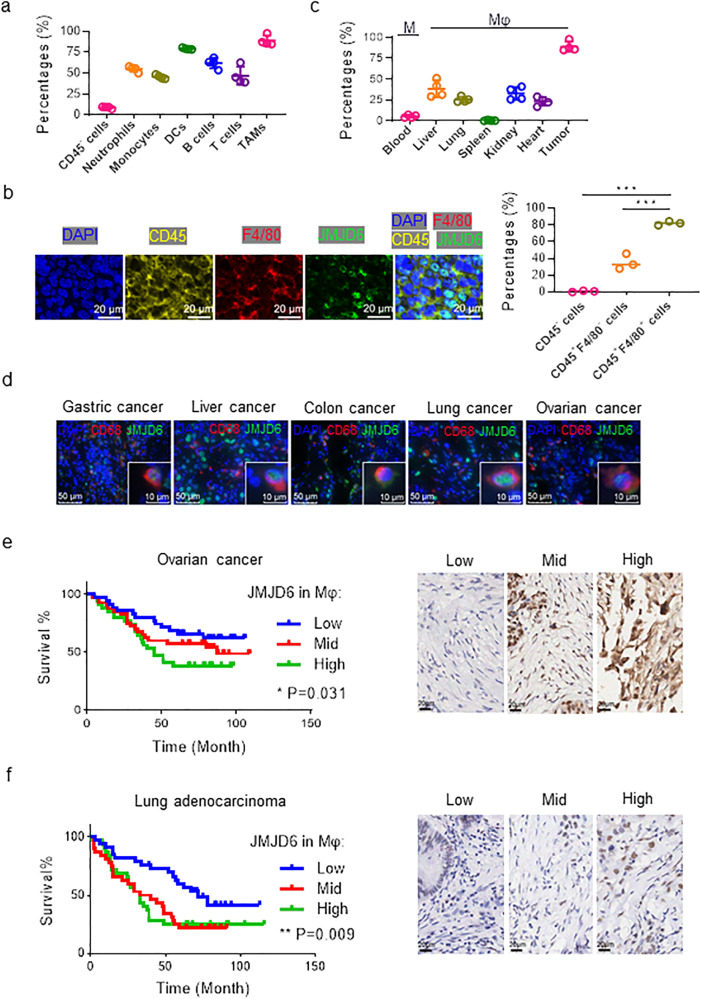
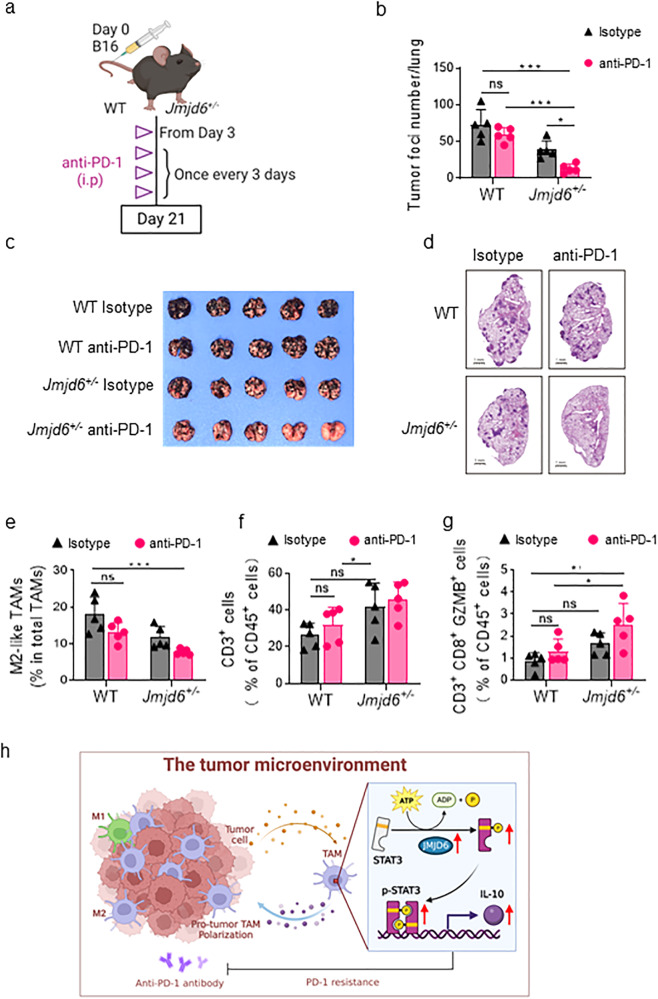
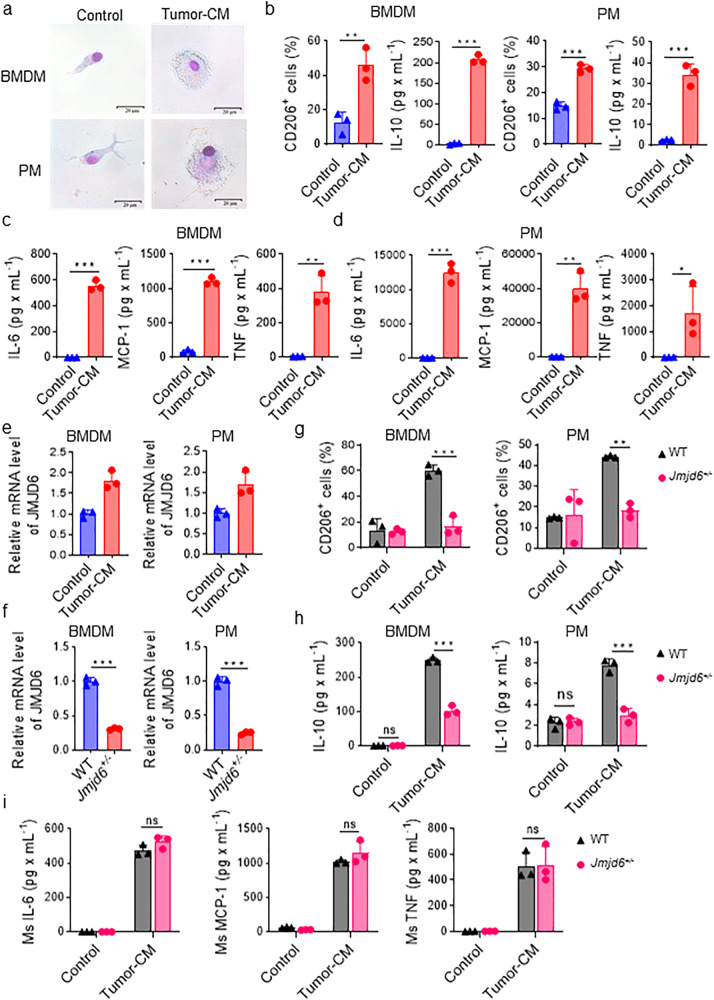
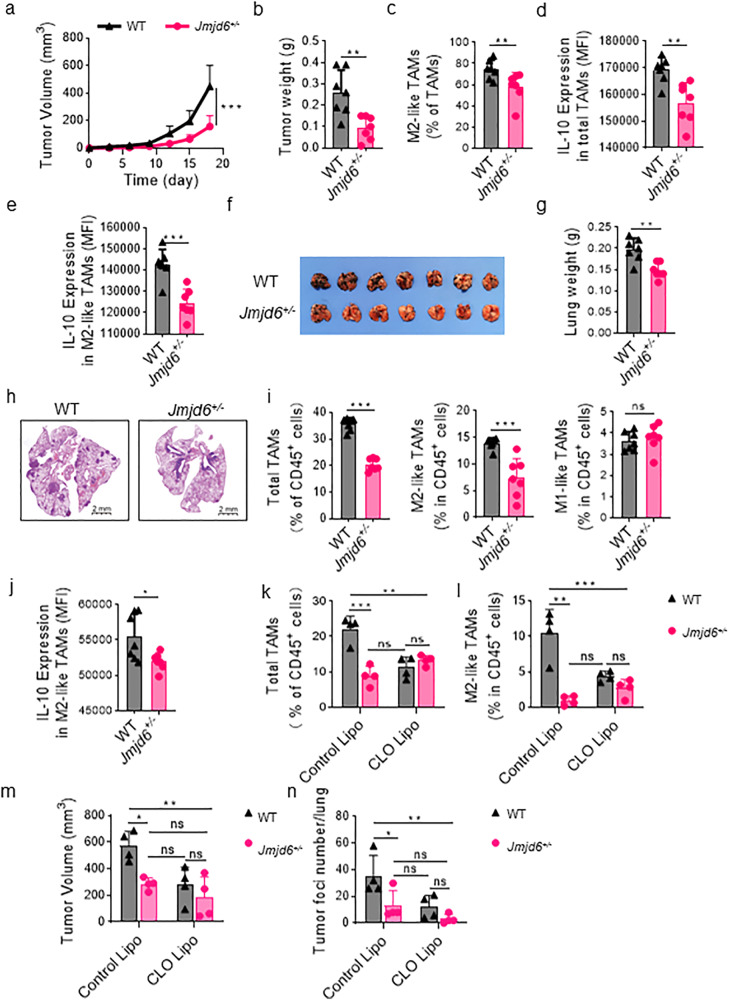
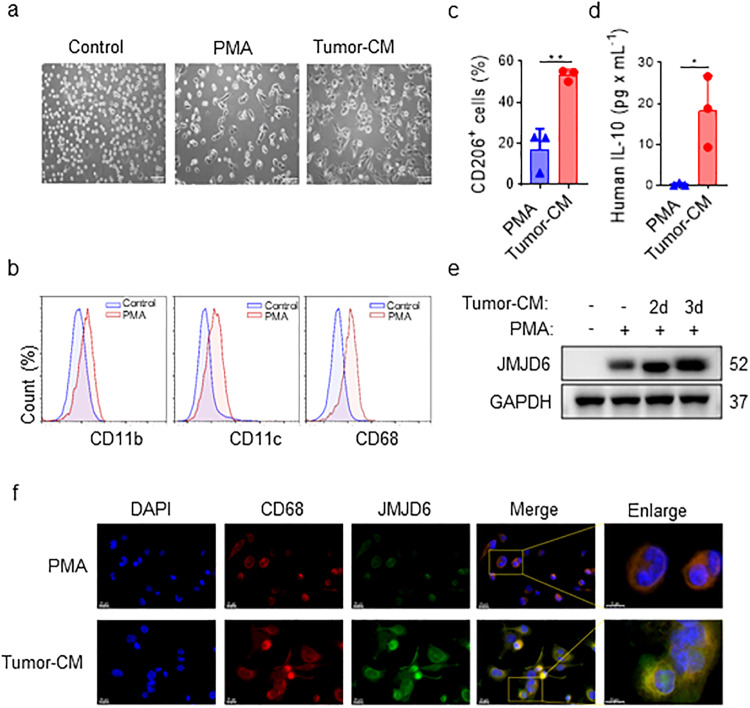
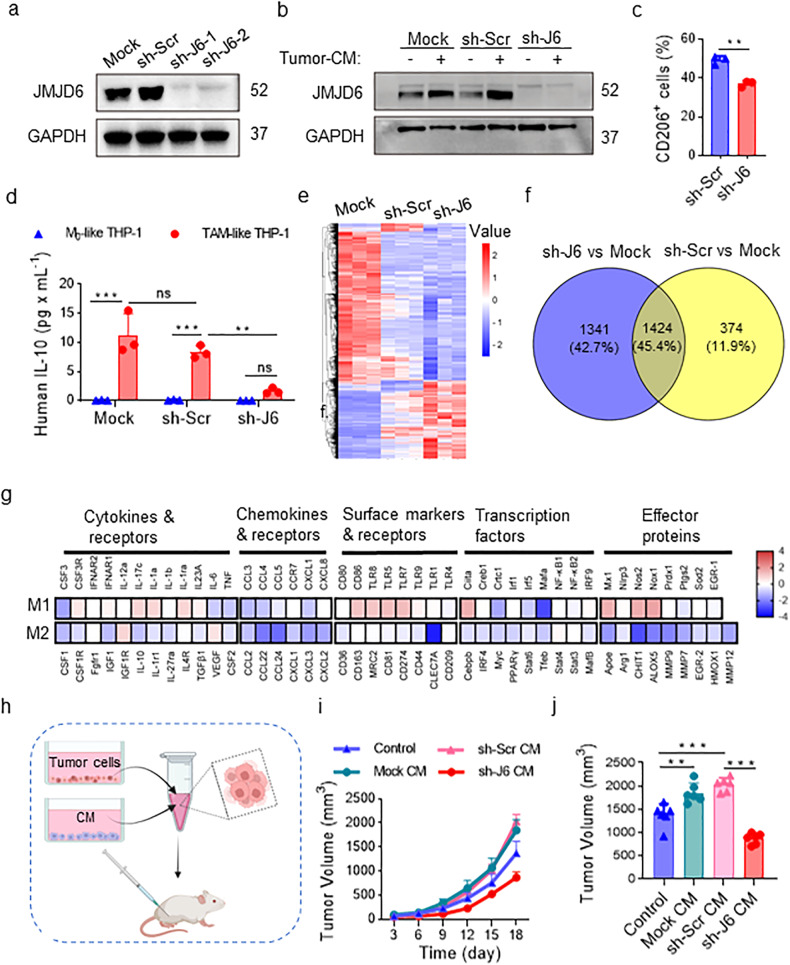
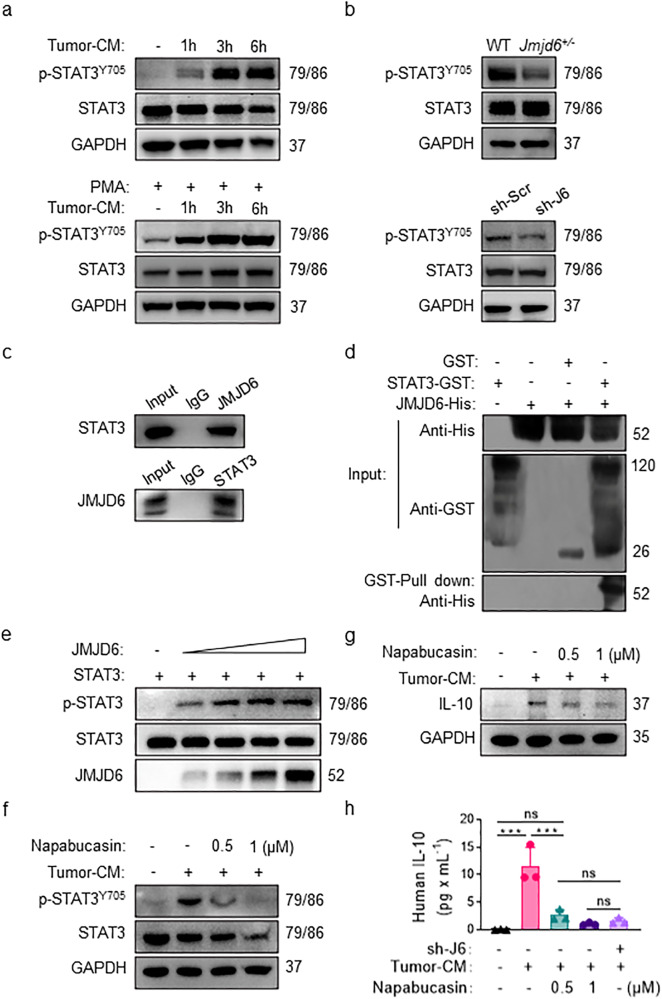
The tumor-associated macrophage (TAM) is the most abundant group of immune cells in the tumor microenvironment (TME), which plays a critical role in the regulation of tumor progression and treatment resistance. Based on different polarization status, TAMs may also induce antitumor immune responses or immunosuppression. The present study identified JMJD6 (Jumonji domain-containing 6) as a novel modulator of TAM activation, the upregulation of which was associated with the immunosuppressive activities of TAMs. JMJD6 deficiency attenuated the growth of both Lewis lung carcinoma (LLC) tumors and B16F10 melanomas by reversing M2-like activation of macrophages, and sensitized tumors to immune checkpoint blockades (ICBs). Moreover, the JMJD6-induced inhibition of M2 polarization was potentially mediated by the STAT3/IL-10 signaling. These findings highlight the regulatory activities of JMJD6 in TAM polarization, and the therapeutic potential of JMJD6/STAT3/IL-10 axis blockades to enhance the efficacy of ICBs in cancer treatment.
肿瘤相关巨噬细胞(TAM)是肿瘤微环境(TME)中最丰富的免疫细胞群,在调节肿瘤进展和治疗耐药性方面发挥着关键作用。根据不同的极化状态,TAMs 也可能诱导抗肿瘤免疫反应或免疫抑制。本研究鉴定 JMJD6(含 Jumonji 结构域的蛋白 6)为 TAM 激活的新型调节剂,其上调与 TAMs 的免疫抑制活性有关。JMJD6 缺失通过逆转巨噬细胞的 M2 样激活,减弱了 Lewis 肺癌(LLC)肿瘤和 B16F10 黑色素瘤的生长,并使肿瘤对免疫检查点阻断(ICB)敏感。此外,JMJD6 诱导的 M2 极化抑制可能是由 STAT3/IL-10 信号介导的。这些发现强调了 JMJD6 在 TAM 极化中的调节作用,以及 JMJD6/STAT3/IL-10 轴阻断增强 ICB 在癌症治疗中的疗效的治疗潜力。