Plant Developmental Biology, TUM School of Life Sciences, Technical University of Munich, Freising, Germany.
Chair of Food Chemistry and Molecular Sensory Science, TUM School of Life Sciences, Technical University of Munich, Freising, Germany.
PLoS Genet. 2020 Jan 21;16(1):e1008433. doi: 10.1371/journal.pgen.1008433. eCollection 2020 Jan.
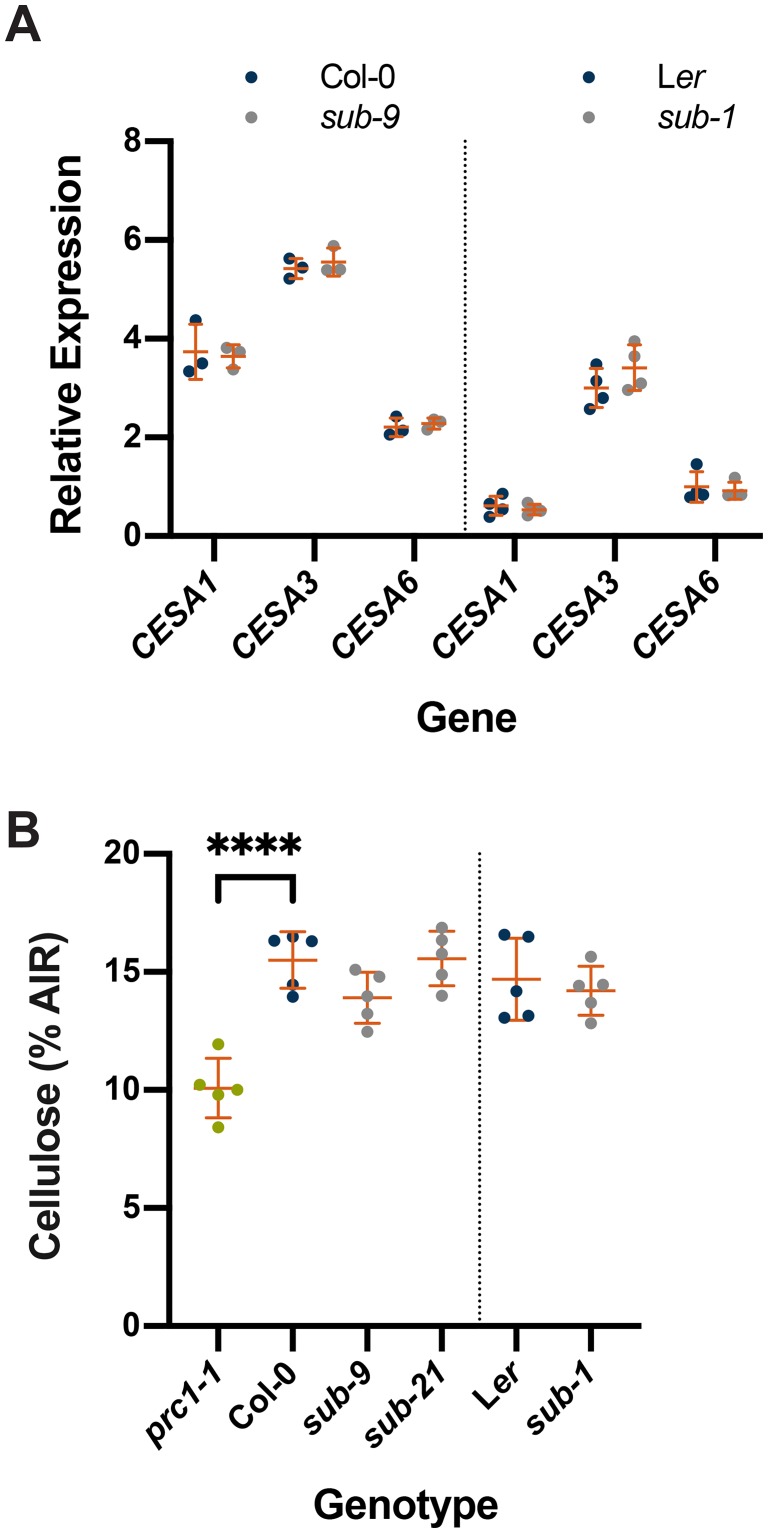
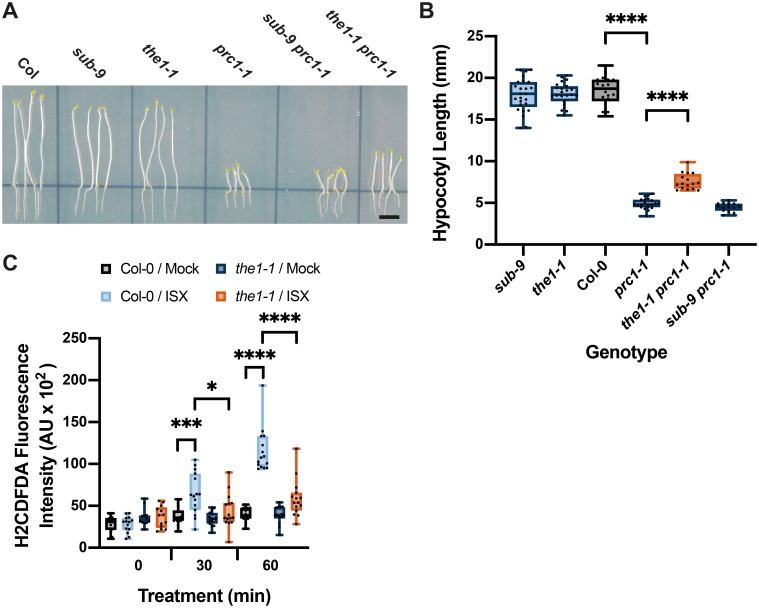
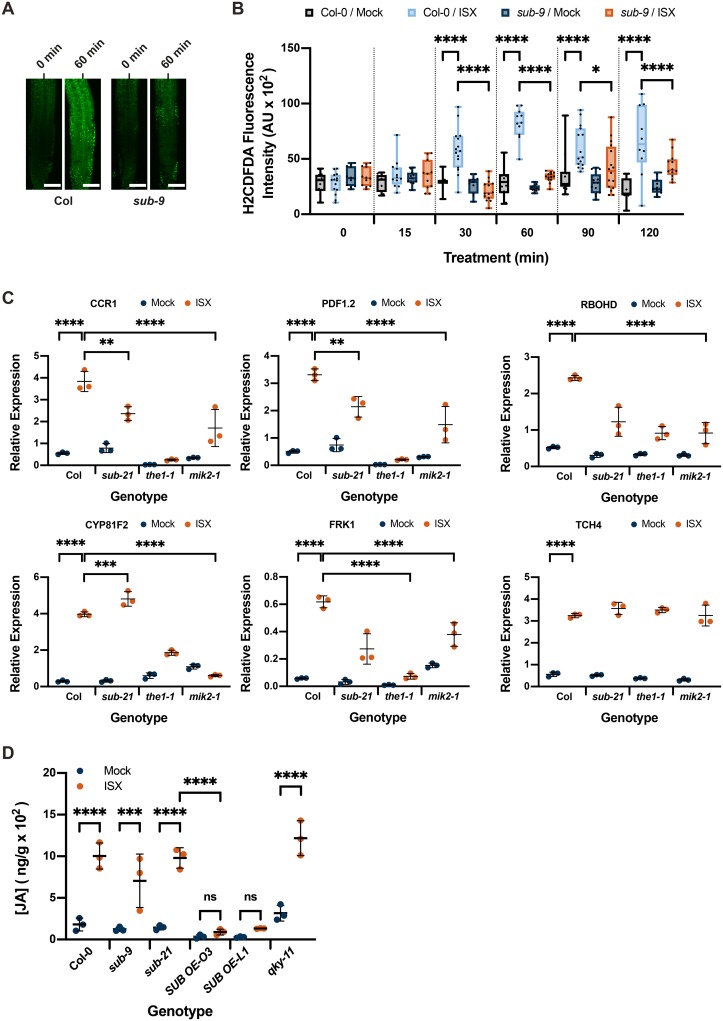
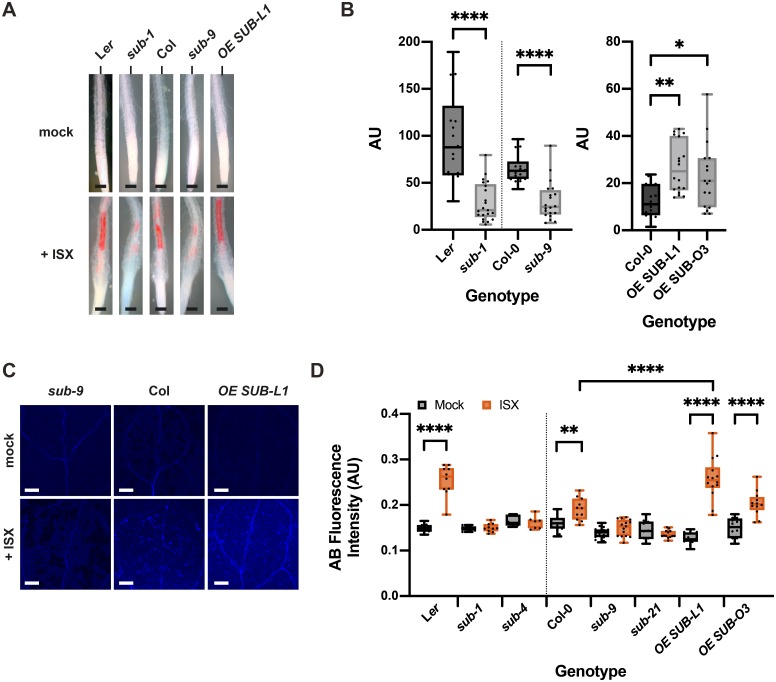
Plant cells are encased in a semi-rigid cell wall of complex build. As a consequence, cell wall remodeling is essential for the control of growth and development as well as the regulation of abiotic and biotic stress responses. Plant cells actively sense physico-chemical changes in the cell wall and initiate corresponding cellular responses. However, the underlying cell wall monitoring mechanisms remain poorly understood. In Arabidopsis the atypical receptor kinase STRUBBELIG (SUB) mediates tissue morphogenesis. Here, we show that SUB-mediated signal transduction also regulates the cellular response to a reduction in the biosynthesis of cellulose, a central carbohydrate component of the cell wall. SUB signaling affects early increase of intracellular reactive oxygen species, stress gene induction as well as ectopic lignin and callose accumulation upon exogenous application of the cellulose biosynthesis inhibitor isoxaben. Moreover, our data reveal that SUB signaling is required for maintaining cell size and shape of root epidermal cells and the recovery of root growth after transient exposure to isoxaben. SUB is also required for root growth arrest in mutants with defective cellulose biosynthesis. Genetic data further indicate that SUB controls the isoxaben-induced cell wall stress response independently from other known receptor kinase genes mediating this response, such as THESEUS1 or MIK2. We propose that SUB functions in a least two distinct biological processes: the control of tissue morphogenesis and the response to cell wall damage. Taken together, our results reveal a novel signal transduction pathway that contributes to the molecular framework underlying cell wall integrity signaling.
植物细胞被复杂构建的半刚性细胞壁所包裹。因此,细胞壁重塑对于控制生长和发育以及调节非生物和生物胁迫反应至关重要。植物细胞主动感知细胞壁中的物理化学变化,并启动相应的细胞反应。然而,细胞壁监测的潜在机制仍知之甚少。在拟南芥中,非典型受体激酶 STRUBBELIG(SUB)介导组织形态发生。在这里,我们表明 SUB 介导的信号转导也调节了细胞对细胞壁中纤维素生物合成减少的反应。SUB 信号会影响细胞内活性氧的早期增加、应激基因的诱导以及在外源应用纤维素生物合成抑制剂异羟肟酸时异位木质素和胼胝质的积累。此外,我们的数据表明 SUB 信号对于维持根表皮细胞的大小和形状以及异羟肟酸短暂暴露后的根生长恢复是必需的。SUB 还需要在纤维素生物合成缺陷突变体中控制根生长停滞。遗传数据进一步表明,SUB 控制异羟肟酸诱导的细胞壁应激反应,独立于其他已知的受体激酶基因,如 THESEUS1 或 MIK2。我们提出 SUB 至少在两个不同的生物学过程中发挥作用:控制组织形态发生和对细胞壁损伤的反应。总之,我们的结果揭示了一个新的信号转导途径,为细胞壁完整性信号转导的分子框架做出了贡献。