Division of Gastroenterology and Hepatology, University of Illinois Medical College, Chicago, IL, United States of America.
Vascular Biology Center, Department of Pharmacology and Toxicology, Medical College of Georgia at Augusta University, Augusta, GA, United States of America.
PLoS One. 2020 Jan 21;15(1):e0227916. doi: 10.1371/journal.pone.0227916. eCollection 2020.
Colorectal cancer remains a deadly cancer due to metastatic disease. To understand the molecular mechanisms of metastasis in colon cancer, we investigated whether the copper chaperone antioxidant-1 (Atox1) protein plays a role in this process. Recent findings indicate that Atox1 protein has transcription factor activities and plays a vital role in cell proliferation in cancer cells. However, the role of Atox1 in metastasis has not been examined.
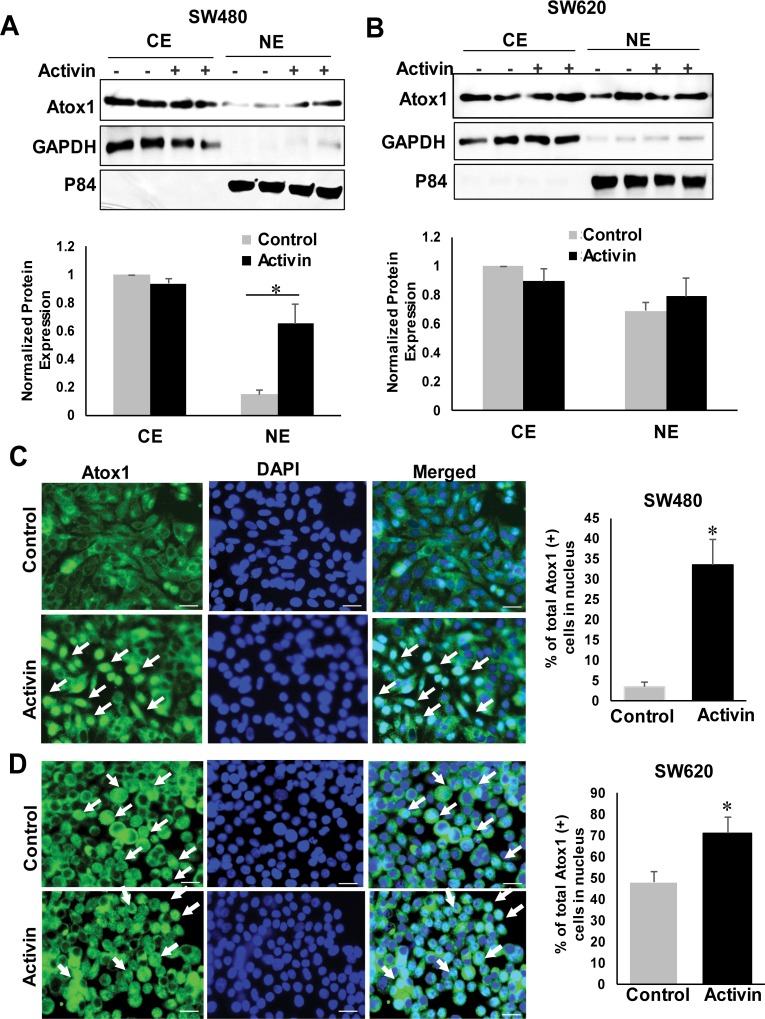
Atox1 expression was determined by immunofluorescence in a tissue microarray generated from a spectrum of CRC patients. Subcellular fractionation of colon cancer cell lines SW480 and SW620 cells was used to examine the cellular location of Atox1 in the face of activin A, a cytokine that stimulates colon cancer metastasis. Atox1 expression was genetically manipulated and cellular migration measured through trans-well assay and proliferation measured by colony formation assays.
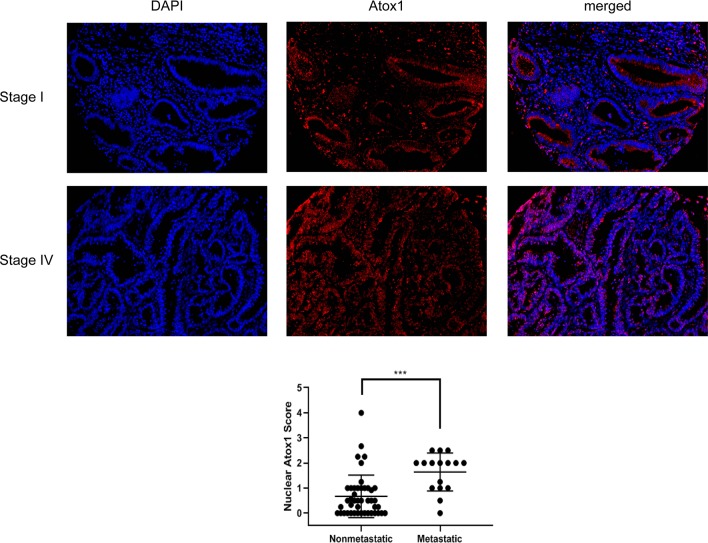
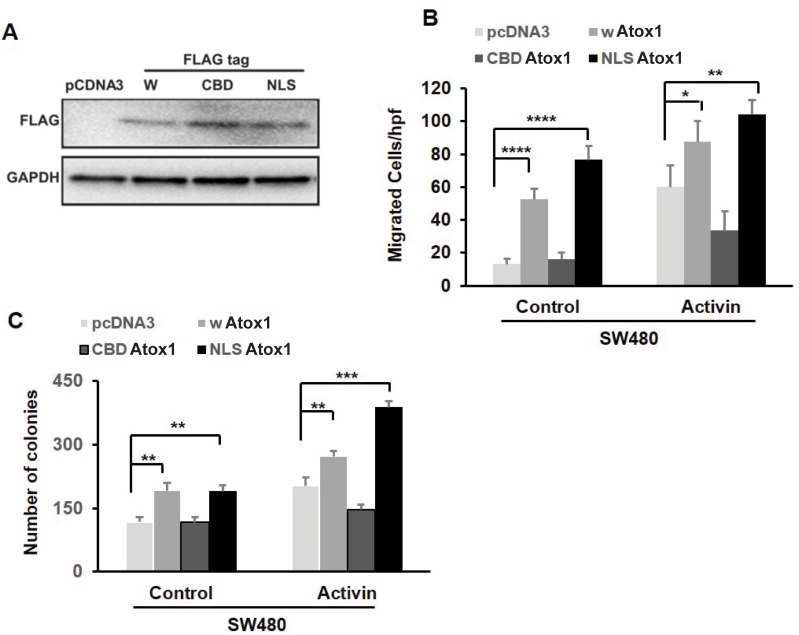
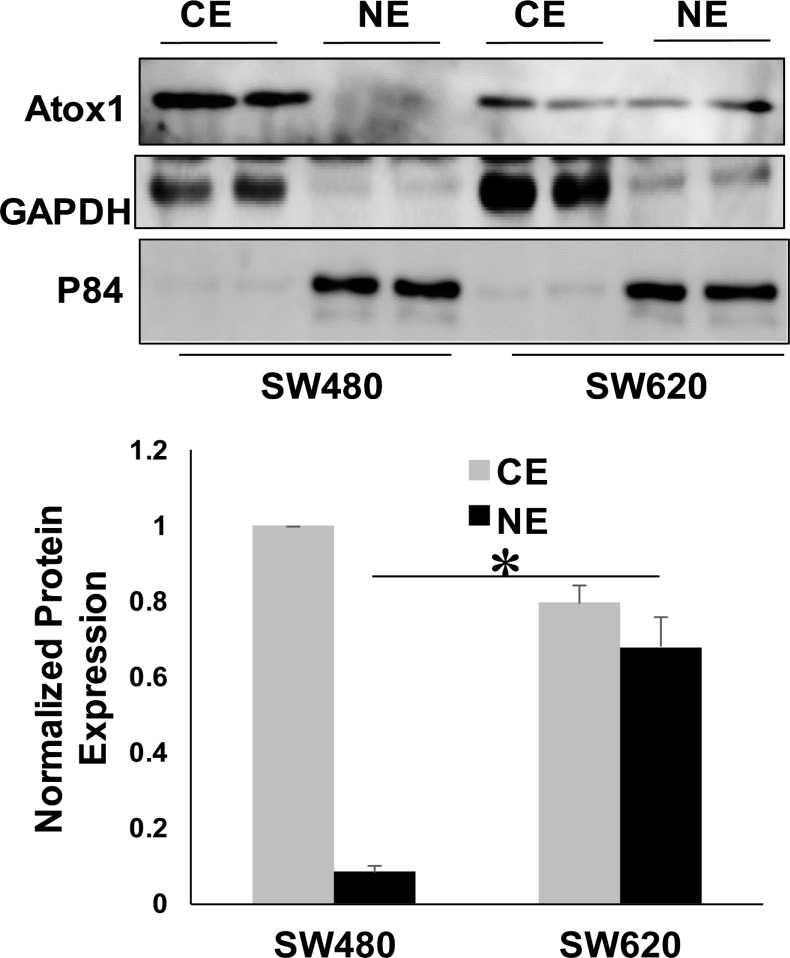
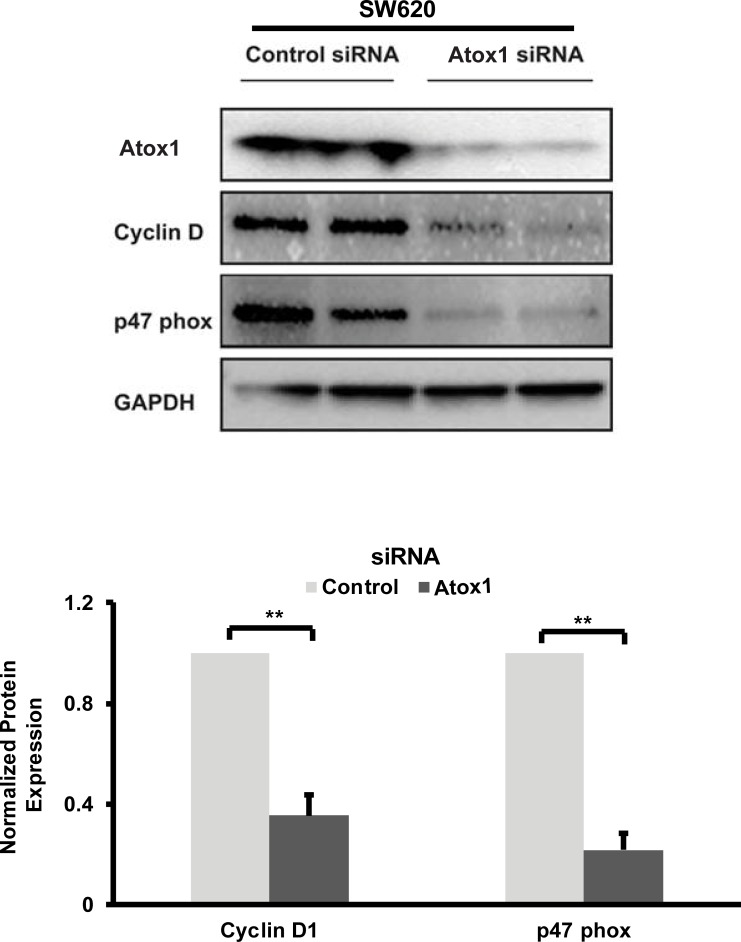
Here we demonstrate that in patients with metastatic colon cancer, there is a significant increase in the expression of nuclear Atox1. Interestingly, the metastatic CRC cell line SW620 has increased nuclear localization of Atox1 compared to its related non-metastatic cell line SW480. Further, inhibition of endogenous Atox1 by siRNA in SW620 decreased colony formation and reactive oxygen species generation via decreased expression of Atox1 targets cyclin D1 and NADPH oxidase subunit p47 phox, respectively. Additionally, overexpression of nuclear-targeted but not copper binding domain-mutated Atox1 in SW480 cells increased colony formation and cell migration that was further augmented by activin A stimulation, a known enhancer of colon cancer metastasis.
Our findings suggest that nuclear Atox1 might be a new therapeutic target as well as a new biomarker for metastatic colorectal cancer.
结直肠癌仍然是一种致命的癌症,因为其会发生转移。为了了解结肠癌转移的分子机制,我们研究了铜伴侣抗氧化剂-1(Atox1)蛋白是否在此过程中发挥作用。最近的研究结果表明,Atox1 蛋白具有转录因子活性,在癌细胞增殖中起着至关重要的作用。然而,Atox1 在转移中的作用尚未被研究。
使用从一系列 CRC 患者中生成的组织微阵列,通过免疫荧光测定 Atox1 的表达。使用亚细胞分离法分离结肠癌细胞系 SW480 和 SW620 细胞,以检查在激活素 A(一种刺激结肠癌转移的细胞因子)存在的情况下 Atox1 在细胞中的位置。通过转染小干扰 RNA 对 Atox1 进行基因操作,并通过 Transwell 测定测量细胞迁移,通过集落形成测定测量增殖。
在这里,我们证明在患有转移性结直肠癌的患者中,核 Atox1 的表达显著增加。有趣的是,与相关的非转移性细胞系 SW480 相比,转移性 CRC 细胞系 SW620 具有增加的核定位 Atox1。此外,通过 siRNA 抑制 SW620 中的内源性 Atox1,通过分别降低 Atox1 靶标细胞周期蛋白 D1 和 NADPH 氧化酶亚基 p47 phox 的表达,减少集落形成和活性氧的产生。此外,在 SW480 细胞中过表达核靶向而非铜结合域突变的 Atox1 增加集落形成和细胞迁移,这通过激活素 A 刺激进一步增强,激活素 A 是已知的结肠癌转移增强剂。
我们的研究结果表明,核 Atox1 可能是转移性结直肠癌的一个新的治疗靶点和新的生物标志物。