International Institute for Population Sciences (IIPS), Mumbai, India.
Department of Development Studies, International Institute for Population Sciences (IIPS), Mumbai, India.
Epidemiol Health. 2019;41:e2019050. doi: 10.4178/epih.e2019050. Epub 2019 Dec 18.
India still faces the burden of undernutrition and communicable diseases, and the prevalence of overweight/obesity is steadily increasing. The discourse regarding the dual burden of underweight and overweight/obesity has not yet been widely explored in both men and women. The present study assessed the determinants of underweight and overweight/obesity in India among adult men and women aged 15-49.
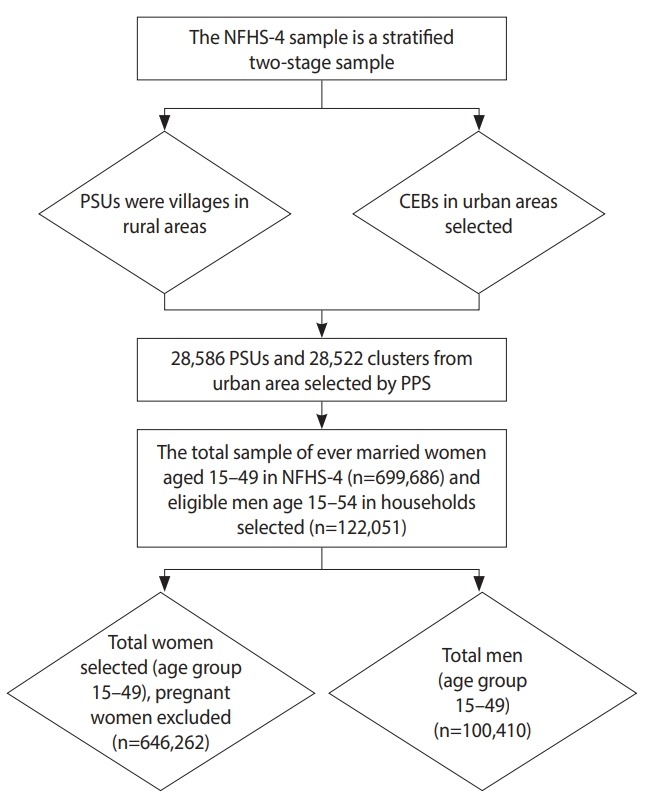
Population-based cross-sectional and nationally representative data from the National Family Health Survey-4 (2015-16), consisting of a sample of men and women, were analyzed. Stratified 2-stage sampling was used in the NFHS-4 study protocol. In the present study, bivariate and adjusted multinomial logistic regression analyses were performed to determine the correlates of underweight and overweight/obesity.
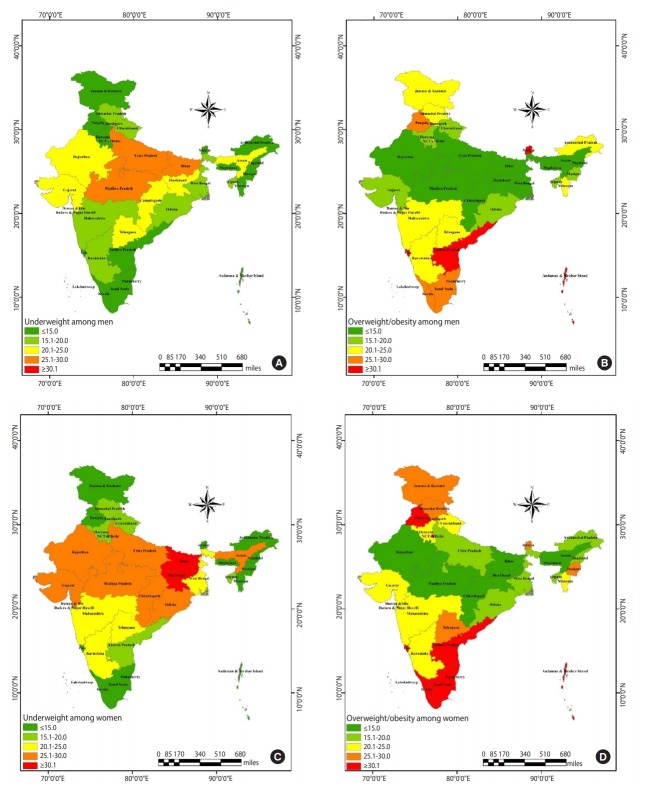
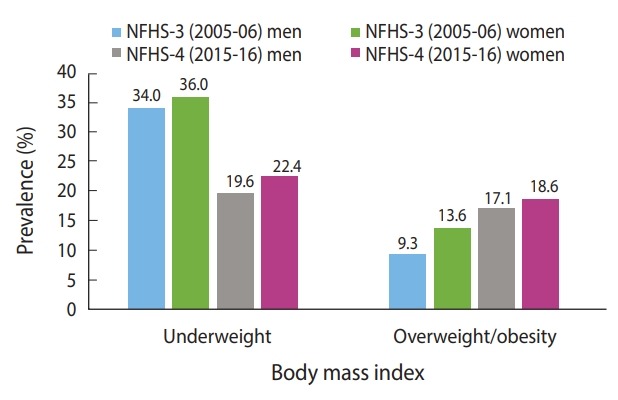
The results suggested a persistently high prevalence of underweight coexisting with an increased prevalence of overweight/obesity in India. The risk of underweight was highest in the central and western regions and was also relatively high among those who used either smoking or smokeless tobacco. Overweight/obesity was more prevalent in urban areas, in the southern region, and among adults aged 35-49. Furthermore, level of education and wealth index were positively associated with overweight/obesity. More educated and wealthier adults were less likely to be underweight.
In India, underweight has been prevalent, and the prevalence of overweight/obesity is increasing rapidly, particularly among men. The dual burden of underweight and overweight/obesity is alarming and needs to be considered; public health measures to address this situation must also be adopted through policy initiatives.
印度仍面临营养不足和传染病的负担,超重/肥胖的患病率也在稳步上升。关于消瘦和超重/肥胖双重负担的讨论在男性和女性中尚未得到广泛探讨。本研究评估了印度 15-49 岁成年男性和女性消瘦和超重/肥胖的决定因素。
本研究使用了基于人群的横断面和具有全国代表性的 2015-16 年国家家庭健康调查-4(NFHS-4)数据,该数据由男性和女性样本组成。NFHS-4 研究方案采用分层两阶段抽样。在本研究中,进行了双变量和调整后的多项逻辑回归分析,以确定消瘦和超重/肥胖的相关因素。
结果表明,印度消瘦的高患病率持续存在,同时超重/肥胖的患病率也在增加。消瘦的风险在中部和西部地区最高,而且在使用吸烟或无烟烟草的人群中相对较高。超重/肥胖在城市地区、南部地区和 35-49 岁的成年人中更为普遍。此外,教育水平和财富指数与超重/肥胖呈正相关。受教育程度较高和较富裕的成年人消瘦的可能性较小。
在印度,消瘦一直很普遍,超重/肥胖的患病率正在迅速上升,特别是在男性中。消瘦和超重/肥胖的双重负担令人震惊,需要加以考虑;必须通过政策举措采取公共卫生措施来解决这一问题。