Liou Bo-Kang, Jaw Yih-Mon, Chuang George Chao-Chi, Yau Newton N J, Zhuang Zhen-Yu, Wang Li-Fei
Department of Food Science and Technology, Central Taiwan University of Science and Technology, No. 666, Buzih Rd., Beitun Dist., Taichung City 40601, Taiwan.
Department of Chinese Culinary Arts, National Kaohsiung University of Hospitality and Tourism, No. 1, Songhe Rd., Xiaogang Dist., Kaohsiung City 81271, Taiwan.
Foods. 2020 Jan 18;9(1):100. doi: 10.3390/foods9010100.
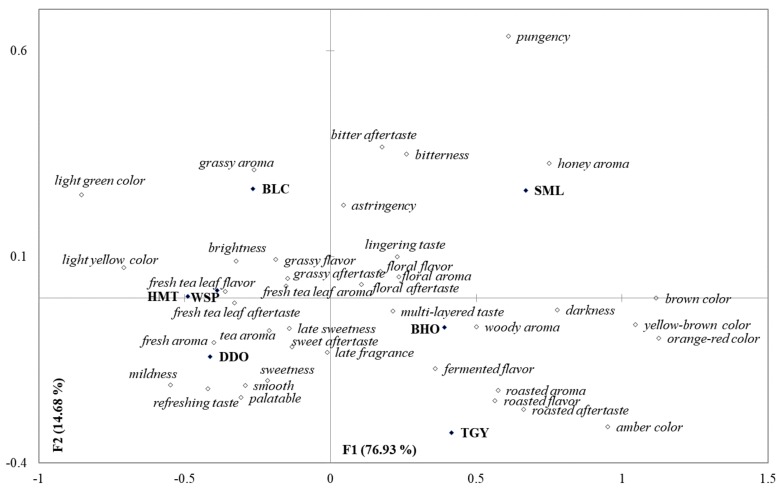
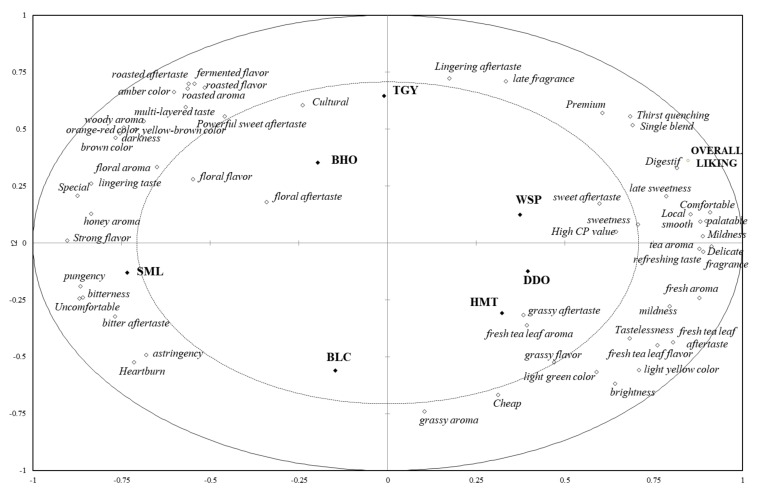
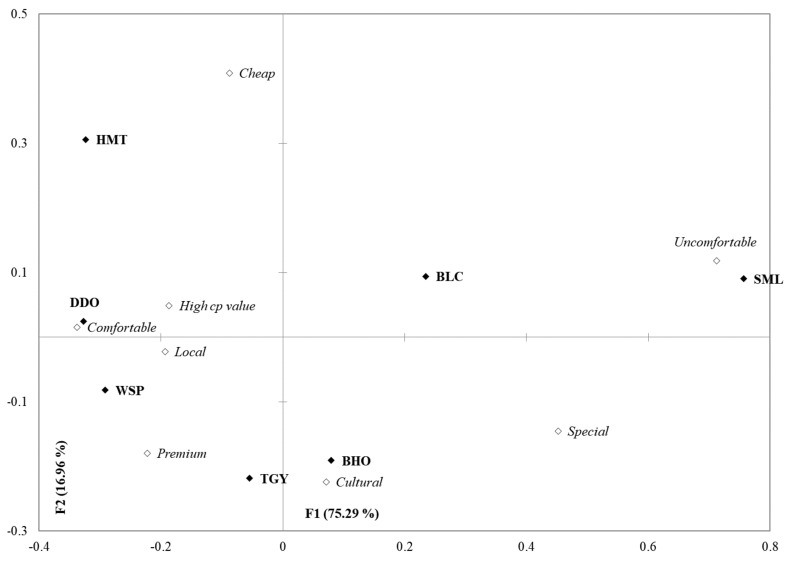
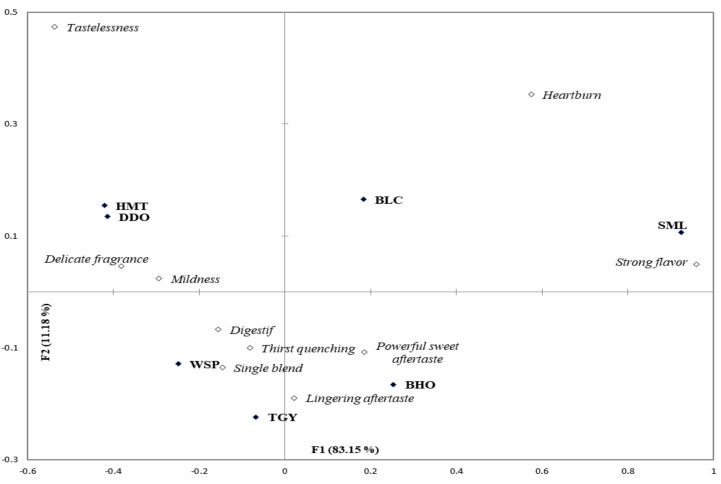
For hundreds of years, Taiwan has been famous for its various specialty teas. The sensory features of these teas have been well specialized and standardized through sensory evaluations performed by tea experts in yearly competitions throughout history. However, the question arises of whether young Taiwanese consumers, whose dietary behaviors have become Westernized, agree with the conventional sensory standards and association/postprandial concepts in the traditional tea market of Taiwan. To study young Taiwanese consumers' ideas towards traditional specialty teas, this research recruited 109 respondents, younger than the age of 30, to taste seven Taiwanese specialty tea infusions of various degrees of fermentation, and their opinions were gathered by questionnaires composed of check-all-that-apply (CATA) questions and hedonic scales. Through statistical analyses, we found that several tea sensory attributes which were emphasized in experts' descriptive sensory evaluations were not appreciated by the young Taiwanese people. Instead, tea aroma and late sweetness/palatable/smooth/refreshing mouthfeels were the most important sensory attributes contributing to their tea preference. Overall, there would generally be no problem in serving young Taiwanese consumers lightly-fermented oolong teas that generate the highest digestive and lowest heartburn postprandial perceptions.
数百年来,台湾一直以其各类特色茶而闻名。通过历史上历年竞赛中茶叶专家进行的感官评估,这些茶叶的感官特性已得到很好的专业化和标准化。然而,问题在于,饮食行为已西化的年轻台湾消费者是否认同台湾传统茶叶市场的传统感官标准及关联/餐后概念。为研究年轻台湾消费者对传统特色茶的看法,本研究招募了109名年龄在30岁以下的受访者,让他们品尝七种不同发酵程度的台湾特色茶茶汤,并通过由多选(CATA)问题和享乐量表组成的问卷收集他们的意见。通过统计分析,我们发现专家描述性感官评估中强调的几种茶叶感官属性并未得到年轻台湾人的喜爱。相反,茶的香气以及后味甜度/可口/顺滑/清爽的口感是影响他们茶偏好的最重要感官属性。总体而言,为年轻台湾消费者提供餐后消化效果最佳且烧心感最低的轻度发酵乌龙茶通常不会有问题。